How to Choose a 24V LiFePO4 Battery
Choosing a 24v lifepo4 battery is not just a matter of comparing amp-hours or finding the lowest price. The right choice depends on the equipment it will power, how long it must run, and the conditions where it will operate. A battery for a small cabin system may have different demands from one used in a boat, camper, or backup setup. Check the device’s voltage requirements, expected daily energy use, and peak power draw before comparing models. Small details matter.
Capacity is only part of the picture. Review the battery’s continuous and peak discharge ratings, built-in battery management system, charging requirements, and physical dimensions. Confirm that your charger and inverter are compatible with the manufacturer’s specifications. If the battery may face cold temperatures, check its charging limits and whether low-temperature protection is included. That detail is easy to overlook. It can affect both performance and service life.
Reliable product information should be clear and specific. Look for a traceable manufacturer, a written warranty, and documentation that explains testing, safety features, and support. Compare usable capacity and operating limits, not just claims on a product page. It is easy to focus on price. That can be a mistake if key specifications are missing. Even careful research cannot predict every installation issue, so leave room to verify connections and system settings before use. With a few checks, you can choose a battery that fits your actual needs rather than a headline number.
Understand What a 24V LiFePO4 Battery Is
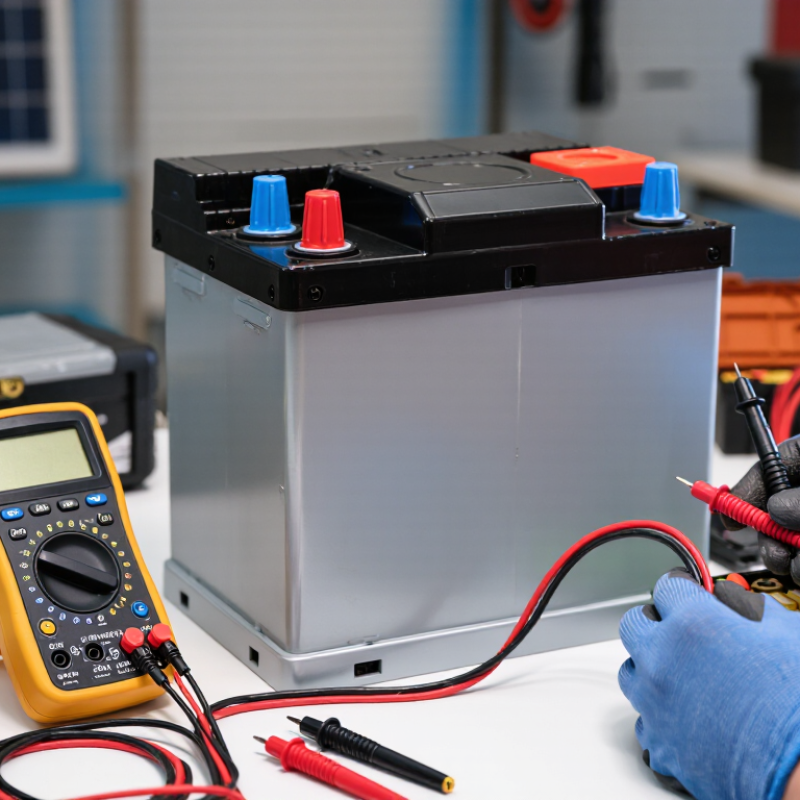
A 24V LiFePO4 battery uses lithium iron phosphate cells to store and deliver electrical energy. “24V” describes its nominal voltage, not a constant reading. A common design connects eight cells in series, each with a nominal voltage near 3.2V, giving about 25.6V overall. Fully charged voltage is higher, often around 29.2V, but the battery’s specifications should guide charging. That distinction matters.
The battery management system, or BMS, monitors the cells and can help protect them from overcharging, excessive discharge, and temperature limits. Capacity is measured in amp-hours (Ah); multiplying Ah by nominal voltage gives a rough energy estimate in watt-hours. For example, a 100Ah battery stores roughly 2,560Wh nominally. Actual usable energy varies with the BMS, load, temperature, and operating conditions. It is easy to focus on capacity and overlook voltage compatibility.
Tips: Check that your charger and equipment support the battery’s voltage range and LiFePO4 charging profile. Confirm the BMS current rating matches your expected load, especially when a motor starts. Read the manual for temperature limits; charging in cold conditions may be restricted. Leave room for cables and ventilation, and inspect terminals periodically. My own rule is simple: verify the details twice. Guessing can be costly.
Determine the Voltage and Capacity Your System Requires
Start with the loads, not the battery label. List each device’s wattage and daily operating time, then total the watt-hours. A 60 W router running for 10 hours uses 600 Wh. Record startup surges separately; they affect inverter sizing, not daily energy. A typical 24 V LiFePO4 battery uses eight 3.2 V cells in series, giving 25.6 V nominal. Check the inverter and charger’s permitted voltage range, including the battery’s charging voltage. Small mismatch, big trouble.
Convert daily energy into amp-hours, allowing for conversion losses and the usable portion of the battery. For 600 Wh of AC use, a 90% efficient inverter and an 80% usable-capacity target require about 33 Ah: 600 ÷ (25.6 × 0.90 × 0.80). That figure covers one day only. Add capacity for cloudy days, aging, cold conditions, or longer runtimes. The U.S. National Renewable Energy Laboratory’s 2024 Annual Technology Baseline uses 85% round-trip efficiency for utility-scale battery storage; this is useful context, not a guarantee for a small battery. Check the battery’s own specifications. I would still measure actual daily consumption for several days; estimates often miss pumps, fans, and brief loads.
Compare Battery Capacity, Current, and Power Needs
How to Choose a 24V LiFePO4 Battery
Compare Battery Capacity, Current, and Power Needs
Start with the devices you plan to run and add their wattage. A 24V battery supplying a 600W load delivers about 25A under ideal conditions. In practice, inverter losses can push that closer to 28–30A. Check that the battery’s continuous discharge rating can handle this current, and that its peak rating covers brief startup surges from motors or compressors. Those surges are easy to overlook.
Capacity, measured in amp-hours, affects runtime. A 24V, 100Ah battery stores roughly 2,400Wh nominally, but not all of that may be available in real use. For a 300W load, a simple estimate suggests about eight hours; inverter losses, temperature, and battery limits can reduce that time. Estimates look precise. They aren’t. Leave a reserve rather than planning around every last watt-hour.
Compare your expected demand with the battery management system’s current limits, too. A large capacity rating does not automatically mean the battery can deliver high power. Check charger compatibility and the system’s voltage requirements before buying. If possible, note the actual wattage and operating hours of your equipment for a few days. Your first estimate may be wrong, and that’s useful information. Recheck it.
How to Choose a 24V LiFePO₄ Battery
Compare the estimated current and capacity needed for different loads. These examples use a 25.6V nominal battery, a two-hour runtime, and 80% usable capacity. Actual requirements vary with battery specifications, temperature, inverter efficiency, and load behavior.
Estimate current with power ÷ 25.6V. For a two-hour runtime at 80% usable capacity, estimate required amp-hours with load power × 2 ÷ (25.6V × 0.8). Check that the battery’s continuous discharge rating supports the load, and allow extra capacity for losses and peak demand.
Check Compatibility, BMS Features, and Charging Requirements
A 24V LiFePO4 battery must match the equipment around it, not just its advertised capacity. Check the inverter’s permitted voltage range and low-voltage cutoff, then compare them with the battery’s specifications. A “24V” label describes a nominal voltage; it does not guarantee that every device will accept the battery’s full charge voltage. Small differences matter.
Check the BMS, too. Its continuous current rating should meet the load, while its short-term rating should cover startup surges from motors or pumps. For example, a compressor may draw much more current when it starts than while running. Look for protection against overcurrent, over-temperature, and low-temperature charging. Cold-weather charging limits are easy to overlook. I would not assume a battery can safely charge just because it can discharge in the same conditions.
Charging requirements need a close match. Use a charger with a lithium iron phosphate profile and set voltage and current according to the battery maker’s specifications. Avoid relying on a lead-acid equalization setting; it may exceed the battery’s limits. If solar equipment is involved, confirm its charge controller can use the required settings. Also check cable size, fuse rating, and connection polarity before installation. It takes a few extra minutes. Still, these details can prevent nuisance shutdowns and help the battery perform as expected.
Evaluate Safety, Lifespan, Warranty, and Installation Needs
When choosing a 24V LiFePO4 battery, check that its battery management system protects against overcharging, excessive discharge, and unsafe temperatures. Match the battery’s continuous current rating to your equipment, not just its advertised peak. A motor starting under load may draw more current than its label suggests. Small details matter. Check the manual for charging limits, especially in cold conditions, because many LiFePO4 batteries should not be charged below freezing unless designed for it.
Lifespan claims need context. Cycle counts depend on discharge depth, temperature, and charging habits, so compare ratings tested under similar conditions. It is easy to overvalue a large cycle number; I still catch myself doing that. Ask what capacity remains at the stated cycle count, and whether the test used a full or partial discharge. Warranty terms matter too. Read the fine print. Look for coverage length, capacity thresholds, and exclusions for improper charging or installation.
Plan the installation before buying. Measure the space, confirm terminal orientation, and allow room for secure mounting and cable bends. Use cable sized for the current and run length, plus an appropriate fuse close to the battery. Keep connections tight and protected from moisture. If the system has multiple batteries, verify that the manufacturer permits the intended series or parallel arrangement. A neat layout helps, but I would still recheck polarity with a meter before connecting the load.