
Choosing a 12v battery pack manufacturer is not just a price comparison. It is a decision about safety, consistency, and support over years of use. Akira Yoshino, a pioneer of lithium-ion battery technology, once said, “The lithium-ion battery is a very small thing, but it changed the world.” His observation helps explain why even compact battery systems deserve careful evaluation.
This guide examines 12 leading manufacturers in China and the evidence buyers should check. A product page may list capacity and cycle life, but those figures need context. Ask which cells are used, how the battery management system handles temperature, and whether test reports match the exact model. For a 12.8-volt LiFePO4 pack, inspect the casing, terminals, wiring, and protection settings—not just the headline capacity. Small details matter.
A strong supplier should explain its specifications clearly and provide consistent answers about customization, quality control, and after-sales service. Look for traceable test records and clear warranty terms. Still, no ranking tells the whole story. Factory capabilities change, and public information can be incomplete. That deserves reflection. A polished website is not proof of dependable production. Use this overview as a starting point, then verify the details that matter for your application, whether it is a solar system, marine equipment, or backup power.
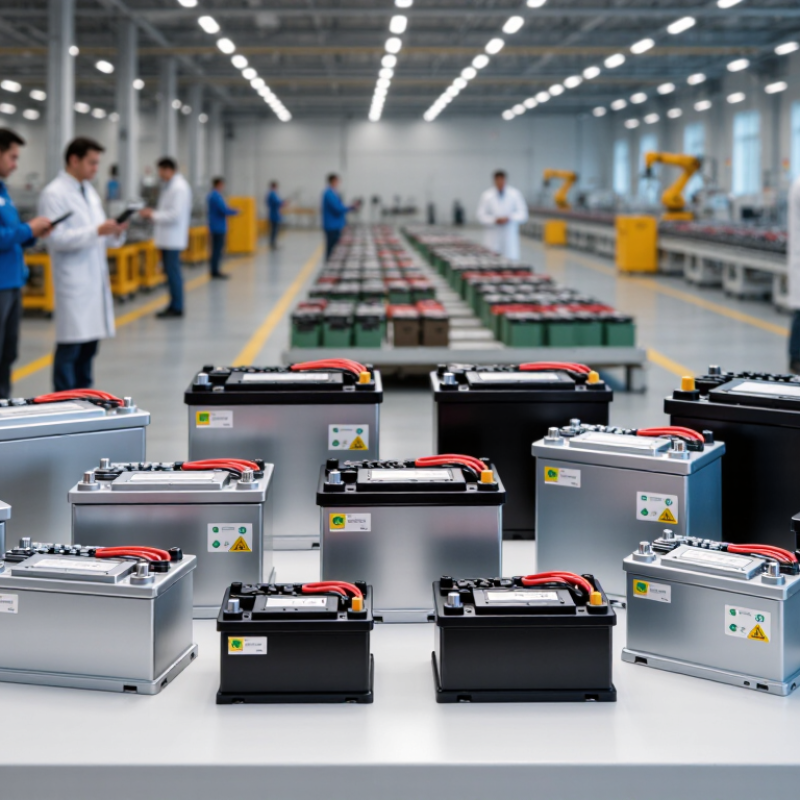
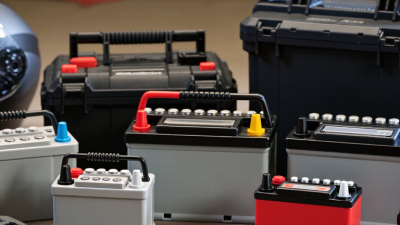
A 12V battery pack describes a voltage class, not one specific chemistry. Traditional lead-acid batteries contain six cells. Many lithium iron phosphate packs use four cells in series, with a nominal voltage near 12.8V. Small differences matter. Actual voltage, usable capacity, and charging limits depend on the chemistry and battery management system. Before selecting a pack, check its charging profile, peak-current rating, operating temperature, and enclosure. A charger made for lead-acid batteries may not suit every lithium pack.
Typical uses include vehicle auxiliary circuits, alarms, access controls, portable instruments, off-grid lighting, and backup power for communications or control equipment. In electric vehicles, a separate 12V system can power locks, lights, sensors, and other electronics alongside the high-voltage traction battery. The IEA’s Global EV Outlook 2024 reports that electric-car battery demand exceeded 750 GWh in 2023. That figure covers traction batteries, not 12V packs, but it shows the wider shift toward electrified systems. For sizing, estimate runtime and account for startup surges and voltage drops. Amp-hours alone can be misleading, especially in cold conditions. A tidy label does not tell the whole story.
| Application | Common Battery Type | Typical Configuration or Voltage | Key Selection Considerations |
|---|---|---|---|
| Passenger vehicle starting | Lead-acid, including flooded, AGM, and EFB designs | 12V nominal; six lead-acid cells in series | Check the vehicle’s required case size, terminal layout, cold-cranking rating, and charging-system compatibility. |
| Automotive auxiliary power | Lead-acid or lithium iron phosphate (LiFePO4) | Lead-acid: 12V nominal; LiFePO4: commonly 4 cells in series, 12.8V nominal | Confirm the charging profile and any battery-management-system requirements before replacing an existing battery. |
| Uninterruptible power supplies (UPS) | Sealed lead-acid, commonly AGM | 12V nominal blocks; UPS systems may connect multiple blocks in series or parallel | Match the UPS manufacturer’s specified battery voltage, dimensions, connector type, and capacity. |
| Security alarm panels | Sealed lead-acid | Commonly a single 12V nominal battery | Check enclosure dimensions, standby requirements, and the alarm panel’s supported battery capacity. |
| Emergency lighting | Sealed lead-acid or a purpose-designed lithium pack | System voltage varies; 12V nominal packs are used in some designs | Verify the luminaire’s specified battery chemistry, connector, charging circuit, and required backup duration. |
| Small solar and off-grid systems | Deep-cycle lead-acid or LiFePO4 | 12V nominal systems; a 4-series LiFePO4 pack is typically 12.8V nominal | Check charge-controller settings, usable capacity, discharge limits, and whether the inverter supports the battery voltage. |
| Recreational vehicle (RV) house power | Deep-cycle lead-acid or LiFePO4 | 12V nominal is common in RV auxiliary circuits | Consider charging sources, expected loads, installation space, temperature limits, and battery-management features. |
| Marine electronics and auxiliary loads | Marine-rated lead-acid or LiFePO4 | 12V nominal systems are common on smaller vessels | Choose equipment suited to marine vibration and moisture exposure; confirm charging and protection requirements. |
| Portable field equipment | Application-specific lithium-ion or LiFePO4 packs | “12V” lithium packs can have different cell counts and actual voltage ranges | Match the equipment’s full operating-voltage range, connector polarity, current demand, and charger specification. |
| Electronic test instruments | Application-specific rechargeable battery packs | May use a nominal 12V pack or a regulated 12V output | Check whether the instrument requires a regulated output; pack voltage can vary with chemistry and state of charge. |
| Small DC pumps and actuators | Lead-acid or a compatible lithium pack | 12V nominal motors and equipment are widely available | Account for startup current, wiring, fuse ratings, and the equipment’s allowable voltage range. |
| Telecommunications and control backup | Lead-acid or lithium systems designed for the specific installation | 12V nominal batteries may be used in some systems; other system voltages are also common | Confirm the system architecture, backup-time target, monitoring requirements, and approved charging method. |
“12V” is a nominal rating, not a fixed output voltage. Actual voltage and charging requirements depend on battery chemistry, design, and state of charge. Always follow the equipment and battery specifications.






An exceptional record of quality and service for 35+ years.
© 2026 Excell Battery Co. All rights reserved.Privacy Statement