
Choosing a reliable bms battery manufacturer requires more than comparing prices, cell capacity, or attractive product photographs. Global buyers must examine engineering experience, certification records, production consistency, communication quality, and after-sales support. A supplier may offer an impressive 48V lithium battery, yet provide weak thermal protection or unclear balancing data. That gap can become expensive.
Davide Andrea, author of Battery Management Systems for Large Lithium-Ion Battery Packs, has emphasized, “A battery pack is only as good as its battery management system.” This principle guides our review of the top 10 BMS battery manufacturers for global buyers. We consider how each company designs protection circuits, monitors voltage, controls temperature, and supports custom communication protocols such as CAN or RS485. We also look at practical evidence, including sample testing, factory audits, warranty terms, and response times.
Real projects are rarely perfect.
A battery may operate in a warehouse at 22°C, then face vibration, humidity, and rapid charging in a delivery vehicle. These conditions expose weaknesses that a product brochure cannot show. Some manufacturers publish detailed technical documents, while others provide limited performance evidence. That difference deserves attention.
This guide does not treat rankings as permanent truth. Market capabilities change, and even established suppliers can experience quality variation between production batches. Buyers should verify current certifications, inspect test reports, and request representative samples before signing large contracts. The strongest bms battery partner is not always the largest company. It is the supplier that demonstrates stable engineering, transparent communication, and dependable support after shipment.
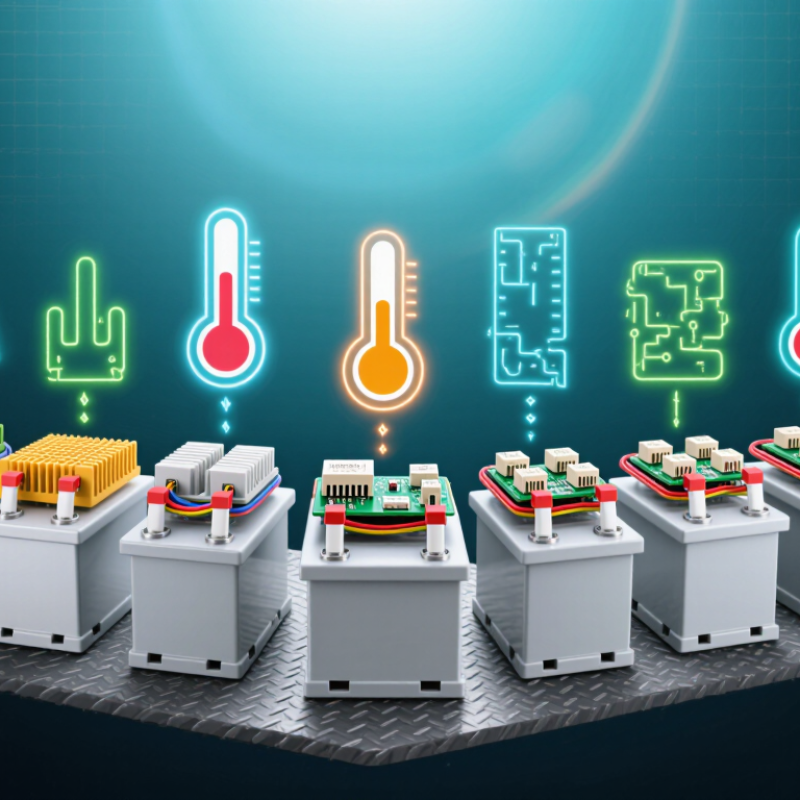
A battery management system, or BMS, is the control layer inside a modern battery pack. It monitors cell voltage, current, temperature, and charging conditions. When one cell reaches a dangerous limit, the BMS can reduce current or disconnect the pack. It also estimates state of charge and state of health. These estimates guide real-world decisions, such as when an electric vehicle needs charging. Small errors can become serious over thousands of cycles.
When comparing the top ten BMS manufacturers, global buyers should examine more than a product brochure. Ask whether the system supports the battery chemistry, cell count, communication protocol, and required balancing method. Passive balancing is simpler and often costs less. Active balancing can transfer energy between cells, but it usually needs more complex hardware. CAN, UART, and wireless communication may support different installation environments. The right choice depends on pack design, not popularity.
Practical testing reveals details that specifications may hide. Engineers should check thermal response, fault recording, calibration stability, and performance during vibration. A BMS should also protect against overvoltage, deep discharge, short circuits, and abnormal temperatures. In a test room, a pack may perform perfectly. Field conditions are less polite. Sensor placement, loose connections, and software timing can still create weak points. Some capacity estimates remain imperfect, especially after aging. That limitation deserves honest documentation, not optimistic marketing. Reliable suppliers provide test records, firmware controls, traceable components, and responsive technical support for integration and maintenance.
| Profile | Primary BMS Architecture | Typical Battery Voltage | Cell Chemistry Support | Balancing Method | Communication Interfaces | Typical Applications | Key Buyer Verification Point |
|---|---|---|---|---|---|---|---|
| Profile 01 | Single-board centralized BMS | 12–96 V DC | Lithium-ion, LFP, NMC, LTO | Passive resistor balancing | CAN, RS-485, UART | Light electric vehicles, portable energy storage, industrial packs | Confirm maximum series-cell count, continuous current, and thermal-input channels. |
| Profile 02 | Modular distributed BMS | 48–800 V DC | LFP, NMC, NCA, LTO | Passive balancing; active options available | Isolated CAN, daisy-chain communication | Electric vehicles, commercial vehicles, battery racks | Check isolation rating, synchronization performance, and cable-fault detection. |
| Profile 03 | High-voltage master–slave BMS | 400–1,000 V DC | NMC, NCA, LFP | Usually passive; balancing strategy varies by design | CAN, isolated CAN, Ethernet gateway | Passenger vehicles, buses, industrial traction systems | Review contactor control, pre-charge logic, insulation monitoring, and service disconnect functions. |
| Profile 04 | Energy-storage BMS with rack controller | 48–1,500 V DC | Primarily LFP; NMC also supported | Passive balancing | CAN, RS-485, Modbus RTU/TCP, Ethernet | Residential, commercial, and utility-scale energy storage | Verify state-of-charge accuracy, rack-to-rack coordination, event logging, and remote diagnostics. |
| Profile 05 | Wireless BMS | 48–800 V DC | LFP, NMC, NCA | Normally passive balancing | Wireless links with CAN or Ethernet backbone | Vehicles and large battery modules with complex harnesses | Request radio-reliability data, cybersecurity controls, latency limits, and fail-safe behavior. |
| Profile 06 | Active-balancing BMS | 24–800 V DC | Lithium-ion chemistries with tight cell matching | Inductor-, capacitor-, or transformer-based active balancing | CAN, RS-485, UART | High-capacity storage, long-cycle systems, and specialized mobility | Compare balancing current, conversion losses, electromagnetic compatibility, and maintenance requirements. |
| Profile 07 | Low-voltage embedded BMS | 12–72 V DC | LFP, NMC, LMO, lead-acid replacement packs | Passive balancing | SMBus, UART, CAN, Bluetooth options | Power tools, medical equipment, robotics, marine systems | Confirm sleep current, protection thresholds, enclosure constraints, and firmware customization. |
| Profile 08 | Safety-focused automotive BMS | 400–1,000 V DC | NMC, NCA, LFP | Passive balancing with redundant monitoring paths | CAN FD, isolated interfaces, automotive Ethernet gateway | Road vehicles and safety-critical traction platforms | Ask for ISO 26262 development evidence, diagnostic coverage, traceability, and validation records. |
| Profile 09 | Cloud-connected smart BMS | 12–1,000 V DC | LFP, NMC, NCA, LTO | Passive or active, depending on pack design | CAN, RS-485, Ethernet, cellular, Wi-Fi | Fleet management, distributed storage, predictive maintenance | Evaluate data ownership, API availability, encryption, firmware updates, and offline operation. |
| Profile 10 | Customized OEM-integrated BMS | Application-specific | Chemistry and cell-format dependent | Passive or active according to requirements | CAN/CAN FD, RS-485, Ethernet, proprietary interfaces | Special-purpose vehicles, industrial equipment, and engineered battery systems | Assess engineering resources, sample-to-production process, software escrow, and long-term supply continuity. |
Note: Voltage ranges and application classifications are representative industry ranges. Final compatibility must be confirmed against the battery chemistry, cell count, current profile, environmental conditions, applicable regulations, and system safety requirements.






An exceptional record of quality and service for 35+ years.
© 2026 Excell Battery Co. All rights reserved.Privacy Statement