How to Choose the Best Rechargeable Lithium Batteries?

Choosing the right rechargeable lithium batteries starts with a simple question: what will they power? A camera flash, cordless tool, and backup system place different demands on a cell. Capacity matters, but it is not the whole story. Voltage, discharge rate, size, operating temperature, and charger compatibility all affect performance. A battery that looks impressive on a package may still be a poor match for your device.

Small details count. Check the device manual and the battery maker’s specifications before comparing capacity claims. Look for clear information about chemistry, rated voltage, cycle life, and recommended charging conditions. Reliable manufacturers also provide traceable product details and practical safety guidance. Avoid mixing cells with different ages, capacities, or charge levels in the same device. Never assume that two batteries with similar dimensions are interchangeable. They may differ in voltage or protection features.

There is no universal best choice. Not quite. A higher-capacity cell may last longer between charges, yet cost more or deliver less power under demanding loads. Temperature and charging habits can also change real-world results. Even careful comparisons leave some uncertainty, because published test conditions may not match your daily use. This guide explains how to weigh key specifications, assess build quality, and match rechargeable lithium batteries to their intended applications. The goal is a dependable, informed choice—not simply the biggest number on a label.
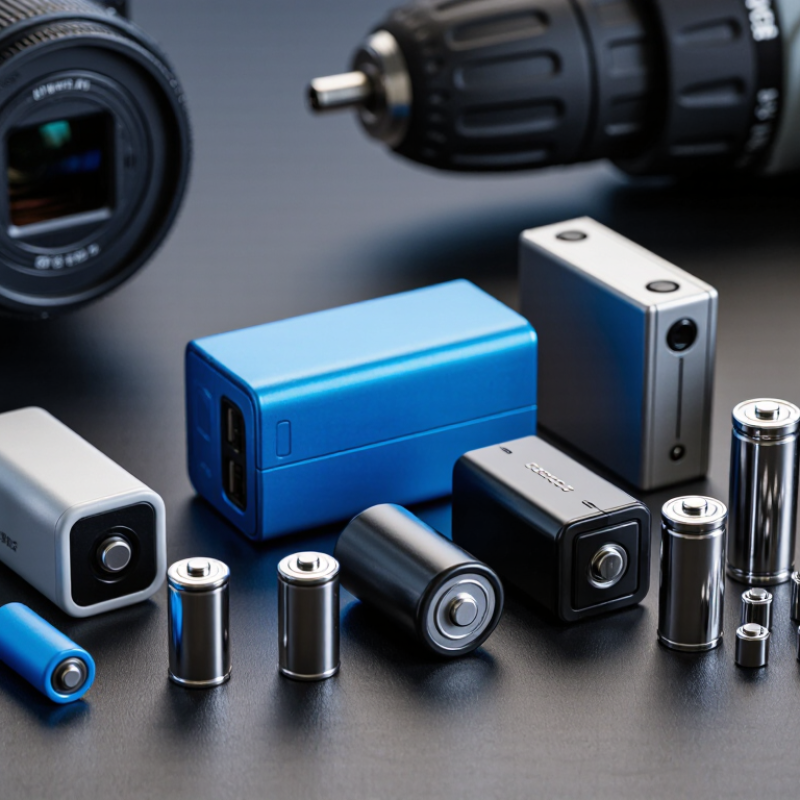
How to Choose the Best Rechargeable Lithium Batteries?

Understanding Rechargeable Lithium Battery Types and Applications

Rechargeable lithium batteries are not one uniform technology. Lithium iron phosphate, or LFP, often suits home storage and electric vehicles because it can offer long cycle life and strong thermal stability. Its energy density is usually lower than some alternatives. Nickel manganese cobalt, or NMC, balances energy density and power, making it common in portable equipment and vehicles. Lithium cobalt oxide can store substantial energy in a compact space, but its lifespan and heat tolerance depend closely on cell design and use. Lithium titanate is known for fast charging and long cycle life, though it stores less energy for its size. Small differences matter.

The right type depends on the device, operating conditions, and battery pack—not just the chemistry name. A camera used for short bursts has different needs from a backup system running for hours. Check the required voltage, capacity, discharge rate, and approved charging method. Cold garages and hot dashboards can also affect performance and service life. Chemistry labels help, but they do not tell the whole story. I would compare the complete battery specifications and protection features before choosing; it is easy to overlook those details. Never assume that two lithium batteries with similar dimensions are interchangeable.


Matching Battery Chemistry, Voltage, and Capacity to Your Device

Choosing a rechargeable lithium battery starts with chemistry, not the largest capacity number. Lithium-ion cells commonly have a nominal voltage near 3.6 or 3.7 volts, while some rechargeable AA-sized lithium batteries regulate output to 1.5 volts. These are not interchangeable. Check the device manual and the battery label for the required chemistry, size, and voltage. A flashlight designed for one cell type may behave unpredictably with another. Fit matters, too.

Capacity, measured in milliamp-hours (mAh), gives a rough guide to runtime. A higher rating may last longer, but actual performance depends on the device’s power draw, temperature, and battery age. For a small wireless sensor, stable voltage and low self-discharge may matter more than maximum capacity. I sometimes catch myself comparing mAh figures too quickly; the number alone does not tell the whole story.

Tips: Match the charger to the exact battery chemistry and cell configuration. Never charge a cell with a charger intended for a different type. Store batteries away from heat, and stop using any cell that is swollen, leaking, or unusually hot. If the specifications are unclear, pause and verify them. A little caution saves guesswork.

Checking Size, Charge Rate, Cycle Life, and Operating Conditions

How to Choose the Best Rechargeable Lithium Batteries?
Checking Size, Charge Rate, Cycle Life, and Operating Conditions

Start with the physical fit. Check the cell’s dimensions, terminal layout, and polarity against your device. A battery that looks close may still sit loosely or fail to make contact. Match the voltage and capacity requirements in the device manual, too. Capacity alone does not tell you whether a cell is suitable. It is easy to overvalue that number.

Charge rate and cycle life matter over time. Check the battery’s specification sheet for its permitted charging current, then use a compatible charger. Charging faster than specified can create excess heat and shorten service life. Cycle-life figures also need context: they depend on test conditions, discharge depth, and temperature. Heat wears cells. A cycle rating is not a guarantee of identical results in every device.

Tips: If a battery compartment feels warm during normal use, stop and check the device and battery instructions. Avoid charging or storing cells outside their stated temperature range. For equipment used in cold garages or hot sheds, confirm its operating limits before buying. Small details matter. I would compare the specifications side by side, though even careful comparisons cannot predict every real-world variable.

How to Choose the Best Rechargeable Lithium Batteries? — Checking Size, Charge Rate, Cycle Life, and Operating Conditions

Battery Chemistry Size and Common Formats Nominal Voltage per Cell Typical Charge Rate Approximate Cycle Life Typical Operating Conditions Best Fit
Lithium Cobalt Oxide (LCO) Available in cylindrical and pouch formats. A common cylindrical size is 18650, approximately 18 mm in diameter × 65 mm long. 3.6–3.7 V nominal; 4.2 V is a common full-charge voltage. Confirm the cell specification. Often around 0.5–1C; the permitted rate is cell-specific. Approximately 500–1,000 cycles to about 80% remaining capacity under specified test conditions. Many cells charge at about 0–45°C and discharge within roughly −20–60°C. Check the datasheet for exact limits. Compact, energy-dense devices where space and weight matter more than maximum service life.
Lithium Nickel Manganese Cobalt Oxide (NMC) Commonly offered in cylindrical, pouch, and prismatic designs. Cylindrical examples include 18650 and 21700 formats; a 21700 cell is approximately 21 mm × 70 mm. Typically 3.6–3.7 V nominal; many cells use a 4.2 V charge limit, but variants differ. Often around 0.5–1C for standard cells; some designs allow higher rates. Approximately 1,000–2,000 cycles to about 80% remaining capacity, depending on cell design and use. Many cells charge at about 0–45°C and discharge within roughly −20–60°C. Use the cell maker’s limits. A balanced option for portable equipment, power tools, and electric mobility applications.
Lithium Iron Phosphate (LFP) Available in cylindrical, pouch, and prismatic formats. Prismatic cell dimensions vary widely; verify the exact length, width, height, and terminal layout. About 3.2 V nominal; approximately 3.65 V is a common maximum charge voltage. Often around 0.5–1C for standard cells; permitted rates vary by model. Approximately 2,000–5,000 cycles to about 80% remaining capacity under suitable conditions. Many cells charge at about 0–45°C and discharge within roughly −20–60°C. Charging below 0°C generally requires explicit manufacturer approval. Applications prioritizing long service life and thermal stability, such as stationary storage and some electric vehicles.
Lithium Titanate (LTO) Commonly supplied in cylindrical or prismatic formats. Dimensions vary by design, so match the cell to the enclosure and connection system. About 2.3–2.4 V nominal; approximately 2.7–2.8 V is a common maximum charge voltage. Some cells support roughly 1–5C or more, but the actual limit must be confirmed for the specific cell. Approximately 5,000–15,000 cycles or more for some designs; test conditions and end-of-life criteria strongly affect results. Temperature limits are product-specific. Some designs tolerate wider ranges than other lithium-ion types; follow the datasheet, especially for charging in cold conditions. Frequent cycling, fast charging, or demanding service-life requirements where lower cell voltage and higher cost are acceptable.

Selection note: Chemistry does not determine a cell’s physical dimensions or safe charge rate by itself. Check the exact cell datasheet for dimensions, terminal arrangement, charge voltage, maximum charge current, temperature limits, and cycle-life test conditions. Cycle-life figures are indicative and depend on depth of discharge, temperature, charge rate, and the manufacturer’s end-of-life definition. Use a charger and battery-management system designed for the selected chemistry and cell configuration.

Evaluating Safety Features, Certifications, and Manufacturer Quality

A rechargeable lithium battery should have protection built into the pack, not just reassuring wording on its wrapper. Look for safeguards against overcharging, excessive discharge, short circuits, and overheating. A temperature sensor matters when batteries power a device in a warm case or enclosed space. Check that the recommended charger matches the battery’s chemistry and voltage. Close enough is not enough.

Certifications can help, but read what they cover. A mark may apply to a cell, a complete battery pack, or a particular test; those are not interchangeable. Check the certificate details and issuing laboratory when available, and confirm that the model number matches the product in your hand. Labels can mislead. Manufacturer quality is harder to judge from a product page. Useful signs include clear specifications, lot identification, published test information, and a responsive way to report defects. Consistent documentation matters more than polished packaging. I would also look for realistic capacity claims and clear storage guidance. A neat label is comforting, yet it cannot show how every batch was tested. That uncertainty deserves a second look.

Comparing Total Cost, Warranty, and Long-Term Battery Performance

A low purchase price can hide the real cost of rechargeable lithium batteries. Compare cost per usable cycle, not just the price per cell. Divide the battery and charger cost by the cycles you realistically expect to get. For example, a battery rated for many cycles may cost less over time, but only if it suits your device and charging habits. The estimate is imperfect. Real use rarely matches laboratory conditions.

Check what the warranty actually covers, including its length, capacity threshold, and proof-of-purchase requirements. A long warranty is useful only if the claim process is clear and practical. Read the exclusions closely. Heat, deep discharge, or an incompatible charger may affect coverage. Long-term performance also depends on storage and workload. A flashlight used briefly each week may age differently from a camera that draws power in short bursts. Look for capacity-retention data after repeated cycles, not just the headline capacity. Keep cells cool and avoid leaving them fully discharged for months. Small habits matter. Still, published cycle-life figures can feel more precise than everyday experience allows; compare them as guidance, not a promise.

An exceptional record of quality and service for 35+ years.