10 Best Rechargeable Lithium Batteries for Buyers

Choosing rechargeable lithium batteries is not just a matter of picking the largest capacity on the shelf. Cell format, voltage, charger compatibility, and device demands all matter. A battery that fits a flashlight may be unsuitable for a camera or controller. Check the device manual before buying. Small details can prevent poor performance, overheating, or damage.

Tesla co-founder Elon Musk, a prominent electric-vehicle and battery-industry leader, said, “The fundamental rate-limiting step in the advancement of electric vehicles is batteries.” His comment highlights why battery quality and design deserve careful attention. For everyday buyers, the same principle applies on a smaller scale: reliable power depends on more than a bold label. Capacity claims, protection features, cycle life, and charging requirements deserve scrutiny. Some products also use different lithium chemistries and voltage designs, so “rechargeable lithium” does not mean universally interchangeable.

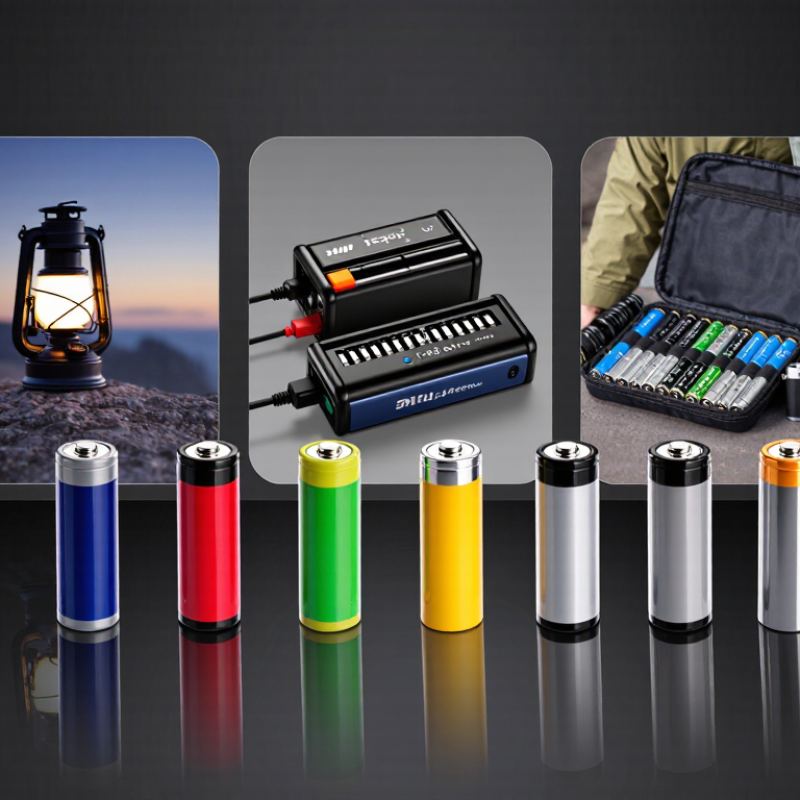
This guide compares 10 rechargeable lithium batteries for different needs, from frequent travel to devices used at home. It considers stated capacity, form factor, charging options, safety features, and practical value. Picture swapping batteries beside a dim campsite lantern or packing spares for a long trip. Convenience matters. So does the charger. A polished product page cannot prove long-term durability, and test conditions may differ from everyday use. A neat ranking cannot capture every real-world fit. That limitation matters. Use the comparisons as a shortlist, then confirm compatibility with your device and charger before purchasing.
10 Best Rechargeable Lithium Batteries for Buyers

Rechargeable Lithium Battery Types and How They Work

Rechargeable lithium batteries are not one uniform product. In common lithium-ion cells, lithium ions shuttle between a graphite-based anode and a cathode during charging and use. Electrons flow through the device’s circuit, producing usable current; charging reverses the ion movement.

That chemistry matters. NMC cells, made with nickel, manganese, and cobalt, often prioritize energy density. LFP cells, using lithium iron phosphate, often emphasize thermal stability and long cycle life. The trade-off is real: an LFP battery may weigh more for the same stored energy.

“Lithium polymer” often describes a pouch-style construction, not a wholly different chemistry. Cylindrical, prismatic, and pouch cells are form factors, and each can use different cathode materials.

The International Energy Agency’s Global EV Outlook 2024 reports that electric-vehicle battery demand exceeded 750 gigawatt-hours in 2023, about 40% higher than in 2022. It also reports that LFP reached roughly 40% of the global EV battery market that year.

These figures describe a fast-changing industry, not every small consumer cell. Match a battery’s voltage, charger, protection circuitry, and temperature limits to the device manual.

Small details matter. Advertised cycle counts can mislead because heat, discharge depth, and test conditions affect real service life. Even a well-made cell ages.
Key Specifications for Comparing Rechargeable Lithium Batteries

Key Specifications for Comparing Rechargeable Lithium Batteries

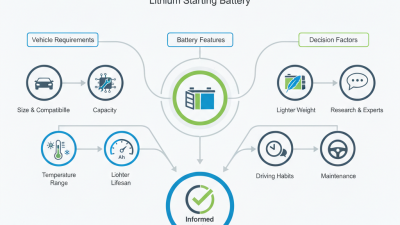
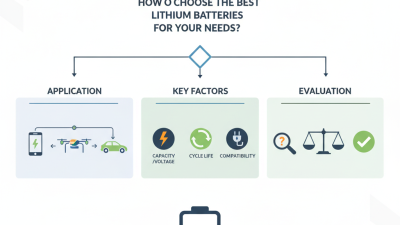
Start with chemistry, nominal voltage, and capacity. Lithium-ion cells often have a nominal voltage near 3.6 or 3.7 volts, while other lithium chemistries differ. Check the device’s required voltage before comparing options. Capacity in milliamp-hours is useful, but it can mislead when batteries have different voltages. Watt-hours offer a better view of stored energy across different battery types. Numbers can mislead.

Cycle life describes how many charge-and-discharge cycles a battery may deliver before its capacity falls to a stated level. Read the test conditions: temperature, charging rate, and remaining-capacity threshold all affect the figure. A battery rated for many cycles may not last as long under heavy loads or frequent high-temperature use. Treat unusually precise lifespan claims cautiously.

Physical size and terminal design matter just as much as capacity. Measure the compartment, then check whether the battery includes protection against overcharging, deep discharge, or excessive current. Not every device supports every protected cell, and the correct charger must match the battery chemistry and voltage. Check the label. Also compare operating-temperature limits and storage guidance, especially for equipment kept in a car or an unheated shed. I would keep the packaging specifications nearby; it is easy to remember the capacity and forget the voltage. Fit matters.

10 Best Rechargeable Lithium Batteries for Buyers - Key Specifications for Comparing Rechargeable Lithium Batteries

Typical specifications are shown for comparison. Actual capacity, cycle life, dimensions, and charging limits vary by cell design and manufacturer. Always check the cell or pack datasheet and use a compatible charger.

Battery type Chemistry Nominal voltage Typical capacity Full-charge voltage Typical cycle life* Approx. dimensions Common applications
18650 high-capacity cell Lithium-ion (NMC/NCA) 3.6–3.7 V 3,000–3,500 mAh 4.20 V About 300–800 cycles 18 × 65 mm Battery packs, lights, and portable electronics
18650 high-drain cell Lithium-ion (often NMC) 3.6–3.7 V 2,000–3,000 mAh 4.20 V About 300–700 cycles 18 × 65 mm Power tools and devices with higher current demand
21700 high-capacity cell Lithium-ion (NMC/NCA) 3.6–3.7 V 4,000–5,000 mAh 4.20 V About 300–800 cycles 21 × 70 mm High-capacity packs, e-bikes, and power equipment
26650 cell Lithium-ion or LiFePO₄ 3.2 V (LiFePO₄) or 3.6–3.7 V (Li-ion) 3,000–5,500 mAh 3.65 V (LiFePO₄) or 4.20 V (Li-ion) About 500–2,000 cycles, chemistry-dependent 26 × 65 mm Large flashlights and compact battery packs
14500 cell Lithium-ion 3.6–3.7 V 600–1,000 mAh 4.20 V About 300–700 cycles 14 × 50 mm Small devices designed specifically for 3.7 V cells
16340 cell Lithium-ion 3.6–3.7 V 600–900 mAh 4.20 V About 300–700 cycles 16 × 34 mm Compact flashlights and compatible electronics
18350 cell Lithium-ion 3.6–3.7 V 700–1,200 mAh 4.20 V About 300–700 cycles 18 × 35 mm Short-format lights and compact custom packs
10440 cell Lithium-ion 3.6–3.7 V 300–600 mAh 4.20 V About 300–600 cycles 10 × 44 mm Very small devices designed for rechargeable lithium cells
32700 LiFePO₄ cell Lithium iron phosphate (LiFePO₄) 3.2 V 5,000–6,500 mAh 3.65 V About 2,000–4,000 cycles 32 × 70 mm Long-life packs, solar storage, and backup systems
12.8 V LiFePO₄ pack (4-cell series) Lithium iron phosphate (LiFePO₄) 12.8 V nominal Commonly 20–100 Ah 14.6 V typical pack charge limit About 2,000–5,000 cycles Pack dimensions vary by capacity and enclosure RV, marine, off-grid, and backup power

*Cycle-life figures are broad indicative ranges, not guarantees; they depend on depth of discharge, temperature, charge rate, and the manufacturer’s test conditions. Never substitute cells based on size alone: nominal voltage, protection circuitry, discharge rating, polarity, and device compatibility must also match.

Ten Leading Rechargeable Lithium Batteries for Buyers

Ten leading rechargeable lithium battery options should be compared by chemistry, format, and intended workload—not headline capacity alone. A useful shortlist spans 18650 and 21700 cylindrical cells, prismatic and pouch LFP cells, plus NMC, NCA, LCO, LMO, LTO, and LMFP chemistries. These formats and chemistries are not interchangeable. LFP is often considered for frequent cycling, while NMC can offer a balance of energy and power. Check cycle-life test conditions, temperature limits, continuous discharge rating, and built-in protection. “5,000 cycles” means little without depth-of-discharge details.

Industry figures underline the market’s scale. The IEA’s Global EV Outlook 2024 reports that EV battery demand exceeded 750 GWh in 2023, rising about 40% year over year. BloombergNEF’s 2023 Battery Price Survey reported an average lithium-ion pack price of $139 per kWh, down 14% from 2022. These are market averages, not proof of any cell’s quality or retail value. A low quote may come with a shorter warranty or different test conditions. Even a polished datasheet can leave important gaps.

Tips: Match voltage and capacity to the device. Confirm dimensions, connector type, warranty, and safety certifications. Compare like-for-like test data. Small details matter.

10 Rechargeable Lithium-Ion Cell Formats Compared

Cell format numbers indicate approximate dimensions: the first two digits give the nominal diameter in millimeters, and the remaining digits give the nominal length. Actual dimensions can vary slightly by cell design.

Matching Battery Features to Devices and Usage Needs

Matching a rechargeable lithium battery to a device starts with its size and voltage, not the largest capacity on the package. Check the device’s manual or battery compartment before buying. An ordinary lithium-ion cell may provide about 3.6 volts, while many household devices expect 1.5 volts. They are not interchangeable. Some rechargeable AA lithium batteries regulate their output to 1.5 volts, but their charging requirements differ from standard cells. Small print matters.

Think about how the device draws power. A camera flash or motorized toy can benefit from cells designed to deliver higher current. A wall clock or remote control may need less capacity and may sit unused for months, so low self-discharge can matter more. Not every package makes comparisons easy. Capacity figures alone can mislead because voltage and testing conditions vary. That is easy to miss.

Choose a charger made for the battery’s exact chemistry and format; a familiar-looking cell does not guarantee charger compatibility. For frequent use, compare cycle-life claims and consider how many spare cells you need during charging. For travel or cold outdoor use, check the manufacturer’s temperature guidance. I would still recheck the device manual, even when the cells appear to fit. A snug fit is not proof of electrical compatibility.

Charging, Storage, and Safety Considerations for Lithium Batteries

Charging a rechargeable lithium battery safely starts with matching the charger to its chemistry and voltage. “Lithium battery” covers several types, and their charging requirements are not interchangeable. Check the battery’s label and instructions before connecting it. Place it on a stable, dry surface, away from paper, bedding, and direct heat. Stay nearby while it charges, especially if the battery or charger is unfamiliar. Small habits matter.

Heat is a warning sign. If a cell becomes unusually hot, swells, leaks, or develops an odd smell, stop using it and follow the manufacturer’s guidance. Do not charge a visibly damaged battery. Avoid leaving batteries in a hot car or damp shed, where temperature swings and moisture can shorten their useful life. It is easy to assume a battery is fine because it still works; that assumption deserves a second look.

For storage, a cool, dry place is generally better than a sunny windowsill. Many lithium-ion batteries tolerate long storage better when partly charged, rather than completely full or empty, but check the instructions for the specific chemistry. If storing one for months, inspect it periodically and keep its terminals from touching metal objects. That can feel overly cautious. Still, a loose battery beside keys in a drawer is a preventable risk.

An exceptional record of quality and service for 35+ years.