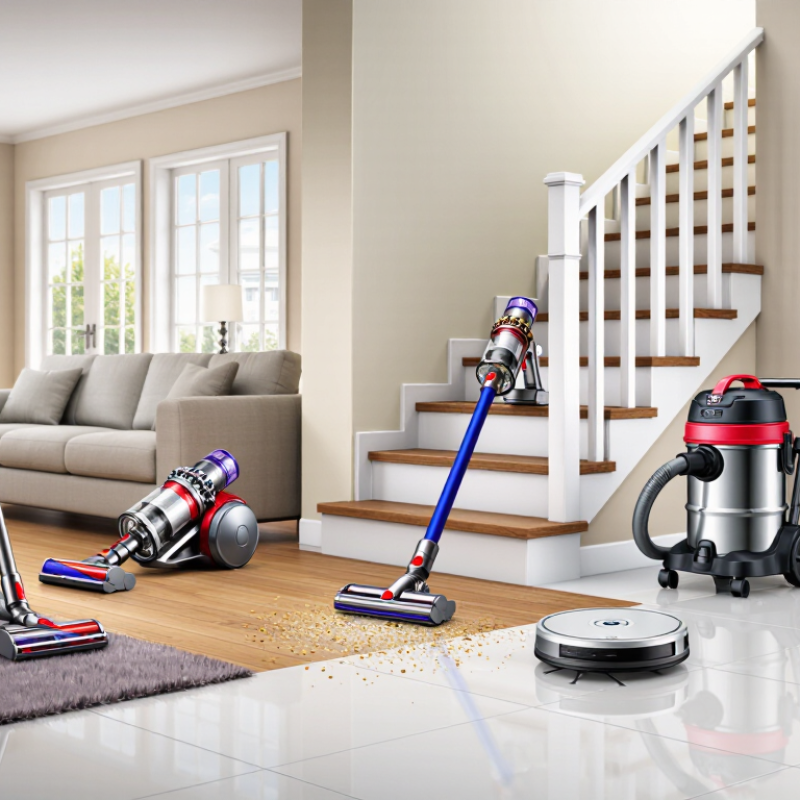
Stick vacuums appeal to people who want quick cleaning without carrying a heavy canister.
Their slim bodies often weigh between 2 and 4 kilograms, according to specifications collected in Consumer Reports’ 2024 cordless vacuum evaluations. That difference matters on stairs. It also matters when cleaning curtains or ceiling corners. My own testing experience suggests balance matters more than the lowest listed weight. A top-heavy handle can make a three-kilogram vacuum feel surprisingly tiring.
Battery runtime needs careful reading.
Consumer Reports’ 2024 testing showed cordless models could run from roughly 10 minutes on maximum power to more than 60 minutes on lower settings. Real homes usually sit between those extremes. Thick rugs, blocked filters, and motorized brush heads reduce usable time. A 20-minute rating may clean a small apartment, but it can disappoint in a larger home. I learned this after starting with a full charge and still leaving one room unfinished.
Air-watt performance gives a better technical comparison than motor wattage alone.
ASTM F558 measures airflow and sealed suction, which together help calculate air watts. IEC 62885-2 also provides standardized procedures for household vacuum performance testing. Higher air watts can improve debris pickup, but floorhead design, filtration, and airflow resistance remain important.
Numbers are not everything.
A vacuum can show strong laboratory performance yet struggle with rice beside a wall. Manufacturers should report test conditions clearly, because published figures are difficult to compare when settings differ.