What Are the Top Pop-up Socket Suppliers Worldwide?
Choosing the right Pop-up Socket supplier involves more than comparing product prices. Buyers must examine electrical safety, material quality, installation depth, warranty support, and production consistency. A reliable supplier should provide clear technical drawings, tested components, and responsive communication. Small details matter, such as smooth lifting mechanisms, child-safe covers, and scratch-resistant finishes.
Industrial design expert Dieter Rams offered a principle that remains useful here: “Good design is as little design as possible.” For Pop-up Socket products, this means a clean surface, simple operation, and dependable performance. The best suppliers combine discreet appearance with practical engineering. Their sockets should rise smoothly from a kitchen island, conference table, or office workstation. They should also disappear neatly when unused.
This guide explores leading Pop-up Socket suppliers across major manufacturing regions. It considers product range, customization, certifications, delivery capability, and after-sales service. However, no ranking is permanent. Supplier performance can change with new factories, material costs, or quality-control policies. That is easy to overlook.
Real purchasing decisions also depend on local voltage requirements, countertop thickness, connector standards, and project volume. A supplier serving large commercial offices may not suit a residential renovation. Some companies advertise broad capabilities but provide limited evidence. Buyers should request samples, factory information, inspection records, and recent customer references before committing.
The goal is not to name one universal winner. It is to identify suppliers that consistently balance safety, design, reliability, and value in real installations.
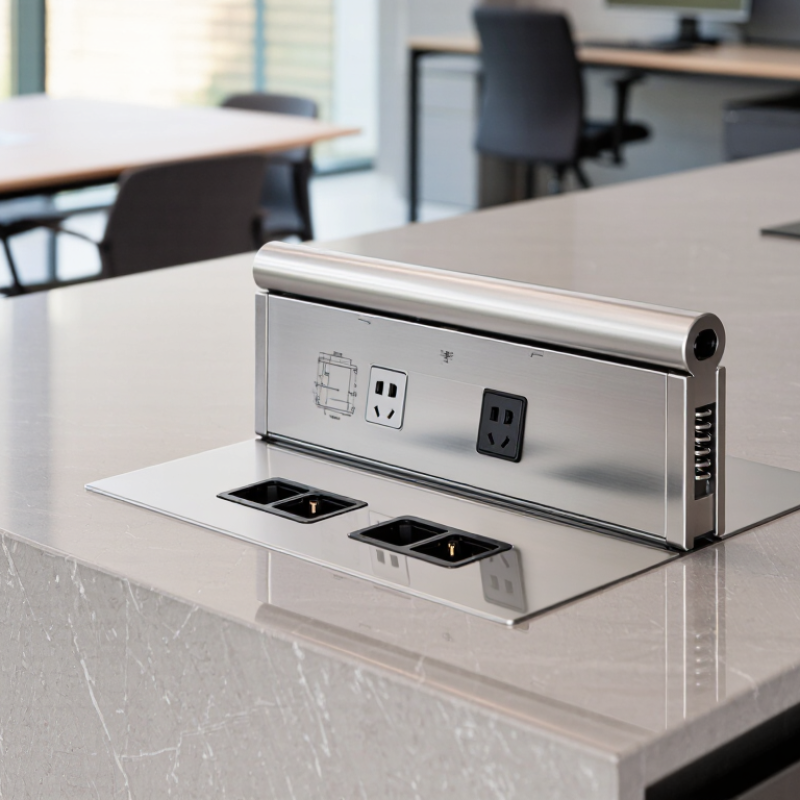
What Is a Pop-up Socket and How Does It Work?
A pop-up socket is a retractable power module installed inside a desk, kitchen island, conference table, or worktop. When closed, its cover sits nearly flush with the surface. Pressing the mechanism lifts power outlets, USB ports, or data connections into reach.
The working system is simple but carefully engineered. A spring, gas lift, or motor raises the housing. A locking collar keeps it stable during use. Sealed cable channels guide power safely below the furniture. Good units also include overload protection, heat-resistant materials, and child-safety shutters where required. Installation must match local electrical rules and socket standards, such as IEC 60884-1 requirements for plugs and socket-outlets.
GSMA’s The Mobile Economy 2024 reported 4.6 billion mobile internet users worldwide in 2023. That growth increases demand for convenient charging points in offices, hotels, and homes. However, convenience should not replace safety. The Global E-waste Monitor 2024 recorded 62 million tonnes of electronic waste in 2022, making repairable designs and replaceable modules increasingly important.
When comparing worldwide suppliers, buyers should request test reports, ingress ratings, load limits, warranty terms, and installation drawings. A supplier may offer an attractive finish but provide weak cable strain relief. That is easy to overlook. A practical inspection should check smooth travel, firm locking, heat buildup, and access for future servicing. Certification claims also need independent verification, because product descriptions alone are not reliable evidence.
Which Features Define a High-Quality Pop-up Socket Supplier?
A high-quality pop-up socket supplier begins with engineering, not attractive catalog images. Its products should use heat-resistant housings, stable lifting mechanisms, and electrical components with clear specifications. The socket should rise smoothly and sit firmly without wobbling. Small details matter.
During project evaluations, buyers should request working samples and installation drawings. A reliable supplier explains cable routing, countertop thickness, load limits, and maintenance access. It should provide inspection records, material data, and testing evidence against relevant safety standards. Vague answers deserve caution. A polished sample can still hide weak internal parts.
Consistency separates experienced suppliers from ordinary sellers. Check whether production tolerances remain stable across repeated samples. Ask about batch traceability, replacement parts, packaging protection, and realistic lead times. Clear communication matters when dimensions change late. So does after-sales support. A supplier that responds quickly before payment should remain available after installation.
Price alone misleads. Very cheap units may use thin metal, noisy motors, or unreliable charging modules. Yet higher prices do not guarantee better workmanship. This is where independent inspection helps. I would also examine unfinished areas, because suppliers often perfect visible surfaces first. That habit may seem overly cautious, but hidden defects become expensive once the countertop is sealed.
Who Are the Leading Pop-up Socket Suppliers Worldwide?
Leading pop-up socket suppliers worldwide are usually manufacturers with strong engineering teams, verified factories, and stable international logistics. They produce units for offices, hotels, kitchens, conference tables, and shared workspaces. Their product ranges often include power outlets, USB charging ports, data connections, and concealed cable systems.
Quality begins with the internal mechanism. Reliable suppliers test lifting cycles, socket alignment, heat resistance, and load performance. They also provide material details, wiring diagrams, inspection records, and certification documents for each target market. Ask about factory audits, sample approval, warranty terms, and replacement procedures. A polished catalog is not enough.
Not enough.
Experienced buyers should compare more than unit price. Check minimum order quantities, tooling costs, packaging strength, shipping schedules, and after-sales response times. Stainless steel may suit busy public areas, while treated aluminum can reduce weight. Small design gaps matter. Dust can enter the housing, and loose covers may create maintenance problems. I would request several samples before approving production, because one sample can hide inconsistent assembly. Some suppliers promise short lead times, yet seasonal capacity changes may cause delays. Written production milestones make the relationship more dependable. Suppliers serving multiple regions also need clear knowledge of local electrical requirements, since a socket designed for one market may not fit another. Availability matters. Reliability matters more.
How Do Global Pop-up Socket Suppliers Compare?
Global pop-up socket suppliers differ most in engineering depth, production control, and customer support. Price alone gives an incomplete picture.
Suppliers in established manufacturing regions often offer mature testing systems and stable component sourcing. Their sockets may include stronger lifting mechanisms, heat-resistant materials, and cleaner cable management. Other suppliers compete through flexible customization, lower minimum orders, and faster prototype changes. This can help smaller furniture producers test new designs without excessive inventory.
Ask each supplier for material specifications, load-cycle results, electrical safety reports, and sample photos. A reliable supplier should explain testing conditions clearly, not simply provide a certificate number. Check whether the report matches the actual socket model and production site. Small details matter. For example, a loose cover can collect dust around a conference-table opening.
Lead time also needs careful comparison. A supplier may quote seven days for production, excluding tooling, inspection, and shipping. That wording can create avoidable delays. Request a complete timeline with sample approval, mass production, packaging, and delivery stages. Communication quality is another practical measure. Slow answers before an order rarely improve afterward.
Some suppliers provide better after-sales support, including replacement parts, installation drawings, and troubleshooting videos. Others offer attractive prices but limited technical guidance. The cheapest option can become expensive after repeated returns. Still, premium pricing does not guarantee perfect performance. I would test samples under real office conditions, because published specifications may not reveal noise, wobbling, or difficult installation.
What Should Buyers Consider Before Choosing a Supplier?
Choosing a pop-up socket supplier requires more than comparing unit prices. A reliable supplier should provide clear load ratings, wiring diagrams, material specifications, and independent test reports. Ask whether each model has been tested against relevant IEC or national electrical standards. Certification alone is not enough. The certificate must match the exact model, voltage, and configuration.
Factory capability matters just as much. The ISO Survey 2023 recorded more than 1.2 million ISO 9001 certificates worldwide, but quality certification does not guarantee consistent production. Request recent inspection records, sample approval procedures, and evidence of batch traceability. I would also check hinge strength, cable strain relief, moisture resistance, and the number of raising cycles. A socket that feels smooth on day one may loosen after repeated use.
Electrical demand is changing. The International Energy Agency’s Electricity 2024 report projected global electricity demand growth of about 3.4% annually through 2026. Buyers should therefore avoid suppliers offering vague capacity claims. Confirm continuous load, peak load, heat management, and protection against overload. Small details matter, especially in office desks, kitchens, and shared workspaces. Ask for dimensional drawings before ordering; a few millimeters can prevent installation. Delivery history, spare-part support, and response times also deserve written commitments. I would not rely on attractive product photos alone. Some suppliers still provide incomplete documentation, and that should remain a warning sign.