Choosing an Outdoor Floor is not only a style decision. It affects drainage, comfort, maintenance, and how well a space handles changing weather. A patio that looks polished in a showroom may feel slippery after rain or become hot beneath bare feet. Global buyers also face different climates, installation practices, and shipping constraints. Details matter.
Outdoor living expert Joe Raboine, Belgard’s vice president of design, has discussed how outdoor spaces should support the way people live. The following is a paraphrase, not a direct quotation: “Good outdoor design connects practical performance with everyday use.” That idea helps frame this guide to stone, porcelain pavers, composite decking, and other popular options. Each material has trade-offs. Porcelain can offer a clean, consistent finish, while natural stone brings variation that buyers may value—or find difficult to match.
No single surface suits every project. A shaded garden terrace has different needs from a poolside walkway exposed to sun and splashes. Buyers should compare slip resistance, drainage, surface temperature, durability, and local installation requirements. Ask suppliers for product specifications and samples. Feel the texture. Check the finish in daylight. Even then, a sample cannot predict every site condition. This overview offers a grounded starting point, not a substitute for project-specific advice.
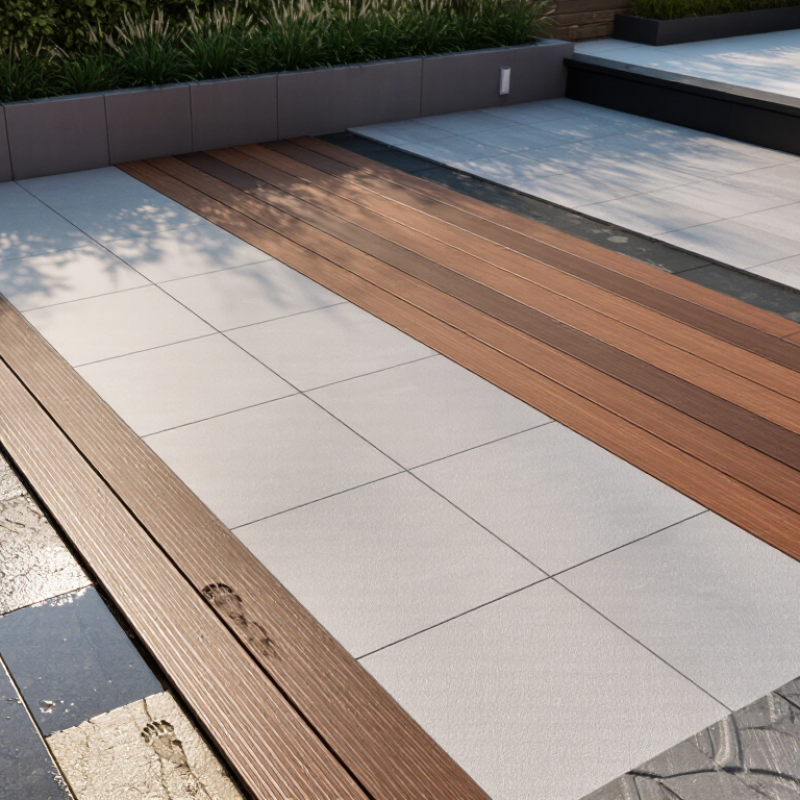
Outdoor flooring is any surface designed to make open-air areas safer and more usable. It may cover a patio, balcony, poolside, garden path, or rooftop terrace. Unlike indoor flooring, it must face rain, sunlight, temperature changes, and everyday dirt. No material is perfect in every setting.
Buyers can classify outdoor flooring by material, installation method, and intended use. Common material groups include natural stone, concrete, ceramic or porcelain tile, wood, and composite boards. Some products come as loose-laid tiles; others require adhesive, grout, or a supporting frame. Poolside surfaces often need reliable traction when wet, while balconies may benefit from lighter systems. Check drainage, expected foot traffic, and local climate before comparing appearance alone. A pale tile can look cool in a sample room, then feel harsh under strong sun.
Tips: Ask for slip-resistance and weather-performance details, and review installation instructions. Bring a sample outdoors. Wet it, leave it in direct sun, and check its texture and color. Also confirm the surface below can support the chosen system. Small details matter. A beautiful finish may still need more maintenance than you expect.

Outdoor flooring choices often come down to climate, maintenance, and how the space will be used. Porcelain pavers resist moisture and are easy to clean, but smooth finishes can become slippery when wet. Look for a textured surface and check that the product is rated for outdoor use. In sunny areas, darker tiles may grow uncomfortably hot under bare feet.
Natural stone, such as slate or granite, brings varied colors and a less uniform appearance. That variation can make matching replacement pieces difficult. Some stones also need periodic sealing to limit staining. Concrete pavers offer practical shapes and dependable strength; however, joints may collect weeds or grit if they are neglected. Wood decking feels warm and comfortable, but it needs regular care. Composite boards reduce some maintenance, though they can still heat up in direct sun. No option is perfect. The right choice depends on what owners are willing to maintain.
Tips: Ask for samples and view them outdoors at different times of day. Check drainage, surface grip, and installation requirements before ordering. A small sample cannot show every variation, so allow for surprises. That part is easy to overlook.
Common materials differ in durability, maintenance needs, and suitability for local climates. The chart shows indicative service-life ranges in years; actual performance depends on product quality, installation, use, and maintenance.
Top Outdoor Flooring Options for Global Buyers
Outdoor flooring faces more than foot traffic. Rain, strong sun, freeze-thaw cycles, and salty air can all shorten its service life. Porcelain pavers resist stains and moisture, and they clean easily with water and a mild detergent. Their hard surface can feel slippery when wet, so check the slip rating for the intended area. Natural stone offers a distinctive texture and can last for decades, but some varieties need periodic sealing. Even stone can chip. Installation quality matters as much as the material.
Composite decking generally needs less upkeep than many wood options. A sweep and occasional wash may be enough, though surface scratches and fading can still occur. Timber feels warm underfoot, but it usually needs regular cleaning and protective treatment to limit moisture damage and color loss. Local climate changes the calculation. A finish that lasts well in a dry region may struggle through repeated wet winters.
Tips: Compare maintenance instructions, slip resistance, and expected lifespan before buying. Ask for samples, then test how they feel when wet. Keep drainage in mind; standing water can undermine even a durable surface. One detail is easy to overlook: lighter flooring may show dirt less, yet glare can make a sunny patio uncomfortable. There is no perfect option, and the right trade-off depends on how the space is used.
Outdoor flooring works best when it matches local weather and daily use. In hot, sunny regions, pale stone or porcelain can reduce heat absorption, though even light surfaces may become uncomfortable under bare feet. Check slip resistance when wet, not just appearance. In freeze-thaw climates, choose materials rated for outdoor temperature changes and install them with proper drainage. Water trapped beneath a surface can cause cracking.
For humid or rainy areas, textured porcelain, sealed stone, or well-drained composite decking can help limit slipping and maintenance. Timber feels warm and natural, but it needs regular care; neglected boards may fade, warp, or grow slippery. Near pools, test samples with wet feet. Small details matter. A sample in a showroom cannot show how a surface feels after hours in direct sun.
Match the floor to its main job. A dining terrace needs stable furniture support and easy cleaning, while a play area benefits from a forgiving surface with secure edges. For balconies, check the structure’s weight limits before selecting heavy pavers. That step is easy to overlook. Climate guides the material, but installation often decides how long it performs. Even a suitable floor can fail if water has nowhere to go.
| Flooring option | Best suited climates | Suitable uses | Key strengths | Important considerations | Typical upkeep |
|---|---|---|---|---|---|
| Porcelain pavers | Hot, wet, coastal, and freeze–thaw climates when a suitable exterior-rated product is selected | Patios, pool surrounds, terraces, and outdoor dining areas | Low water absorption, stain resistance, and a wide choice of finishes; many products are designed for exterior use | Choose a slip-resistant surface for wet areas and confirm the product’s frost rating. Installation needs a stable, well-drained base. | Regular sweeping and washing; replace or refill joint material as needed. |
| Natural stone | Varies by stone type; dense, frost-resistant stone can suit cold regions, while some porous stones are better in mild climates | Patios, garden paths, terraces, and feature areas | Distinct natural appearance and substantial durability when correctly selected and installed | Porosity, surface texture, and freeze–thaw performance vary. Some stones may become hot in direct sun or need sealing. | Sweep and wash periodically; reseal when recommended for the specific stone. |
| Concrete pavers | Many climates, including regions with seasonal temperature changes, if the base and drainage are properly designed | Walkways, patios, courtyards, and selected light-duty vehicle areas | Modular units are relatively easy to repair or replace; available in varied shapes and finishes | Quality and color consistency vary. Poor drainage or an inadequately prepared base can lead to movement or settlement. | Sweep, wash, and maintain joints; sealing is optional and depends on the product and desired appearance. |
| Treated timber decking | Temperate and humid climates; suitability in severe weather depends on the timber, treatment, detailing, and maintenance | Raised decks, garden seating areas, and outdoor living spaces | Warm appearance and a comfortable surface underfoot; boards can be replaced individually | Moisture can contribute to swelling, decay, or surface slipperiness if drainage and ventilation are poor. Check local requirements for treatment and use. | Clean regularly; inspect fixings and finish, and recoat when required by the product instructions. |
| Composite decking | Temperate and humid climates; hot, sunny locations require checking the manufacturer’s heat and UV guidance | Residential decks, balconies, and outdoor seating areas | Typically needs no paint or stain; boards are available in wood-like colors and textures | Surface temperature can rise in strong sun. Allow for product-specific expansion, ventilation, and support requirements. | Remove debris and wash with suitable cleaners; follow care instructions to avoid damaging the surface. |
| Exterior-rated ceramic tile | Warm or moderate climates; cold regions require a tile specifically rated for exterior frost exposure | Covered patios, balconies, and exterior areas with a suitable substrate | Easy to clean and available in many colors and patterns | Use an exterior-rated, slip-resistant tile and compatible installation materials. Incorrect installation can lead to cracking or water-related damage. | Sweep and wash; inspect grout and replace damaged sections promptly. |
| Gravel or crushed stone | Dry and moderate climates; can also work in wet areas when the ground is prepared for drainage | Garden paths, informal seating areas, and low-cost landscape surfaces | Permeable surface that can be straightforward to install and repair | Loose aggregate may shift underfoot and is less suitable for smooth access or wheeled traffic without stabilizing measures. | Rake level, remove weeds, and replenish material as it disperses. |
Selection note: Climate suitability depends on the exact product, installation system, drainage, and local conditions. Confirm slip resistance, frost performance, structural loading, and applicable building requirements before purchase.
Outdoor flooring must suit its climate, intended use, and installation conditions. A porcelain tile that performs well on a sheltered patio may become slippery beside a pool. Ask suppliers for test results on slip resistance, water absorption, and freeze-thaw performance—not just attractive product photos. Check the test method and product thickness. Small details matter.
Sourcing also means checking consistency and supply risk. Request samples from the actual production line, then compare color, dimensions, edge finish, and batch tolerances. Confirm packaging, pallet weight, lead time, and replacement availability in writing. The World Bank’s Logistics Performance Index 2023 assessed 139 economies across customs, infrastructure, shipments, and other supply-chain factors. Delivery reliability can vary, even when product quality is strong. Build realistic time buffers.
Environmental data deserves equal scrutiny. The European Commission reports that construction and demolition waste accounts for more than one-third of all waste generated in the EU. Ask for documented recycled content, product lifespan, and disposal guidance where relevant. Compare the evidence, not broad sustainability claims. I would not choose on price alone. Yet a polished checklist cannot predict every installation issue; local drainage and subfloor preparation still need an experienced site review.
An exceptional record of quality and service for 35+ years.
© 2026 Excell Battery Co. All rights reserved.Privacy Statement