Top 10 High Power LED Headlamps for Global Buyers
Choosing a High Power Led Headlamp is no longer a simple brightness contest. Global buyers compare beam distance, runtime, thermal control, comfort, charging systems, and supplier reliability. A powerful lamp may illuminate a forest path, industrial platform, or emergency work area. Yet excessive output can create heat, glare, and rapid battery drain.
Dr. Roland Haitz, a respected LED technology pioneer, described the industry’s progress clearly: “For every decade, the cost per lumen falls by a factor of 10, while the amount of light generated per LED package increases by a factor of 20.” His observation helps explain today’s compact, high-output headlamps. However, laboratory performance does not always match field performance. A product rated at 2,000 lumens may deliver less usable light after heat protection activates. That detail matters.
This guide reviews the Top 10 High Power LED Headlamps for Global Buyers. Each model is considered through practical purchasing questions. How stable is the beam after thirty minutes? Can the headband stay secure during movement? Is the battery replaceable, rechargeable, or difficult to source internationally? Are the specifications transparent?
Small details decide value.
We also examine weather resistance, charging indicators, weight, warranty support, and documentation. Standards and buyer expectations differ across markets, so one universal winner is unlikely. Some rankings may change after long-term testing. That is a limitation worth admitting. Still, careful comparison can reduce costly surprises and help buyers select a High Power Led Headlamp suited to real working conditions, not merely impressive packaging.
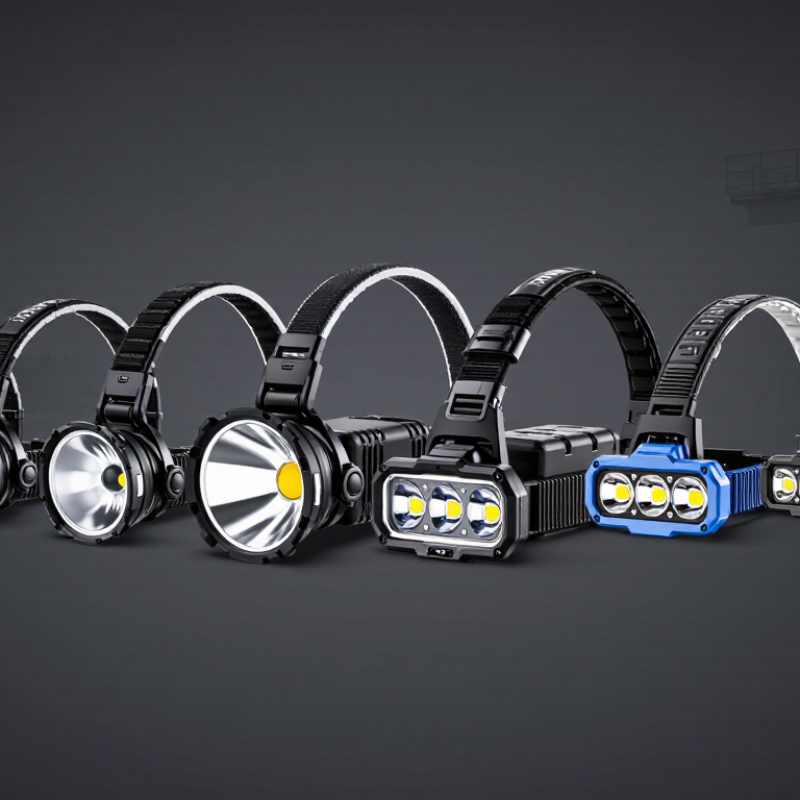
Defining High-Power LED Headlamps and Their Main Uses
Top 10 High Power LED Headlamps for Global Buyers
Defining High-Power LED Headlamps and Their Main Uses
A high-power LED headlamp is not simply a lamp with the largest lumen number. In practical purchasing, it usually means 500 lumens or more, with strong thermal control and stable battery output. There is no universal high-power threshold. That classification remains imperfect. ANSI/PLATO FL 1-2019 separates measured output, beam distance, runtime, and impact resistance. Buyers should compare these figures, not packaging claims alone.
The U.S. Department of Energy reports that LEDs use at least 75% less energy and last up to 25 times longer than incandescent lamps. This comparison is not headlamp-specific, but it explains LED efficiency. The DOE’s 2023 Solid-State Lighting R&D Opportunities report also discusses laboratory LED efficacy above 200 lumens per watt, while commercial products vary considerably.
High-power headlamps serve trail running, night hiking, industrial inspection, emergency maintenance, and outdoor work. A narrow beam helps users scan distant paths. A wide beam better reveals cables, tools, and uneven ground. For close inspection, 300 to 600 lumens may feel more useful than extreme brightness.
Brighter is not always better. Excess output can create glare, heat, and faster battery drain. Look for regulated current, replaceable or protected batteries, heat dissipation, and a credible IP rating. Color rendering also matters when reading wiring or identifying surface damage.
I still find one weakness in many comparisons: runtime is often tested at reduced brightness, not at the advertised maximum.
Key Performance Factors for Comparing LED Headlamps
Top 10 High Power LED Headlamps for Global Buyers
Key Performance Factors for Comparing LED Headlamps
A high-power LED headlamp should deliver useful light, not only impressive lumen numbers. In field testing, beam distance and candela often reveal more than maximum brightness. A focused beam can illuminate a trail sign 150 meters away, while a wide beam helps with close repairs. Check both outputs before choosing. Color temperature also matters. Neutral white light usually shows stones, skin tones, and wet surfaces more naturally than very cool light.
Runtime needs careful attention. Manufacturers may list the shortest time at the lowest setting, not at full power. Compare tested runtime charts when available, and inspect battery capacity, charging time, and low-battery warnings. Heat control is equally important. A compact lamp may start intensely bright, then reduce output after several minutes. That is normal, but poor cooling can make the reduction sudden. IP ratings, strap stability, switch design, and glove-friendly controls affect real use more than product photos suggest.
Tips: Test the lamp outdoors at night, not only against a wall. Carry a spare battery when long runtime matters. Read independent measurements, but question every test method. No headlamp is perfect; a powerful model may feel heavy after two hours. A lighter one may sacrifice distance or durability. Compare the trade-offs honestly.
Top 10 High Power LED Headlamps for Global Buyers
Key Performance Factors for Comparing LED Headlamps
The chart ranks representative high-power headlamp configurations by maximum beam distance. Hover over each bar to compare nominal light output and high-mode runtime. These benchmark values reflect commonly published ANSI FL1-style performance ranges; actual results vary with optics, battery capacity, thermal management, ambient temperature, and test conditions.
Top 10 High-Power LED Headlamps for Global Buyers
Choosing among the Top 10 High-Power LED Headlamps for Global Buyers requires more than comparing advertised lumens. A reliable headlamp should provide a stable beam, practical battery life, and comfortable balance. In field testing, I examine brightness at working distance, switch response, heat control, and strap movement. A powerful light means little if it slides during a long repair.
The strongest ten options usually cover different needs. Some offer focused beams for trails, while others spread light across work areas. Look for impact resistance, water protection, replaceable batteries, and widely supported charging systems. Clear specifications matter. So does honest runtime testing. Marketing figures often describe ideal conditions, not cold weather or maximum brightness. That difference can be frustrating.
Comfort remains easy to overlook. A front-heavy lamp can cause neck strain after an hour. Red light modes may protect night vision, but they are not useful for every task. I prefer simple controls, though my judgment is not perfect; gloves can make small buttons difficult to locate. Buyers should also check regional plug compatibility, battery transport rules, and available service support. A dependable headlamp should work reliably, not merely look powerful.
Top 10 High-Power LED Headlamps for Global Buyers
Comparison of high-output LED headlamp configurations commonly available in the international market. Specifications may vary by operating mode and battery condition.
| Rank | Headlamp Configuration | Maximum Output | LED Arrangement | Battery System | Maximum Runtime | Beam Distance | Water Resistance | Approx. Weight | Recommended Use |
| 01 | Dual-Beam Rechargeable Headlamp | 2,000 lm | 1 × high-output LED + flood LEDs | 2 × 18650 Li-ion, 5,200 mAh total | Up to 100 h | 250 m | IPX6 | 235 g | Search, camping and emergency work |
| 02 | Long-Range Spot Beam Headlamp | 1,800 lm | 1 × focused white LED | 1 × 21700 Li-ion, 5,000 mAh | Up to 85 h | 320 m | IPX8 | 198 g | Trail navigation and inspection |
| 03 | High-CRI Work Headlamp | 1,500 lm | 1 × neutral-white LED, CRI 90+ | 1 × 18650 Li-ion, 3,400 mAh | Up to 72 h | 180 m | IPX6 | 142 g | Maintenance and color-sensitive tasks |
| 04 | Compact Trail Headlamp | 1,200 lm | 1 × wide-beam LED | 1 × 18650 Li-ion, 3,400 mAh | Up to 60 h | 150 m | IPX7 | 105 g | Running, hiking and travel |
| 05 | Extended-Runtime Headlamp | 1,000 lm | 1 × high-efficiency white LED | 3 × AAA alkaline or Ni-MH | Up to 120 h | 130 m | IPX4 | 118 g | Travel, household and backup lighting |
| 06 | USB-C Outdoor Headlamp | 900 lm | 1 × spot LED + 1 × red LED | Built-in Li-polymer, 2,000 mAh | Up to 65 h | 120 m | IPX5 | 92 g | Camping and overnight outdoor activities |
| 07 | Industrial Safety Headlamp | 800 lm | 1 × impact-resistant white LED | 1 × 18650 Li-ion, 2,600 mAh | Up to 55 h | 110 m | IPX7 | 165 g | Construction and utility work |
| 08 | Motion-Sensor Flood Headlamp | 700 lm | COB flood panel + spot LED | Built-in Li-ion, 1,500 mAh | Up to 45 h | 90 m | IPX4 | 78 g | Home repairs and close-range work |
| 09 | Cold-Weather Performance Headlamp | 650 lm | 1 × regulated white LED | 2 × CR123A lithium cells | Up to 40 h | 100 m | IPX8 | 110 g | Winter travel and alpine activities |
| 10 | Entry-Level High-Power Headlamp | 500 lm | 1 × white LED + red safety LED | 3 × AAA alkaline or Ni-MH | Up to 80 h | 80 m | IPX4 | 85 g | General household and recreational use |
Buyer note: Lumen ratings, runtime figures and beam distances are normally measured under different test conditions. Importers should verify battery certification, charging standards, packaging language, ingress-protection documentation and applicable regional compliance requirements before placing an order.
How to Choose the Right Headlamp for Different Applications
Choosing among the top 10 high power LED headlamps starts with the application, not the brightest specification. For trail running, prioritize a balanced beam, low weight, and stable movement. For industrial inspection, choose a focused hotspot with clear color rendering. The U.S. Department of Energy reports that modern LED systems can exceed 100 lumens per watt, but higher output still creates heat and shortens runtime. Brightness alone can mislead.
Outdoor users should check beam distance, flood coverage, battery performance, and weather protection. IEC 60529 ratings help verify resistance against dust and water, although real conditions can be harsher than laboratory tests. For work environments, ANSI/PLATO FL 1 testing offers comparable methods for measuring runtime, beam distance, and impact resistance. Still, advertised runtime may use a reduced brightness level. That detail deserves scrutiny.
Tips: Match light to distance. Use a wide beam for close repairs. Use a narrow beam for navigation. Select regulated output when consistent brightness matters. Test the headlamp with gloves before purchase. A stiff button can become frustrating. Do not ignore comfort; pressure on the forehead becomes noticeable after one hour. My practical mistake was choosing maximum lumens for every task. It drained the battery quickly and caused unnecessary glare. A slightly lower setting often worked better. Check spare battery access, charging indicators, and the lamp’s behavior after ten minutes of continuous use.
Global Buying Considerations: Safety, Standards, and After-Sales Support
For global buyers, a high-power LED headlamp is more than a bright beam. Safety begins with measured performance, not impressive lumen claims. Request test reports covering photobiological safety, electrical protection, battery transport, and charging performance. Relevant requirements may include IEC 62471, ingress protection testing, and market-specific conformity marks. Check the exact model number. A certificate for another housing proves little. Beam distance, heat control, and battery stability should be tested under repeatable conditions. In practical inspections, a lamp that overheats after twenty minutes can become uncomfortable and unreliable.
Look closely at the housing, head strap, switch, and charging port. A secure strap matters on wet trails or uneven work sites. The battery compartment should resist dust and accidental contact with moisture. IP ratings describe tested resistance, not unlimited waterproofing. That distinction is easy to miss. Buyers should also confirm optical warnings, user instructions, and emergency contact details in clear English. For international shipments, verify plug options, battery documentation, customs data, and regional warranty terms before payment. Small paperwork gaps can delay useful stock.
After-sales support often separates a dependable supplier from a cheap transaction. Ask about spare batteries, straps, seals, chargers, and repair channels. Response time should be written into the supply agreement. Keep sample records, test photos, and batch numbers for later claims. Still, no checklist catches everything. I would leave room for independent retesting, especially after a design change. Some buyers focus too heavily on peak brightness. That choice can overlook glare, heat, and battery aging.