10 Tips for Buying Modern Lights in Bulk?
Buying Modern Lights in bulk can lower unit costs, but a low price alone does not make a purchase successful. One mismatched finish or incompatible dimmer can affect an entire room. Architect Louis Kahn observed, “A room is not a room without natural light.” His thought is a useful reminder: fixtures should work with daylight, room size, and the way people use each space.
This guide presents 10 practical checks for comparing suppliers, specifications, and sample products before placing a large order. Look closely at color temperature, brightness, beam spread, materials, and dimming compatibility. Ask for written specifications and warranty details, then compare them against your project requirements. Test samples first. A warm-white pendant may look inviting in a showroom yet feel too yellow beside cooler task lighting. Small details matter. Confirm carton quantities, lead times, replacement policies, and packaging requirements; a delayed shipment can disrupt installation even when the fixtures are excellent.
Bulk buying also calls for restraint. Ordering every fixture at once may seem efficient, but untested products can create costly rework. Compare the delivered cost, not just the listed price, and keep records of supplier commitments. This checklist is a starting point, not a substitute for checking site conditions or consulting a qualified lighting professional. Some advice may need adjusting for your space. The aim is simple: choose Modern Lights that perform consistently, suit the design, and arrive when the project needs them.
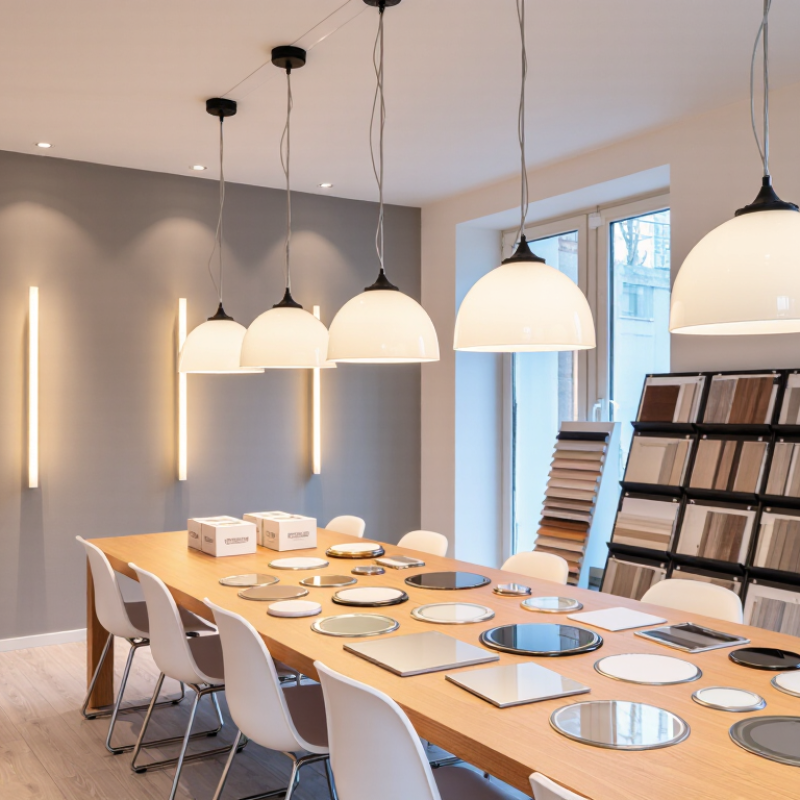
Define Lighting Needs by Space, Brightness, Color, and Controls
Before ordering modern lights in bulk, map each space rather than choosing one fixture for the whole building. A kitchen work area needs clear, even light; a lounge may feel better with softer pools of illumination. Note ceiling height, surface colors, task locations, and existing wiring. Measure twice. A bright white wall can reflect more light than a dark timber ceiling, so identical fixtures may look surprisingly different.
Check lumen output, not wattage alone, when comparing brightness. For a small meeting room, several moderate fixtures can reduce harsh shadows better than one powerful fitting. Color temperature matters too: around 2700–3000 K often feels warm, while 3500–4000 K can suit focused work. These ranges are starting points, not rules. I still find it easy to underestimate how much personal preference affects a room. Keep samples. Test them after dark, with the actual finishes in place.
Decide how lights will be controlled before confirming quantities. Basic wall switches may be enough for storage areas, while dimming or occupancy sensors can help in shared spaces. Verify that the fixtures, drivers, and controls are compatible; “dimmable” does not guarantee smooth performance with every control system. Ask for written specifications and a sample batch, then compare brightness, color, and finish across units. Small differences become noticeable when dozens of lights are installed together.
Compare LED Efficiency: DOE Says LEDs Use at Least 75% Less Energy
When buying modern lights in bulk, compare energy use before comparing appearance. The U.S. Department of Energy says LEDs use at least 75% less energy than incandescent lighting. That comparison matters: it does not mean every LED uses 75% less than every other light source. Check each fixture’s wattage and expected daily use, then estimate the total for the rooms you are outfitting. Small details matter. A lower-wattage fixture can reduce operating costs, but only if its brightness suits the space.
Tip: Match brightness and color temperature across rooms before placing a large order. Look at lumens for light output, not watts alone. A sample fixture can reveal whether a hallway feels too cold or a work area too dim. Measure before ordering. I once focused too much on unit price and missed how different one finish looked under warm evening light. That was a preventable mistake.
For bulk purchases, review dimmer compatibility, mounting dimensions, and replacement-part availability. Ask for the product specifications in writing, and keep a copy with your order records. Calculate possible energy savings using your actual electricity rate and hours of use; the result is an estimate, not a guarantee. Also check delivery quantities and inspect a few fixtures promptly. A small test order may feel slower, but it can prevent dozens of mismatched lights arriving at once.
Verify Safety Certifications, Dimming Compatibility, and Local Code Requirements
When buying modern lights in bulk, check each fixture’s safety certification before comparing unit prices. Request a model-specific test report and confirm the certification mark appears on the product, not only its packaging. A recognized listing can show that a fixture was tested to applicable safety standards, but it does not automatically satisfy every local code. Ask for documentation covering voltage, installation location, and intended use. Keep the paperwork with the purchase order; it helps resolve substitutions and inspection questions later.
Tip: Order a sample first. Test it with the exact dimmer type planned for the project, including at low brightness. Check for flicker, buzzing, delayed starts, or sudden shutoff. The U.S. Department of Energy’s Energy Saver guidance says LEDs use at least 75% less energy and can last up to 25 times longer than incandescent bulbs. Those benefits depend on suitable controls and operating conditions. A sample may still behave differently across a large batch, so confirm the production model matches.
Before placing the order, ask the local building or electrical authority which code edition and permit rules apply. Requirements can differ by jurisdiction and by space, such as damp rooms, corridors, or emergency routes. Confirm fixture ratings, wiring methods, and dimming controls against the project plans. It is easy to overlook one small detail. That is worth checking twice.
10 Tips for Buying Modern Lights in Bulk
Verify safety certifications, dimming compatibility, and local code requirements before placing a bulk order.
Checklist counts: confirm the fixture’s recognized certification and exact model listing; check dimmer type and minimum load; and verify locally adopted electrical and energy codes. Requirements vary by jurisdiction.
Calculate Bulk-Buying Costs, Including Installation, Energy, and Replacement
A low price per fixture can hide a high total cost. Before ordering, list the quantity, wattage, expected daily operating hours, and local electricity rate. Estimate annual energy use with this formula: total watts ÷ 1,000 × daily hours × 365. Then multiply the result by your electricity rate. For example, 40 fixtures rated at 20 watts, running eight hours daily, use about 2,336 kilowatt-hours each year. That adds up.
Add installation costs to the purchase estimate. Ask an electrician to assess labor, wiring, mounting height, controls, and access equipment. A warehouse with high ceilings may need lifts, while a small office may not. Include shipping, storage, and any costs to remove old fixtures. Keep a buffer. Site conditions can change the quote, so request an itemized estimate rather than relying on a per-light labor guess.
Replacement costs matter too. Check the rated lifespan, warranty terms, and whether drivers or other components can be replaced separately. Estimate how many units might need attention over your planning period, then include parts, labor, and disposal costs. Compare options over the same number of years, not just by upfront price. The estimate will still be imperfect; usage patterns and repair needs can surprise you. Record your assumptions, and revisit them after a few months of actual energy bills.
Set Delivery, Sample Approval, and Inspection Plans Before Ordering
Buying modern lights in bulk is not only about choosing the right finish and brightness. Delivery, sample approval, and inspection plans can prevent avoidable delays. Ask the supplier to confirm production and shipping dates in writing, including how cartons will be labeled. If fixtures are needed in stages, agree on delivery quantities and dates before production begins. A vague delivery window can disrupt installation schedules.
Tips: Approve a production sample before the full run. Check its dimensions, finish, color temperature, and packaging. Keep the approved sample or clear reference photos for comparison. Record who will sign off and how quickly they must respond. This step may feel slow. It is usually cheaper than discovering a mismatch across dozens of cartons.
Set inspection rules before the order ships. Decide whether checks happen at the factory, on arrival, or both. Specify how many units will be examined, and what counts as damage or a defect. Ask for photos of carton labels and packed goods before dispatch. On arrival, inspect a few boxes from different parts of the shipment, not just the easiest ones. Note problems promptly and keep packaging until claims are resolved. Plans cannot prevent every mistake; unclear expectations can make small problems harder to fix.