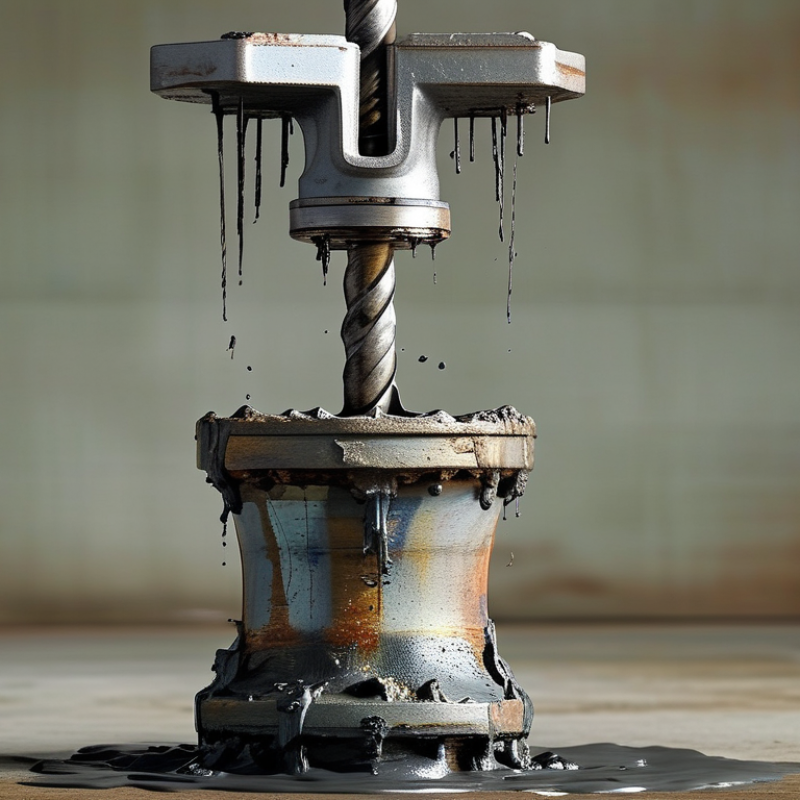
| Component Definition | A mud pump piston rod is a reciprocating steel rod that connects the power-end drive assembly or extension rod to the fluid-end piston. | It transfers linear motion and pumping force to the piston so drilling fluid can be displaced during each stroke. | Incorrect dimensions, damaged threads, excessive wear, or unsuitable material selection. | Reduced pump output, abnormal vibration, leakage, or premature piston and packing failure. | Confirm the rod dimensions, thread specification, surface condition, and material requirements before installation. |
| Working Principle | The crankshaft and connecting-rod mechanism convert rotary motion into reciprocating motion. The piston rod then moves the piston forward and backward inside the liner. | The forward stroke raises fluid pressure and pushes drilling mud toward the discharge manifold. The return stroke draws mud through the suction valve. | Improper timing, restricted suction flow, valve problems, or excessive mechanical resistance. | Pressure fluctuation, irregular flow, pulsation, knocking, or loss of volumetric efficiency. | Check the complete power-end, fluid-end, suction system, valves, liners, and piston assembly rather than inspecting the rod alone. |
| Load and Service Conditions | The rod is exposed to repeated tensile and compressive loads, bending forces, vibration, abrasive mud, moisture, and corrosive contaminants. | Reliable operation depends on maintaining correct alignment and preventing side loading or contamination at the sealing area. | Fatigue cracks, corrosion pitting, bending, galling, or accelerated surface wear. | Frequent seal replacement, rod runout, unusual noise, heat at the packing area, or visible scoring. | Maintain correct alignment, use clean lubricating or cooling fluid where specified, and keep abrasive solids away from the rod surface. |
| Rod Surface and Finish | The sealing portion should have a smooth, uniform surface without deep scratches, corrosion pits, raised metal, or sharp edges. | A suitable surface allows packing or rod seals to retain pressure while minimizing friction and heat generation. | Scoring, rust, pitting, surface dents, or roughness caused by abrasive particles. | Persistent fluid leakage, damaged packing, seal extrusion, or rapid wear of the piston rod. | Clean the rod before inspection. Polish only minor surface imperfections when permitted; replace the rod if damage exceeds the applicable service limit. |
| Rod Alignment | The piston rod should remain concentric with the liner, piston, packing, and extension-rod assembly during the complete stroke. | Correct alignment distributes load evenly and prevents the rod from rubbing against the packing housing or liner components. | Misalignment from worn guides, incorrect assembly, loose fasteners, bent components, or foundation movement. | Uneven packing wear, one-sided piston wear, rod vibration, leakage, and elevated operating temperature. | Check alignment during major maintenance and after component replacement. Inspect guides, connections, and mounting surfaces for looseness or wear. |
| Threaded Connection | Threads connect the piston rod to the piston, extension rod, rod clamp, or related components, depending on the pump design. | The connection transfers reciprocating force and must remain tight throughout repeated pressure and vibration cycles. | Thread galling, cross-threading, cracked threads, insufficient tightening, or thread damage caused by contamination. | Looseness, impact noise, piston movement, abnormal wear, or unexpected loss of pumping capacity. | Clean and inspect threads, use the specified tightening procedure, apply only the approved thread compound, and never force damaged threads into engagement. |
| Piston and Rod Connection | The piston is secured to the rod so that the piston can withstand alternating pressure loads without shifting or tilting. | A secure connection keeps the piston centered in the liner and supports stable suction and discharge performance. | Loose retaining hardware, worn connection surfaces, incorrect installation, or piston deformation. | Metallic knocking, uneven liner wear, piston leakage, pressure pulsation, or repeated piston failure. | Inspect the connection whenever the piston is changed. Verify seating, locking features, torque requirements, and the condition of mating surfaces. |
| Packing or Rod Seal Area | Rod packing or seals limit fluid leakage where the reciprocating rod passes through the fluid-end or seal housing. | Effective sealing helps maintain pressure and prevents drilling mud from entering areas that require protection. | Worn packing, incorrect packing installation, insufficient cooling or lubrication, rod scoring, or excessive rod movement. | Visible leakage, spray, heat, smoke, rapid packing wear, or contamination near the power-end side. | Inspect leakage regularly, replace packing as a complete compatible set when required, maintain the specified cooling or lubrication flow, and correct the underlying rod or alignment problem. |
| Bending and Runout | A piston rod should remain straight enough to operate within the pump manufacturer’s specified runout and alignment limits. | Low runout reduces side loading on seals, packing, piston, liner, and guide components. | Overload, impact during handling, incorrect storage, misalignment, or operation with damaged internal parts. | Repeated seal failure, uneven wear patterns, vibration, and difficulty installing the piston or packing. | Measure runout with suitable precision equipment during overhaul. Do not straighten a critical rod unless an approved repair procedure and inspection method are available. |
| Corrosion and Erosion | Water, salts, corrosive drilling-fluid additives, oxygen, and abrasive solids can attack the rod surface and nearby components. | Corrosion pits and erosion marks create stress concentrations and damage sealing surfaces. | Standing fluid, poor cleaning, unsuitable storage, contaminated wash fluid, or abrasive mud circulation. | Rust discoloration, pitting, leakage, rough movement, or a shortened service life. | Wash and dry exposed components, protect clean metal during storage, control fluid contamination, and remove corrosion before it becomes a deep surface defect. |
| Lubrication and Cooling | Some piston-rod and packing arrangements require a controlled supply of clean cooling or lubricating fluid. | Proper cooling and lubrication reduce friction, remove heat, and help protect packing and the rod surface. | Blocked lines, incorrect fluid, inadequate flow, excessive flow, contaminated fluid, or improper pressure. | Hot packing, leakage, glazed or hardened packing, accelerated rod wear, or fluid contamination. | Check flow, pressure, cleanliness, and routing according to the pump design. Keep the system free of blockages and use the specified service fluid. |
| Inspection During Operation | Routine observation should include leakage, vibration, temperature, noise, pressure stability, and visible rod movement. | Trend monitoring can identify developing problems before they cause a rod, piston, liner, or packing failure. | Delayed response to small leaks, abnormal vibration, pressure changes, or rising temperature. | Progressively increasing leakage, irregular pressure, unusual sound, or increased maintenance frequency. | Record operating observations and compare them with normal equipment trends. Stop the pump if there is a serious leak, sudden vibration, or suspected structural damage. |
| Cleaning Procedure | Drilling mud and abrasive solids should be removed from exposed rod surfaces and adjacent sealing components during planned cleaning. | Clean surfaces make cracks, pitting, scoring, and leakage easier to detect. | High-pressure cleaning directed at sensitive seals, trapped solids, or recontamination after cleaning. | Hidden surface damage, premature seal wear, or contamination of the power-end area. | Use a suitable cleaning method, avoid forcing contaminants through seals, dry the rod, and inspect the surface before reassembly. |
| Storage and Handling | Replacement rods should be supported to prevent bending and protected from impact, moisture, and contamination. | Correct handling preserves straightness, thread integrity, and the sealing surface. | Dropping, unsupported storage, contact with hard surfaces, exposed threads, or condensation. | Installation difficulty, thread damage, runout, corrosion, or immediate leakage after installation. | Use protective caps on threads and sealing surfaces, store rods horizontally with adequate supports, keep them dry, and avoid dragging them across the ground. |
| Replacement Decision | Replacement is normally required when the rod has unacceptable bending, cracks, severe pitting, deep scoring, damaged threads, or dimensions below the service limit. | Installing a sound rod protects the piston, liner, packing, and pump pressure capability. | Reusing a damaged rod because the defect appears minor or replacing seals without correcting rod damage. | Repeated leakage or component failure soon after maintenance. | Compare inspection measurements with the applicable service limits. Replace the rod when repair cannot reliably restore strength, geometry, surface condition, or thread integrity. |
| Safety Requirement | A mud pump contains stored hydraulic, mechanical, and pressure energy even when it is not actively pumping. | Safe isolation prevents unexpected movement, fluid release, and contact with moving components. | Working on the rod or packing while the pump is pressurized, rotating, or inadequately isolated. | Potential crushing, injection, impact, chemical exposure, or serious equipment damage. | Critical
Shut down and isolate the pump, relieve pressure, drain or flush hazardous fluid, apply lockout and tagout procedures, and follow the site-specific maintenance and safety requirements. |