Choosing China’s top Fence Posts manufacturers requires more than comparing catalogue prices. The right supplier must combine material control, production consistency, testing, and dependable export experience. This matters because fence posts face constant stress from wind, soil moisture, frost, livestock, and repeated handling during installation.
Grand View Research estimates that the global fencing market was worth approximately USD 30 billion in 2023. Its report also projects steady growth through 2030, supported by construction, agriculture, infrastructure, and security applications. These figures indicate strong demand, but market growth does not guarantee reliable manufacturing. Definitions and regional coverage differ between reports. That detail is easy to overlook.
A practical evaluation should begin with the post’s working environment. Ask whether the manufacturer uses hot-dip galvanized steel, powder-coated steel, aluminum, concrete, or treated wood. Request coating thickness records, steel grade certificates, weld inspection results, and salt-spray or corrosion-testing details. For galvanized components, ISO 1461 can provide a useful reference. For structural steel, ASTM or EN specifications may apply, depending on the destination market. Do not accept vague claims such as “premium quality.”
Research and Markets reports continued investment in fencing products across residential, agricultural, and commercial sectors. However, supplier selection still depends on evidence. Examine factory audit records, sample dimensions, packaging photographs, and independent inspection options. A strong manufacturer should explain tolerances clearly. It should also identify weaknesses.
That honesty matters. A low-cost post may look attractive, yet thin walls, poor coating adhesion, or inaccurate holes can increase installation labor. Compare total delivered cost, not only unit price. The best China supplier is not always the largest one. It is the manufacturer that matches your soil conditions, load requirements, standards, volume, and after-sales expectations with documented proof.
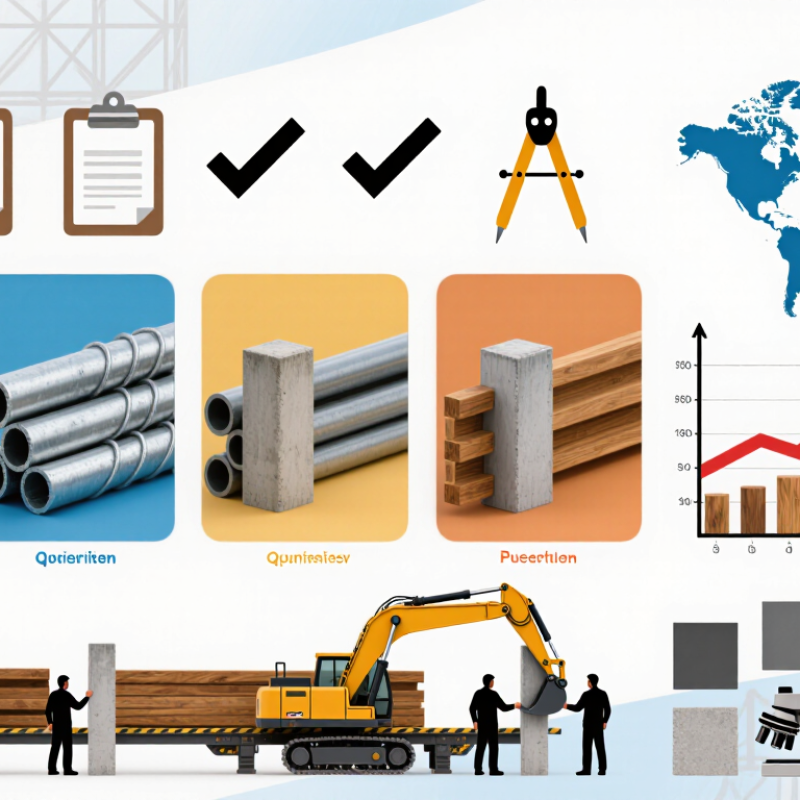
Fence posts determine a fence’s stability, service life, and appearance. Timber posts suit gardens, rural boundaries, and temporary enclosures. They are easy to cut and install, but moisture can cause decay near ground level. Steel posts provide strong support for security fences, mesh panels, and windy areas. Galvanized coatings help reduce rust, especially in humid conditions.
Concrete posts work well for permanent boundaries, agricultural fencing, and heavy panels. They resist rot, insects, and impact, but their weight increases transport and installation costs. Vinyl and composite posts offer clean surfaces for residential gardens and coastal properties. However, some lightweight products may bend under strong wind. The best choice depends on fence height, soil condition, panel weight, and local weather.
Tips: Check the post’s wall thickness, coating standard, and tested load data. Ask manufacturers for installation drawings and sample pieces. Measure ground moisture before selecting timber. For steel, inspect welds and coating coverage, including hidden edges. A reliable supplier should explain tolerances, packaging, and replacement procedures clearly. Do not choose only by price. In practice, a cheaper post can create expensive repairs after one harsh season. I would also review drainage and concrete depth carefully; these details are easy to overlook, and even a high-quality post may fail in poorly prepared ground.
Choosing a Chinese fence post manufacturer requires more than checking price or catalog photos. World Steel Association data reports China produced about 1.019 billion tonnes of crude steel in 2023. This scale supports strong supply capacity, but capacity does not guarantee consistent posts. Ask for ISO 9001 certification, production records, and material certificates such as EN 10204 3.1. Check steel grade, wall thickness, post weight, and dimensional tolerance. A reliable factory should explain these details clearly.
For outdoor projects, examine corrosion protection closely. ISO 1461 and ASTM A123 provide useful references for hot-dip galvanized coatings. Request coating-thickness results from an independent laboratory, not only an internal spreadsheet. Inspect weld penetration, cap shape, drainage holes, and cut-edge treatment. A polished brochure can still hide weak welds. In my experience, sample testing often reveals more than a factory tour. Still, one sample cannot represent every production batch. That limitation deserves attention.
Tips: Order pre-production samples and compare them with approved drawings. Use a third-party inspection before shipment. Confirm packaging, bundle weight, and loading photos. Review at least three recent project references. Ask how rejected posts are recorded and corrected. If answers remain vague, pause the purchase. A low quotation may reflect thinner steel, lighter coating, or weaker quality control.
Choosing among China’s top fence post manufacturers requires more than comparing prices. Material selection sets the post’s service life.
The World Steel Association reported about 1.89 billion tonnes of crude steel production worldwide in 2023. This scale supports steel availability, but it does not guarantee quality. Ask whether posts use structural-grade steel, recycled content, or verified virgin material.
For humid soil, hot-dip galvanized steel usually offers stronger corrosion protection than ordinary painted steel. ISO 1461 defines requirements for zinc coatings on fabricated iron and steel products. Check coating thickness records, not just shiny surfaces.
Manufacturing details reveal a supplier’s discipline. Reliable factories control tube forming, welding, galvanizing, cutting, and dimensional inspection. Look for continuous welds, clean drainage holes, and consistent wall thickness.
The American Galvanizers Association reports that properly galvanized steel can provide more than 50 years of maintenance-free service in many environments, although soil chemistry can reduce that period. Conditions matter.
A serious manufacturer should provide salt-spray results, coating measurements, tensile data, and batch traceability. Independent laboratory testing adds credibility, especially for posts exposed to wind, livestock impact, or heavy gates.
Do not overlook small defects. A slightly misaligned hole can weaken installation efficiency. Powder coating may improve appearance, yet poor surface preparation can cause early peeling. No checklist is perfect. Visit the plant when possible, inspect random samples, and compare laboratory claims with field performance.
When comparing Chinese fence post manufacturers, begin with the complete price, not the factory quote alone. Request itemized costs for materials, surface treatment, packaging, tooling, inspection, and shipping. A low price can hide thinner steel, weaker coatings, or inconsistent dimensions. Ask for a production sample and measure its wall thickness, length, hole spacing, and coating finish. Numbers can mislead. Compare equivalent specifications.
Certifications should match the actual product and manufacturing site. Check issuing bodies, validity dates, test standards, and certificate numbers independently. Request recent material reports, quality records, and batch traceability documents. A certificate image alone proves little. During a factory video call or audit, observe welding stations, coating equipment, storage areas, and final inspection procedures.
Capacity requires evidence too. Ask about monthly output, active orders, production lines, workforce, and realistic lead times. A large facility may still have limited availability during peak seasons. Confirm whether promised capacity includes subcontracted work. That detail is often overlooked. Smaller suppliers can sometimes provide closer communication, but may struggle with sudden volume increases. Build a comparison sheet and score price, certification reliability, defect controls, and delivery performance. Leave room for uncertainty. The cheapest offer may not be the most economical after replacement costs and delays.
Choosing a fence post supplier requires more than comparing online prices. Start by defining post dimensions, coating needs, load requirements, and delivery location. Record these details in a clear specification sheet. Ask for material grades, coating thickness, tolerance data, and production standards. A reliable manufacturer should provide traceable documents, not only attractive product photos. Request recent test reports and confirm that they match the proposed product. Do not accept vague claims. I have learned that polished catalogs can hide inconsistent wall thickness or weak surface treatment. That risk matters.
Verify the factory through a live video call, site visit, or independent audit. Check raw material storage, welding areas, coating lines, and finished-goods control. Ask for production samples from different batches. Measure their length, weight, hole position, and coating condition yourself. Small differences can affect installation. Review shipping records and contact at least two recent customers, with permission. Their comments often reveal delays or communication problems. Confirm packaging details, inspection points, payment stages, and replacement procedures in writing. If a supplier avoids direct questions, treat that as useful evidence. Keep every promise documented. One practical weakness remains: photos cannot prove long-term durability. For important orders, use an independent pre-shipment inspection. This costs more. Yet it may prevent expensive rework.
| Step | Evaluation Dimension | What to Verify | Objective Selection Criteria | Recommended Evidence | Suggested Weight |
|---|---|---|---|---|---|
| 1 | Product Specification Fit | Confirm whether the supplier can produce the required post profile, length, wall thickness, hole pattern, end treatment, and installation accessories. | All critical dimensions and tolerances must match the approved technical drawing before quotation comparison. | Dimensioned drawings, product data sheets, tolerance tables, and a pre-production sample. | 15% |
| 2 | Material and Mechanical Performance | Check the steel or other material grade, yield strength, tensile strength, weldability, and resistance to expected wind, soil, impact, or livestock loads. | Material grade and mechanical requirements must be stated in the purchase specification and supported by test documentation. | Mill test certificates, third-party laboratory reports, batch traceability records, and engineering calculations where required. | 15% |
| 3 | Corrosion Protection | Evaluate the selected coating system, coating thickness, surface preparation, edge coverage, and suitability for indoor, outdoor, coastal, or high-moisture environments. | The coating type and minimum coating requirement must be defined by the project specification; galvanized products should be verified against the applicable galvanizing standard. | Coating inspection records, coating-thickness measurements, salt-spray results when relevant, and declarations of conformity to the specified standard. | 15% |
| 4 | Manufacturing and Quality Control | Review forming, punching, welding, cutting, coating, packing, and final inspection procedures. | A documented quality-control process should cover incoming materials, in-process checks, final inspection, nonconforming products, and corrective action. | Quality manual, inspection and test plans, control charts, calibration records, internal audit records, and sample inspection reports. | 15% |
| 5 | Factory Verification and Capacity | Verify that the quoted manufacturer operates an identifiable production facility with suitable equipment and sufficient capacity for the order volume. | The factory address, production process, equipment, storage area, and stated monthly capacity should be consistent with the quotation and audit findings. | Factory audit, business registration documents, production-line photographs or video, equipment list, and capacity statement. | 10% |
| 6 | Sample and Pre-Shipment Inspection | Compare samples with approved drawings and inspect dimensions, straightness, holes, welds, coating, labeling, and packing. | A written acceptance plan should define sampling quantity, inspection points, defect classification, and approval authority. | Approved golden sample, inspection checklist, dimensional report, photographs, and an independent pre-shipment inspection report when needed. | 10% |
| 7 | Export, Packaging, and Logistics | Assess export experience, packing strength, container utilization, moisture protection, loading method, documentation, and delivery responsibilities. | Packaging must prevent bending, abrasion, coating damage, and moisture-related deterioration during handling and transport. | Packing specification, loading plan, commercial invoice, packing list, shipping documents, and clearly defined Incoterms® in the contract. | 10% |
| 8 | Commercial Terms and Total Cost | Compare unit price together with tooling, testing, packaging, inland transport, freight, duties, inspection, replacement, and payment costs. | Select based on total landed cost and contractual risk, not on unit price alone; payment milestones should be linked to verifiable deliverables. | Itemized quotation, pro forma invoice, payment terms, warranty terms, replacement policy, and total-cost comparison sheet. | 10% |
| 9 | Communication and After-Sales Support | Measure response quality, technical understanding, change-control discipline, complaint handling, and spare-parts or replacement support. | The supplier should provide a named contact, documented response process, corrective-action timeline, and clear warranty conditions. | Communication records, warranty document, complaint procedure, corrective-action sample, and service-level commitments. | 10% |
An exceptional record of quality and service for 35+ years.
© 2026 Excell Battery Co. All rights reserved.Privacy Statement