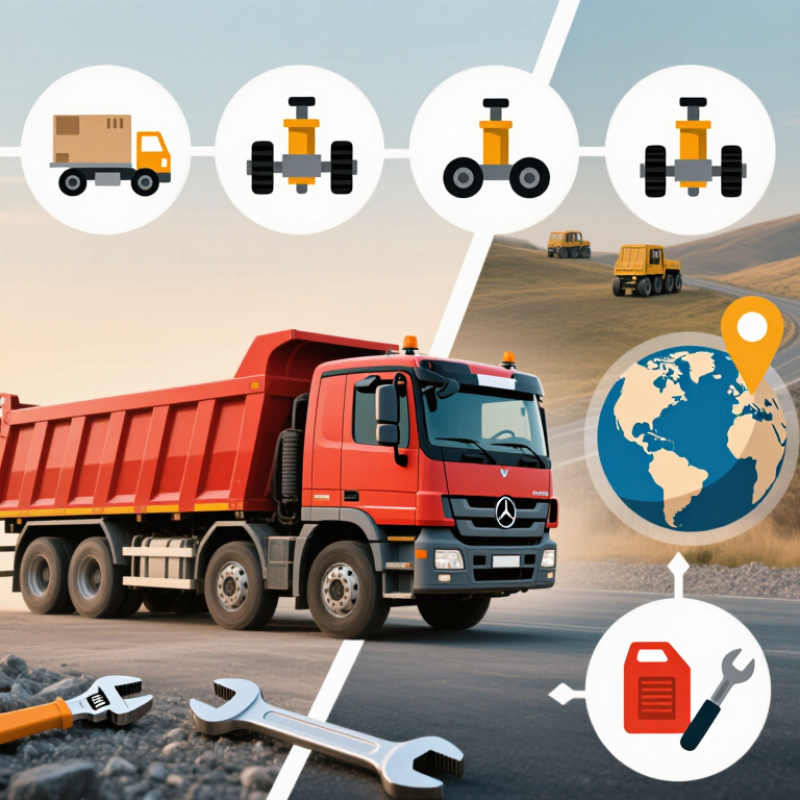
| 1 | Payload Capacity | Light-duty: approximately 1–5 tonnes
Medium-duty: approximately 6–15 tonnes
Heavy-duty: approximately 16–40+ tonnes | Payload depends on the legally permitted gross vehicle weight, chassis tare weight, axle ratings, and body weight. | Urban deliveries, construction materials, quarrying, mining, and bulk earthmoving. | Calculate the actual cargo density and avoid selecting a vehicle based only on the advertised maximum payload. |
| 2 | Body Volume | Common body volumes range from approximately 3 m³ for compact units to more than 30 m³ for heavy-duty applications. | Short bodies normally improve maneuverability; longer bodies increase volume but may reduce stability and increase turning requirements. | Sand, gravel, soil, demolition waste, agricultural products, and municipal refuse. | Match body volume to material density so the vehicle reaches its payload limit without excessive unused space. |
| 3 | Body Material | Mild steel is economical; high-strength steel can reduce body weight; abrasion-resistant steel is suitable for highly abrasive loads. | Floor thickness, side-wall reinforcement, and wear plates should be selected according to impact and abrasion levels. | General construction, rock, ore, scrap, recycled aggregate, and agricultural loads. | Confirm steel grade, floor thickness, welding quality, corrosion protection, and ease of repair in the target market. |
| 4 | Tipping Mechanism | Hydraulic systems commonly use telescopic cylinders, front-mounted cylinders, or underbody hoists. | Front-mounted telescopic cylinders provide high lifting force; underbody hoists save space but may have different clearance and maintenance needs. | Rear discharge is common for general construction; side discharge is useful where rear access is restricted. | Compare maximum lift angle, rated hydraulic pressure, cycle time, cylinder protection, and local repair capability. |
| 5 | Drive and Axle Layout | Two-axle vehicles are often used for lighter work; three- and four-axle layouts provide higher legal payload and load distribution. | Two-wheel drive improves road efficiency, while multi-axle or all-wheel-drive layouts improve traction and off-road capability. | Paved roads, rural routes, steep construction sites, muddy ground, and unpaved haul roads. | Verify axle-load limits, turning radius, ground clearance, tire availability, and regulations in the destination country. |
| 6 | Stability and Safety | Key factors include a low center of gravity, adequate chassis rigidity, body-side height, and a stable tipping angle. | A wider body and properly positioned hinge points can improve stability, while uneven ground increases rollover risk during discharge. | Construction sites, landfill operations, quarry roads, and uneven loading or unloading areas. | Look for body-locking devices, hydraulic hose protection, tipping alarms, rear underrun protection, and rollover-prevention procedures. |
| 7 | Chassis and Suspension | Heavy-duty frames and reinforced suspension are preferred for repeated high-impact loading and rough terrain. | Leaf-spring suspension is robust and widely serviceable; air suspension can improve ride comfort and load control on suitable road applications. | High-cycle quarry work, long-distance transport, urban construction, and mixed road conditions. | Compare frame-section strength, suspension capacity, shock absorption, articulation, and expected fatigue life. |
| 8 | Engine and Fuel Efficiency | Engine output must match gross vehicle weight, road gradients, target speed, and operating altitude; fuel consumption varies by load and terrain. | A correctly matched powertrain avoids excessive fuel use caused by underpowered operation or unnecessary engine capacity. | Flat highways, mountainous routes, stop-start urban work, and low-speed off-road hauling. | Review torque at low engine speed, transmission ratios, fuel quality requirements, cooling capacity, and emissions rules. |
| 9 | Cabin, Visibility, and Access | Useful features include wide mirrors, camera compatibility, step access, ergonomic controls, and adequate operator visibility. | A compact cab benefits restricted sites; a larger cab can provide better storage, comfort, and long-shift ergonomics. | Dense urban areas, busy construction sites, long haul cycles, and operations requiring frequent entry and exit. | Assess right-hand or left-hand drive requirements, climate control, dust protection, seat adjustment, and visibility around the body. |
| 10 | Maintenance and Total Cost | Compare purchase cost, fuel, tires, hydraulic service, scheduled maintenance, downtime, insurance, and resale value. | Simple hydraulic layouts and commonly available components can reduce downtime and make field repairs easier. | Remote projects, fleet operations, public works, agriculture, and markets with limited specialist support. | Confirm spare-parts availability, service intervals, warranty terms, diagnostic support, operator training, and local technician coverage. |