How to Choose a Water Label Machine?
A Water Label Machine is not just a label applicator. It must match the bottle, label material, line speed, and available floor space. The scale of demand makes that choice consequential. The International Bottled Water Association’s 2023 statistics report that U.S. bottled water volume reached 15.9 billion gallons. That figure describes one market, not every factory, but it shows why reliable, repeatable labeling matters.
Start with the bottle in your hand. Is it round, square, or shaped with a narrow shoulder? Check whether labels arrive on rolls or as precut sleeves. Then compare the machine’s rated speed with your real production target, not a best-case demonstration. Ask suppliers how they measure uptime, changeover time, and label-placement accuracy. Request a test using your own bottles and labels. A glossy brochure cannot reveal every wrinkle, skew, or adhesive issue.
Quality expert W. Edwards Deming’s well-known advice, “In God we trust; all others must bring data,” offers a useful test for equipment claims. It is not a water-labeling-machine quotation, but the principle fits: request documented trial results and a clear acceptance standard. Pay attention to cleaning access, operator training, spare-part lead times, and service support. Small details matter. A poorly placed roll holder can slow a shift. Yet no single specification decides the purchase. Your line layout, product mix, and maintenance skills matter too. This guide explains how to compare options with evidence—and where a factory trial may challenge your assumptions.
Define Your Water Bottle and Labeling Requirements
Before choosing a water label machine, define the bottle precisely. Record its height, diameter, taper, material, and fill volume. Measure a filled bottle, too; lightweight PET can flex under pressure. Note whether bottles arrive dry or chilled and damp.
Then identify the label format and placement. A wraparound label needs a consistent bottle circumference and seam position. Pressure-sensitive labels can suit varied designs, but moisture and surface temperature may affect application. Specify the label material, roll direction, core size, and desired position tolerance. Small details matter.
Capacity matters, but do not buy by headline speed alone. IBWA’s 2024 Bottled Water Industry Report, using Beverage Marketing Corporation data, reports 15.9 billion gallons of U.S. bottled water volume in 2023 and 47.7 gallons per person. Those figures show market scale, not your required line speed. Calculate bottles per minute from peak demand, changeovers, and planned operating hours. Allow time for cleaning and jams. A spreadsheet may still miss real-world bottle variation. Test your actual containers and labels before finalizing the machine specification.
Compare Labeling Machine Types and Their Applications
How to Choose a Water Label Machine?
Pressure-sensitive machines apply pre-cut labels to bottles, making them suitable for varied shapes and short production runs. They are relatively easy to adjust when bottle sizes change. However, labels can wrinkle if bottles are wet or poorly aligned. A quick test with filled, chilled bottles can reveal problems that a dry sample misses.
Roll-fed systems suit high-volume lines using lightweight plastic labels. They wrap labels around bottles efficiently, but setup depends on consistent bottle dimensions and label tension. Sleeve labelers cover more of the container and work well for contoured bottles or full-body graphics. They may require extra heat-shrink equipment, space, and energy. That matters.
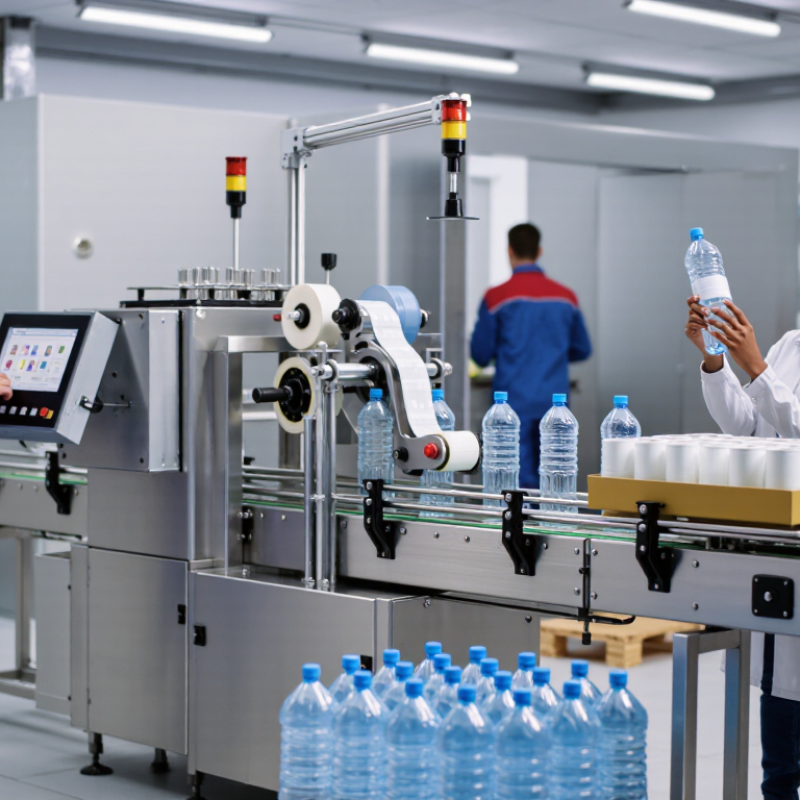
Match the machine to the bottle and line, not just the target speed. Check how it handles your actual water bottle diameter, conveyor spacing, and planned label material. Ask operators to test changeovers and inspect labels after several hours, when small alignment issues can appear. No setup is perfect. I would also leave room for slower periods; buying capacity that is rarely used can make maintenance feel like wasted effort.
How to Choose a Water Label Machine?
Compare typical labeling machine types by approximate throughput.
Semi-automatic machines suit lower-volume operations and frequent changeovers. Inline automatic machines are a flexible choice for many production lines, while rotary systems are designed for higher-throughput lines. These ranges are approximate planning estimates; actual speed depends on bottle shape, label format, and line setup.
Match Machine Capacity to Bottle Size and Production Speed
Choosing a water label machine starts with the line’s steady output, not its advertised maximum. Record bottles per minute across a typical shift, including pauses for cap checks and label replenishment. Compare that figure with the machine’s rated speed, leaving a practical buffer instead of running at its limit. A line filling 80 bottles per minute may need a labeler rated above 80, especially if containers arrive unevenly. Bottle dimensions matter just as much. Measure the smallest and largest diameters, bottle height, and usable label area. A tall, slim bottle behaves differently from a short, wide one.
Ask how quickly guides, rollers, and sensors adjust between bottle sizes. Frequent changeovers can erase the benefit of a fast machine. That matters. Check label alignment on bottles with light condensation, and test the actual containers, labels, and line speed together. During a full run, watch for wrinkles, skewed seams, missed labels, or bottles bunching at the infeed.
Small details count. A slower setting that runs steadily may outperform a higher-rated unit needing constant correction. Capacity estimates can look tidy on paper, then shift once real bottles and operators are involved.
Assess Hygiene, Maintenance, and Total Ownership Cost
A water label machine should be assessed in the conditions it will actually face, not only by its rated speed. Inspect product-contact surfaces, guards, and frame joints for smooth finishes and accessible cleaning points. Water, adhesive, and paper dust can collect around rollers and sensors. Ask operators to demonstrate how residue is removed safely. Hygiene must work on a busy shift, not just in a brochure.
Maintenance access matters. Check whether staff can reach sensors, belts, and label rolls without dismantling large sections of the machine. Ask which parts wear routinely, how often they need adjustment, and whether replacements are readily available. A short service checklist is useful. So is a realistic estimate of cleaning and changeover time. I would not assume a quick rinse is enough; residue can remain in awkward corners.
Calculate total ownership cost across several years, including installation, training, energy, cleaning supplies, labels, spare parts, and planned service. Include discarded labels and lost production during jams or format changes. Compare estimates using your actual bottle sizes and shift patterns. A first calculation can still be wrong if cleaning time is guessed; time a real cleaning and changeover instead. A lower purchase price may not mean a lower operating cost.