How to Choose the Right Duct Air Heater in 2026?
Choosing a Duct Air Heater in 2026 is less about picking the biggest unit and more about matching heat output to real airflow, duct dimensions, and operating conditions. A heater that looks right on a catalog page may still create uneven temperatures, excessive pressure drop, or frequent cycling once installed. Small details matter: the measured air volume, available electrical supply, duct material, insulation, and the controls that stop heating when airflow falls.
HVAC researcher Jeffrey Siegel’s work on building systems reinforces an important idea: equipment choices should be judged in the context of the whole system, not in isolation. A practical selection principle follows: “Match the heater to the air moving through the duct, not just to the space you want to warm.” This is a concise editorial guideline, not a verified quotation from Siegel. A named expert’s exact words should be checked against a reliable source before publication.
This guide will help you compare capacity, voltage, airflow limits, safety controls, and installation requirements. It will also explain what to verify with a qualified HVAC professional before ordering. For example, a unit sized from room area alone may miss a major constraint: the system’s actual airflow. And sizing is not always neat; older ducts can leak, and field measurements may disagree. That uncertainty deserves attention, not a confident guess. A suitable Duct Air Heater should fit the application, work with its controls, and deliver predictable heat under documented conditions.
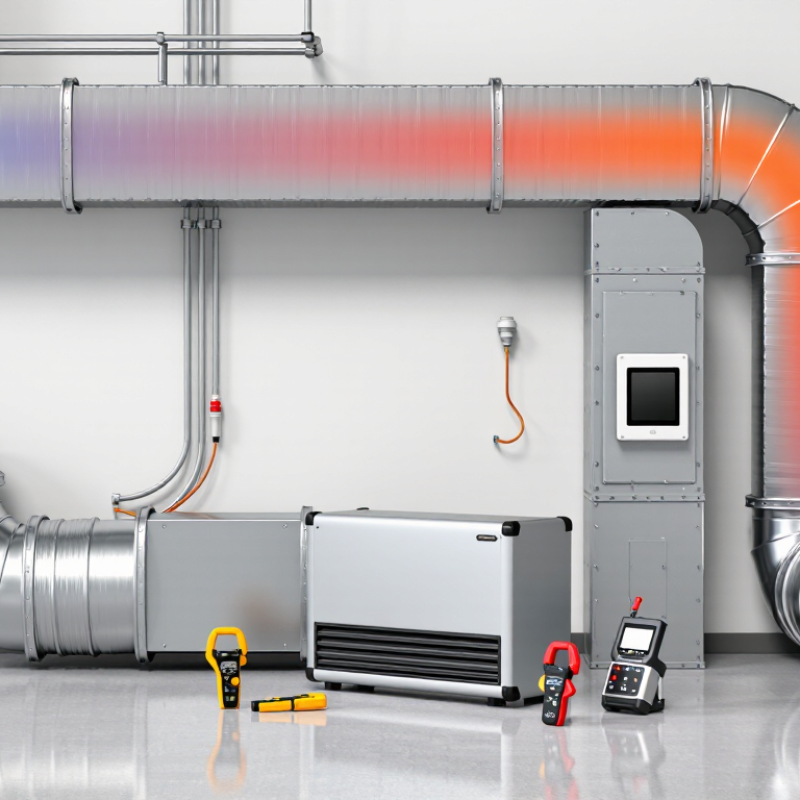
Understand Duct Air Heaters and Their Main Types
Duct air heaters warm moving air inside a ventilation or heating system. The right type depends on the available energy source, airflow, temperature rise, and installation conditions. Check the duct’s rated airflow before comparing heater output. A powerful unit cannot compensate for insufficient airflow.
Electric resistance heaters use elements to heat passing air directly. They are compact and straightforward to control, but can require substantial electrical capacity. Hydronic heaters transfer heat from hot water through a coil. They suit buildings with a boiler or central hot-water loop, though the coil needs protection from freezing when exposed to cold conditions.
Steam coils are another option in facilities with an existing steam supply.
Direct-fired gas heaters burn fuel to heat air, while indirect-fired designs transfer heat through a heat exchanger. Their venting, combustion-air, and maintenance requirements differ, so qualified review matters. Small details count. A coil that fits the duct may still create too much resistance or uneven heating. Compare the heater’s pressure drop, control range, and safety controls with the system design. I might be tempted to choose by output alone; that is an easy mistake. Check actual operating conditions, not just the product label.
Assess Heating Requirements, Airflow, and Duct Conditions
How to Choose the Right Duct Air Heater in 2026?
A suitable duct air heater must match the building’s heat loss, required airflow, and duct limits. Start with a room-by-room heat-loss estimate, not the old heater’s rating. Check the unit’s nameplate, available electrical capacity, and the temperature rise required on the coldest design days. Small details matter. A heater that is too powerful may cycle frequently, while an undersized unit may struggle to maintain temperature.
Airflow sets the heat a duct heater can deliver. A common sensible-heat estimate is 1.08 × airflow in cubic feet per minute × temperature rise in °F, at sea level. This relationship appears in standard HVAC engineering references, including the ASHRAE Handbook—Fundamentals; actual output also depends on site conditions and equipment limits. Inspect filters, coils, dampers, and duct bends before selecting a unit. The U.S. Department of Energy’s Energy Saver guidance reports that typical homes can lose 20–30% of conditioned air through duct leaks. A new heater cannot fix that. Still, a calculation will not reveal every crushed or poorly sealed duct hidden above a ceiling.
Tips: Measure airflow and static pressure, then compare them with the heater’s rated range. Confirm duct dimensions, insulation, clearances, and electrical supply with a qualified HVAC professional. If readings disagree with the design, investigate before increasing heater capacity.
Compare Heater Types, Energy Sources, and Materials
Choosing a duct air heater starts with the job it must do. Electric resistance heaters are compact and respond quickly, but operating costs can rise where electricity is expensive. Gas-fired units may suit buildings with existing gas service and higher heating loads; they need appropriate venting and combustion controls. Hydronic coils use hot water from a boiler or heat pump, so their performance depends on the water supply and system design. Heat pumps can provide efficient heating in suitable conditions, though low outdoor temperatures may affect capacity. Check required airflow, temperature rise, and available space before comparing prices. A heater sized without measured airflow can overheat or deliver uneven warmth. Small details matter.
Materials affect durability and maintenance. Stainless-steel elements or components can better withstand moisture and corrosion than some lower-cost options, while galvanized steel is common for casings in relatively dry settings. Aluminum can be useful where low weight matters, but its suitability depends on temperature and exposure. Ask what parts contact hot air, and inspect whether access panels allow cleaning and service. Match the heater’s construction to duct conditions, not just the room temperature. Controls also matter: a correctly selected thermostat, airflow switch, and over-temperature protection help prevent unsafe operation. Have a qualified HVAC professional verify the design and installation. Real buildings are messy; existing ducts may be leaky, and that can change the result.
Verify Sizing, Controls, Safety, and Installation Needs
How to Choose the Right Duct Air Heater in 2026?
Verify the load before comparing heater ratings. ASHRAE’s Handbook—Fundamentals uses the sensible-heat relationship Q = 1.08 × airflow (CFM) × temperature rise (°F) for standard air conditions. For example, 1,000 CFM heated by 30°F requires about 32,400 Btu/h, or 9.5 kW. Treat this as an estimate: actual air density, measured airflow, and site conditions affect performance. A heater sized from floor area alone may miss the mark.
Check what the controls do when airflow drops. Specify an airflow-proving device, automatic temperature regulation, and an independent high-limit cutoff. UL 1996 covers electric duct heaters, while NFPA 70 addresses electrical installation; confirm the selected unit and wiring meet applicable requirements. Small details matter. Verify circuit capacity, duct dimensions, access for servicing, and manufacturer-required clearances before installation. A tight ceiling cavity can make routine inspection awkward.
Match the control strategy to the system: staged output may suit steady loads, while modulation can help manage changing demand. Confirm how the heater responds to fan shutdown and how its sensors are positioned; a sensor placed in a poor location can give misleading readings. I’d still recheck the airflow at commissioning, rather than trusting the design figure alone. Real systems can be imperfect. Document the final settings and measured temperature rise for future troubleshooting.
Compare Efficiency, Maintenance, and Total Ownership Costs in 2026
Choosing a duct air heater in 2026 means comparing more than its purchase price. The U.S. Energy Information Administration’s 2018 Commercial Buildings Energy Consumption Survey reports that space heating accounts for about 32% of commercial-building energy use. That makes seasonal runtime and delivered heat important cost drivers. Compare electric and fuel-fired models using local energy rates, expected operating hours, and the heat actually reaching occupied rooms.
Efficiency figures need context. Electric resistance heaters convert electricity to heat at the unit, but electricity prices and generation affect operating costs. Fuel-fired units require attention to combustion efficiency, venting, and scheduled burner checks. Inspect duct insulation and joints, too; a warm mechanical room can signal heat escaping before it reaches the workspace. Small details matter. Filter access, fan-motor replacement, and control compatibility can influence maintenance time and downtime.
For total ownership cost, include installation, energy, planned maintenance, likely repairs, and replacement—not just the quote. The U.S. Department of Energy’s Federal Energy Management Program Life-Cycle Costing Manual provides a framework for evaluating these cost categories over an equipment’s service life. I would treat any payback estimate as provisional: fuel prices, occupancy schedules, and repair access can change the result. A spreadsheet helps, but its assumptions deserve a second look.