Choosing the best Puppy Collar in 2026 is about more than color or style. A collar should fit a growing puppy comfortably, stay secure during everyday walks, and allow regular checks as the puppy changes. Too loose, and it may slip over the head. Too tight, and it can rub the soft skin beneath the fur. Small details matter.
The American Pet Products Association’s 2025 State of the Industry Report estimated U.S. pet-industry spending at $152 billion in 2024, with $157 billion projected for 2025. Its National Pet Owners Survey also reported that 94 million U.S. households owned at least one pet. These figures describe a broad market, not collar sales specifically. Still, they show why buyers face so many choices—and why clear, practical guidance matters. Veterinarian and animal behaviorist Dr. Sophia Yin offered a useful training principle: “Dogs do what works.” A collar is only one part of that learning process.
This guide will compare materials, closures, adjustability, and everyday comfort. It will also explain how to check fit without guessing: inspect the buckle, feel for rough seams, and reassess as your puppy grows. A product label cannot tell you how a collar behaves on your dog. That takes observation. Even careful shoppers may need to change their choice as a puppy’s size and habits develop.
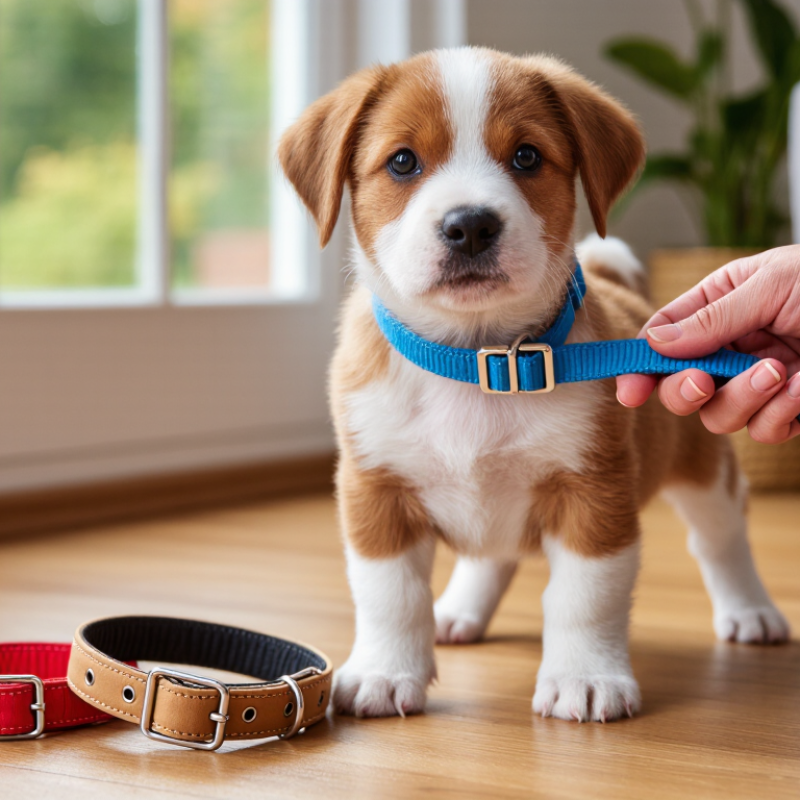
A puppy collar has a simple job: hold an identification tag and help you guide your puppy during brief, calm walks. It should not take the full force of a hard pull; a well-fitted harness may be more suitable for that. Puppies grow quickly, so a collar that fits today may become tight within weeks. Comfort matters. A stiff, heavy, or rough-edged collar can rub a young dog’s neck and distract them from learning.
Tips: Choose a lightweight collar with smooth seams and a secure buckle. Once fastened, you should be able to slide two fingers beneath the band without squeezing. Check the fit every few days, especially after a growth spurt. Watch for red skin, flattened fur, coughing, or repeated scratching. Remove the collar when your puppy is resting in a crate or playing unsupervised with other dogs; it could snag on nearby objects or playmates.
A collar is not a substitute for supervision or gradual training. Let your puppy sniff it first, then fasten it for a few minutes indoors and reward relaxed behavior. Increase the time slowly. Some puppies freeze or paw at the strap at first. That does not always mean the fit is wrong, but discomfort should not be ignored. Inspect the stitching and hardware regularly, and replace the collar if anything frays or loosens. Small checks are easy to forget. They matter.

A comfortable collar starts with an accurate neck measurement, not an estimate based on breed or age. Let your puppy stand naturally, then place a soft measuring tape around the base of the neck, where a collar usually rests. Keep the tape close to the fur without pulling it tight. Note the measurement and check the collar’s adjustment range before buying. A puppy may grow quickly, but a collar should never be loose enough to slip over the head.
Tips: After fastening the collar, slide two fingers between it and your puppy’s neck. They should fit without squeezing. Keep it gentle. Check the fit weekly, and sooner if the collar starts leaving marks or seems tight. Re-measure if your puppy has a thick or changing coat; fur can make a close fit harder to judge.
Watch your puppy move, eat, and turn its head while wearing the collar under supervision. Look for rubbing beneath the buckle and behind the ears, plus any coughing or repeated pawing. Remove the collar if you notice discomfort, then reassess the fit. Measurements can vary when a puppy wiggles, so repeating the check is sensible, even if it feels a little fussy. Growth is not always even. A fit that worked last week may need adjusting today.
Inches-to-centimeters reference for measuring your puppy’s neck.
Fit tip: Measure around the neck where the collar will sit, keeping the tape snug without compressing the fur or skin. Choose an adjustable collar that includes your measurement, then check that two fingers fit comfortably between the collar and your puppy’s neck. The chart shows unit conversions, not recommended collar sizes.
Choosing a puppy collar means balancing material, style, and room to grow. Nylon is lightweight, dries quickly, and suits everyday walks, but rough stitching may irritate a puppy’s neck. Soft padding can help, though it may hold moisture after rain. Leather often feels supple and can last, but it needs care and may become stiff when wet. Check seams and edges with your fingers. Small details matter.
For most puppies, an adjustable flat collar is a practical starting point. A quick-release buckle makes removal easier, while a heavy or dangling accessory can catch on things during play. Dogs Trust recommends fitting a collar with space for two fingers between the collar and the neck. Recheck often; puppies grow quickly, and yesterday’s comfortable fit may become tight. Fit matters most. APPA’s 2025 State of the Industry report estimates U.S. pet spending reached $152 billion in 2024, but that market figure does not compare collar safety or materials. It is worth remembering that a popular style is not automatically the right fit. Check the collar after a walk, especially if the coat is damp or the puppy has been scratching.
A puppy collar should stay secure without pressing into a growing neck. Check the fit regularly: you should be able to slide two fingers between the collar and your puppy’s skin. If it leaves a mark, feels tight, or slips over the head, adjust it or choose another size. Puppies grow quickly. A collar that fit last week may not fit today.
Look for smooth edges, sturdy stitching, and a buckle that closes firmly without pinching fur. For walks, the leash attachment should feel solid, and the collar should not twist easily when your puppy pulls. A breakaway collar can reduce snagging risks indoors, but it may release under leash pressure. Don’t rely on it for walks. Reflective details can help in dim light, though they are not a substitute for staying close and alert.
Active puppies need frequent checks. Inspect the collar for fraying, loose hardware, or cracks, especially after muddy play or swimming. Small checks matter. Remove the collar during crate time or rough play if it could catch or become tangled. I’d be cautious about assuming a “puppy-safe” label means the fit is right; watch how your puppy moves, scratches, and breathes. If the collar causes coughing, rubbing, or repeated pawing, take it off and reassess the fit.
A puppy’s neck can change noticeably within weeks, so collar fit is not a one-time decision. The American Pet Products Association’s 2023–2024 National Pet Owners Survey estimated that 65.1 million U.S. households had a dog. That scale makes routine fit checks a practical welfare habit. Slide two fingers beneath the collar; they should fit without forcing. Check that the collar does not rotate easily over the head, yet leaves no deep marks or rubbed fur. Watch your puppy walk and sniff: a collar that shifts toward the jaw or catches the shoulder needs adjustment. Check again tomorrow.
Fit varies with coat, build, and growth, so the two-finger check is only a starting point. That rule is imperfect. Recheck after meals, baths, grooming, and rapid growth, then inspect the skin for redness, dampness, or broken hairs. Remove the collar for a close look, and feel along the edges for fraying, cracked stitching, or a weakened buckle. Wash it according to its care instructions and let it dry fully before putting it back on; trapped moisture can irritate skin. If your puppy coughs, scratches persistently, or develops a sore, stop using that collar and ask a veterinary professional to assess the fit and skin.
An exceptional record of quality and service for 35+ years.
© 2026 Excell Battery Co. All rights reserved.Privacy Statement