Choosing a Folding Electric Scooter in 2026 is less about chasing the biggest battery or highest speed and more about matching the scooter to your actual day. Picture the routine: carrying it up apartment stairs, folding it beside a crowded desk, or rolling it over cracked pavement after work. Weight, folded dimensions, wheel size, braking performance, and charging time can matter more than a headline range figure. Small details matter.
Battery range deserves careful reading. Manufacturers may test under ideal conditions, while rider weight, hills, temperature, and frequent stops can reduce real-world distance. Check how the range was measured, and leave a practical buffer for the trip home. A little skepticism helps. Also compare warranty terms, replacement-part access, and clear service information. These details are easy to overlook until something needs attention.
This guide offers a practical way to compare models without treating one specification as the whole story. It looks at portability, comfort, safety features, battery claims, and everyday maintenance. Where possible, verify specifications against the manufacturer’s materials and compare them with independent reviews. If you can, inspect the folding latch and controls in person; a scooter that looks compact online may feel awkward to lift. No checklist can predict every commute, and a short test ride may reveal more than another hour spent comparing numbers.
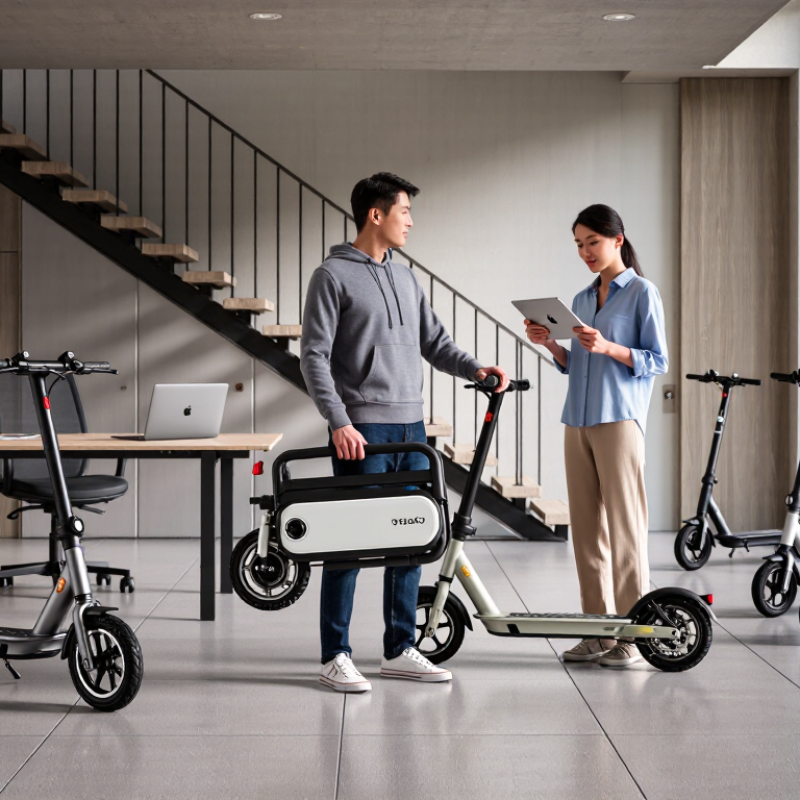
Before choosing a folding electric scooter, map the trips you actually take. Note the distance each way, steep sections, rough pavement, and places where you must carry it. A smooth 2-mile commute feels very different from a route with cracked sidewalks and a long station staircase. Check whether the scooter fits beneath your desk or in your hallway when folded. Measure the space; “compact” can mean different things.
Think about your heaviest regular day, not just an ideal ride. A longer advertised range may shrink with hills, cold weather, frequent stops, or a heavier load. Leave a practical buffer rather than planning to arrive with almost no charge. If you need to lift the scooter onto a bus or up stairs, compare its actual weight with what you can comfortably carry. This detail is easy to underestimate. I would measure twice, though people do forget.
Tips: Walk your usual route once and mark steep ramps, broken pavement, and charging access. Check the scooter’s load rating and tire type against your needs, then compare the folded dimensions with your storage space.

How to Choose a Folding Electric Scooter in 2026
Range claims look reassuring on a product page. Real rides are less tidy. A route with hills, frequent stops, cold weather, or a heavier rider can use more energy than a steady test ride. Compare the advertised range with your usual round trip, then leave a practical reserve. That matters.
Battery capacity, usually listed in watt-hours (Wh), helps explain how much energy is stored. When figures are available, volts multiplied by amp-hours gives watt-hours. A larger battery may support longer trips, but it can also add weight. Check whether the scooter’s stated range was measured under conditions similar to yours; manufacturers may use different test methods.
Speed and motor power answer different questions. Top speed matters less if your route is crowded or has steep inclines. Motor power can help with hills and acceleration, but rider weight, wheel size, and controller settings also affect performance. Look beyond claims. I’d compare continuous motor power where listed, not just a short peak figure. Specs still cannot predict every ride, so treat them as a guide, not a promise. A short test ride, if available, can reveal whether acceleration feels manageable and braking stays controlled.
Compare estimated range, top speed, motor power, and battery capacity across representative scooter profiles.
Further right means more range; higher means greater top speed. Larger bubbles indicate more battery energy, and the legend shows rated motor power. Figures are illustrative specification combinations, not product test results. Real-world range varies with rider weight, terrain, temperature, speed, and riding mode. Battery energy is calculated as volts × amp-hours.
A folding electric scooter should fit your routine when open and folded. Check how the latch works, and whether it locks firmly without pinching fingers. A simple folding motion is useful when you are carrying groceries or standing in a crowded entryway. Test it several times, not just once in a showroom. A hinge that feels awkward can become irritating during daily use. Small details matter.
Weight is more than a number on a product page. Consider the stairs between your front door and the street, or the distance from a parking spot to your desk. A scooter that weighs 15 kilograms may feel manageable for a short lift but tiring across several flights. Carrying balance matters, too: note where the frame rests against your leg and whether folded parts swing loose. You may need to adjust your expectations.
Measure your storage space before choosing. Record the folded length, width, and height, then compare them with your closet, car trunk, or space beneath a desk. Leave room to lift the scooter out; a tight fit can make storage frustrating. Measure twice. If possible, fold and unfold the model yourself, checking that cables stay clear and the latch engages fully. Published dimensions can differ slightly from what is practical in a cramped home. A few minutes of checking can prevent a daily inconvenience.
When choosing a folding electric scooter in 2026, inspect its safety hardware before comparing range or weight. Look for responsive brakes, bright front and rear lights, reflectors, and a secure folding latch that cannot shift under load. Check the tires for grip and the deck for enough room to stand comfortably. For battery safety, seek clear documentation of testing to an applicable standard, such as UL 2272. A label is useful, but it is not a substitute for careful charging and storage.
Local rules can change from one town or transit system to the next. Check permitted riding areas, speed limits, helmet requirements, and rules for carrying a folded scooter aboard public transport.
NACTO’s 2023 Shared Micromobility Report recorded 133 million shared micromobility trips in the United States and Canada. That figure describes shared services, not private scooters, but it shows how often riders encounter busy streets and crowded paths.
Plan a route that fits local conditions.
Maintenance is not optional. Before each ride, test both brakes, check tire pressure, and make sure the stem and latch are firmly locked. After wet rides, dry the scooter and inspect for grit around the folding joint. CPSC’s 2023 micromobility report tracks injury patterns involving electric scooters and other devices, a reminder that small checks matter. I still find hinge wear easy to overlook. Put it on a monthly checklist, and follow the maker’s battery-care instructions.
A folding electric scooter’s price tag is only the entry fee. Compare the full cost over your expected ownership period: scooter, lock, lights, tires, routine service, and eventual battery replacement. Add charging costs, too, though they are usually modest. Divide the total by the years you expect to ride. Then compare that figure with your realistic annual travel budget, not an optimistic one.
Warranty details can change the calculation. Check how long the battery, motor, and frame are covered, and whether normal capacity loss is excluded. Ask how repairs are handled and whether replacement parts are available. NACTO’s Shared Micromobility in the U.S. and Canada: 2023 report counted 133 million shared-bike and scooter trips that year. That signals substantial use, but shared-fleet trips cannot predict a private scooter’s lifespan. The comparison has limits.
A low purchase price may hide costly battery or tire service. A longer warranty may also have narrow conditions. Keep the receipt and warranty terms together. I would budget for one unexpected repair; the exact amount is hard to predict. Check the folding latch, tire condition, and brake response before buying, since a small defect can become an expensive nuisance.
Planning comparison in USD. The figures below are illustrative estimates for broad scooter categories, not live quotes or guaranteed specifications. Actual prices, range, warranty terms, and repair costs vary by model, seller, location, rider weight, terrain, and use.
| Comparison factor | Lightweight, short-trip commuter | Everyday commuter | Comfort-focused all-rounder | Long-range, higher-power scooter |
|---|---|---|---|---|
| Typical purchase budget | $400–$700 | $700–$1,200 | $1,200–$1,800 | $1,800–$3,000+ |
| Typical practical range per charge | About 8–15 miles | About 15–25 miles | About 20–35 miles | About 30–50 miles |
| Typical scooter weight | About 25–35 lb | About 35–50 lb | About 45–65 lb | About 55–85 lb |
| Portability and best use | Easier to carry and store; best for short rides and mixed transit trips. | A practical balance for regular commuting; check whether the folded weight is manageable for stairs. | Often offers a more comfortable ride; suitable for longer daily trips if carrying it is not a priority. | Designed for longer trips; greater weight and bulk can make carrying or storing it difficult. |
| Warranty points to verify | Confirm coverage period for the battery, motor, frame, and charger; read exclusions for wear and water damage. | Check whether battery coverage differs from coverage for other components and whether labor is included. | Confirm the warranty process, service location, parts availability, and shipping responsibility. | Check coverage limits, battery-capacity exclusions, repair turnaround, and access to replacement parts. |
| Battery and repair planning | Budget for tires, brakes, and eventual battery wear; a replacement battery can be a large share of the original price. | Ask for the battery replacement price and whether the battery is replaceable without specialized service. | Check the cost and availability of tires, brake parts, battery, and other model-specific components. | Get written battery and major-repair estimates before buying; expensive parts can materially affect long-term value. |
| Estimated 3-year ownership cost | About $835 | About $1,260 | About $1,835 | About $2,755 |
| What the 3-year estimate includes | Illustrative calculation assumes 1,500 miles of riding per year and includes a representative purchase price, routine maintenance, and home-charging electricity. It excludes sales tax, accessories, theft, major repairs, and battery replacement. Estimated maintenance and electricity are respectively $80 and $15 per year for the lightweight category, $100 and $20 for the everyday commuter, $120 and $25 for the all-rounder, and $150 and $35 for the long-range category. Electricity costs depend on local rates and actual energy use. | |||
| Long-term value outlook | Good value when low weight and easy carrying matter more than range or a low cost per mile. | Often a strong balance of purchase price, usable range, portability, and routine upkeep. | Can be worthwhile for frequent riders who value comfort and use the added features regularly. | Best value when the extra range is genuinely needed; otherwise, the higher initial and repair costs may not pay off. |
| Before you buy | Test the folded carry weight and confirm the practical range suits your round trip. | Compare the real-world range with your route and check local rules for scooter use. | Test ride comfort, folding and storage, and confirm the scooter fits your commute and charging setup. | Check local speed and power rules, braking performance, secure storage, and the full cost of replacement parts. |
An exceptional record of quality and service for 35+ years.
© 2026 Excell Battery Co. All rights reserved.Privacy Statement