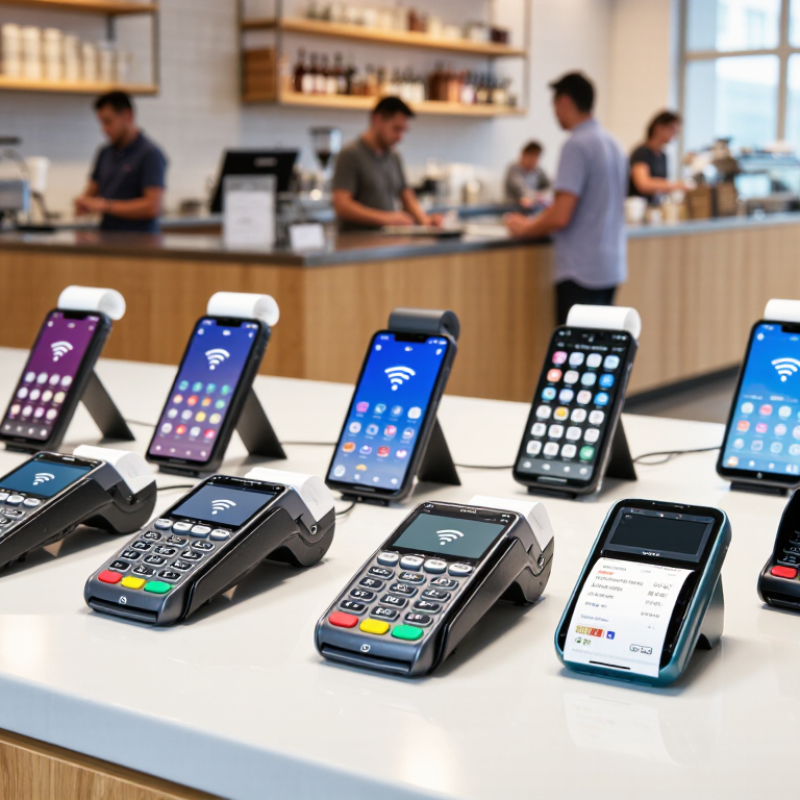
China Top 10 Best Mobile POS Systems for Global Buyers

Choosing among the best mobile pos systems means looking beyond a polished screen. Global buyers need to know how a terminal performs during a busy lunch rush, whether it supports local payment methods, and how clearly it reports sales across locations. A dropped connection or confusing checkout flow can turn a small queue into a real problem.

Technology pioneer Steve Jobs offered a useful design principle: “Design is not just what it looks like and feels like. Design is how it works.” That idea matters when comparing China’s mobile POS options. A compact device is only useful if staff can learn it quickly, receipts print reliably, and managers can review transactions without guesswork.

This guide introduces ten systems for buyers assessing hardware, software, connectivity, support, and integration needs. It does not assume that every product suits every country or business model. Availability, payment coverage, and service terms can vary by market, so verify them with each provider before making a purchase. No shortlist is flawless. Some details may change, and advertised features deserve careful checking. Use these profiles as a starting point, then test the devices with realistic tasks: take an order, process a payment, reconnect after a network interruption, and review the resulting report. That hands-on check can reveal more than a feature list.

China Top 10 Best Mobile POS Systems for Global Buyers

What Mobile POS Systems Are and How They Work

A mobile point-of-sale system turns a phone or tablet into a portable checkout. Staff use an app, a payment reader, and a connection to process sales away from a fixed counter. A customer taps or inserts a card; the system sends the transaction for authorization and displays the result. It can also record items, update stock, and send a digital receipt. Small details matter: a weak signal can slow checkout, while a low battery can stop it entirely. That matters.

The workflow is simple, but the components do different jobs. The app manages the sale, the reader captures payment details, and a payment processor routes the request to the relevant financial networks. The provider’s security setup should protect sensitive data during transmission and storage. For global buyers, check supported payment methods, currencies, languages, and integrations before comparing devices. Grand View Research valued the global mobile POS terminals market at USD 36.1 billion in 2023 and projected a 13.7% compound annual growth rate from 2024 to 2030. This signals growing demand, not a guarantee that every system suits every shop. Not quite. A busy outdoor stall and a multi-location retailer may need very different hardware, connectivity, and reporting features.

How Mobile POS Systems Work: A Typical Transaction Flow

A mobile POS transaction typically moves from item selection to payment authorization, receipt delivery, and record synchronization. Bar values show step order—not processing time or system performance. Exact workflows vary by setup.

How to Evaluate Chinese Mobile POS Systems for Global Use

Evaluating Chinese mobile POS systems for global use starts with the markets where they will operate. Check whether the device supports local network bands, reliable Wi-Fi, and the payment methods your customers actually use. Ask for documentation on regional approvals rather than assuming one configuration works everywhere. Confirm language options, tax settings, and currency handling with realistic sample transactions.

Test the hardware in a working environment. A busy shop, a warehouse dead zone, and an eight-hour shift reveal different weaknesses. Check battery life while scanning items and printing receipts. Test what happens when the connection drops: can staff continue recording transactions, and how are records synchronized later? Data security also deserves specific questions about encryption, access controls, software updates, and where information is stored.

Small details matter. Support response times, replacement parts, and clear setup guides can determine whether a rollout stays on schedule. Request a trial unit and test it with your existing checkout workflow before placing a large order. A polished demonstration may not expose slow printing or awkward menus. A checklist will not catch every edge case, either; record what remains uncertain and get written answers before committing.

Profiles of 10 Leading Mobile POS Systems from China

China’s mobile POS market is easier to assess by use case than by a single “best” label. The Worldpay Global Payments Report 2024 estimates digital wallets accounted for 30% of global in-store payment value in 2023. That makes flexible payment acceptance an important comparison point.

Ten useful profiles include:

a compact Android handheld for queues; a rugged terminal for outdoor work; a phone-connected reader for small merchants; a printer-integrated unit for paper receipts; a dual-screen device for customer-facing checkout; a cellular terminal for delivery teams; a countertop-mobile hybrid for cafés; an offline-capable unit for unstable networks; a multilingual interface for export markets; and fleet software for multi-site operators.

These are product categories, not endorsements. Check security documentation, update policies, payment integrations, and service support for each supplier. No shortlist is perfect. A low price may conceal costly support gaps.

Tips: Test devices with your own network, receipt format, and payment workflow before ordering at scale. Confirm how quickly staff can complete a transaction during a busy shift. A real test helps.

Key Features, Payment Support, and Platform Compatibility

Global buyers should assess mobile POS systems by how they work at a busy counter, not by feature lists alone. Check support for contactless cards, chip cards, and mobile wallets. Payment options can vary by country, payment provider, and merchant account. Ask for a current list of supported methods, settlement currencies, and transaction types. Do not assume a device sold in one market will process payments in another. That detail matters.

Platform compatibility affects daily work. Confirm the POS app runs on the devices your staff already use, such as Android phones, iPhones, or tablets. Check the required operating system version and whether updates remain available for older hardware. A system should also connect reliably to receipt printers, barcode scanners, and cash drawers if your setup needs them. Test these connections before buying. A busy shop is a poor place to discover a pairing problem.

Useful features include inventory tracking, sales reports, staff permissions, and clear refund workflows. For example, a small retailer may need stock counts to update after each sale, even when Wi-Fi briefly drops. Ask how offline mode stores transactions and when it syncs again. I would not rely on a polished demo alone; real checkout conditions are messier. Some details may still be unclear until the system is tested with your own devices and payment account.

How Global Buyers Can Assess Deployment and Compliance Needs

Global buyers should assess a mobile POS system against how each site actually trades, not just a feature sheet. Map checkout steps, peak-hour volume, receipt needs, and integrations with inventory or accounting tools. Test it on the intended devices, including older tablets and handhelds used on a busy floor. Small details matter. Can staff pair a printer quickly? Does the screen remain readable under bright shop lighting? A tidy checklist can still miss how hurried staff actually work. Pilot one location first, then record setup time, training questions, and failed transactions.

Compliance varies by market and payment method. Confirm supported currencies, tax settings, receipt fields, and payment-security responsibilities with local acquiring partners and qualified advisers. Ask where transaction data is stored, who can access it, and how long records are retained. Document update procedures, user permissions, and steps for a lost device. Offline processing deserves special scrutiny. Clarify which transactions can queue, what limits apply, and how synchronization works after connectivity returns. Test it live. A short trial in a basement or crowded venue can reveal gaps, though it cannot replace market-specific review.

China Top 10 Best Mobile POS Systems for Global Buyers — How Global Buyers Can Assess Deployment and Compliance Needs

Comparison of 10 common mobile POS deployment profiles for evaluating operational fit. These are system archetypes, not named products or a ranked list; capabilities depend on the selected software, hardware, payment provider, and market.

# Mobile POS profile Typical deployment Connectivity and offline planning Payment and security checks Best suited to Questions for global buyers
1 Android handheld with integrated payment reader Managed handheld devices running checkout and payment apps; deployment may be cloud-managed or centrally administered. Wi-Fi and cellular options are common. Confirm whether sales can be recorded offline and how transactions are queued, reconciled, and protected. Check payment-provider certification, device security controls, encryption, key management, and applicable PCI DSS responsibilities. Retailers and service teams needing portable checkout with fewer separate devices. Are the device, payment application, and acquiring setup supported in each target country? Who handles updates and replacements?
2 Tablet-based POS with a separate payment terminal Tablet runs the POS application; a connected terminal handles card-present payments. Typically depends on local Wi-Fi or a wired network. Ask which checkout functions continue if the POS app or payment connection is unavailable. Confirm terminal integration and payment flow with the local acquirer; define which components store, process, or transmit account data. Restaurants, boutiques, and pop-up shops that need a larger screen and flexible counter setup. Are the tablet operating system, terminal interface, receipt options, and local tax settings supported and maintained?
3 Smartphone POS with a contactless reader Staff use a compatible phone with a payment reader or an approved contactless acceptance solution. Usually requires a reliable internet connection for authorization. Confirm supported phone models, operating-system versions, and any offline restrictions. Verify that the acceptance method is approved for the intended market and transaction type; review device access controls and payment-data handling. Mobile workers, small retailers, and businesses with low-volume or occasional checkout needs. Does the solution support local payment methods, merchant onboarding, and the required device-management policy?
4 Rugged handheld POS for field operations Purpose-built mobile device with barcode scanning and optional integrated payment capability. May use cellular, Wi-Fi, or store-and-forward workflows. Test synchronization, duplicate prevention, and recovery after extended outages. Assess secure boot, supported security updates, user authentication, and the payment provider’s rules for offline transactions. Delivery, field service, outdoor sales, and inventory-intensive retail. Are the device’s environmental ratings, battery life, repair options, and connectivity bands suitable for the operating locations?
5 Portable POS for tableside service Staff take orders and payments at the table using handheld or tablet devices connected to restaurant systems. Requires dependable coverage across dining areas. Validate order and payment behavior during network interruptions and peak traffic. Check secure terminal pairing, role-based access, receipt handling, and the separation of payment data from order records. Restaurants and hospitality operators seeking tableside ordering and checkout. Can it integrate with the existing kitchen workflow, local tipping practices, tax rules, and language requirements?
6 Portable POS for markets and temporary locations Compact mobile setup deployed at events, stalls, seasonal sites, or temporary counters. Cellular connectivity can reduce reliance on venue Wi-Fi, but coverage and congestion should be tested at the actual site. Confirm local merchant-acquiring availability, transaction limits, identity-verification requirements, and procedures for lost devices. Event sellers, seasonal businesses, and operators opening short-term locations. Can the merchant account be activated in time, and are power, network coverage, and support available at each venue?
7 Mobile POS with barcode and inventory workflows Handheld or tablet checkout linked to product, stock, and order-management records. Clarify which inventory actions are available offline and how conflicting stock changes are reconciled across locations. Review user permissions, audit logs, data retention, and access to customer or transaction records. Retailers that need mobile checkout alongside stock lookup, receiving, or cycle counting. Can product catalogs, tax configuration, and inventory data be managed consistently across countries and stores?
8 Mobile POS with customer-facing display or digital receipt Staff-facing mobile device paired with a customer display, digital receipt, or customer-facing payment interface. Check whether customer-facing functions continue during network interruptions and whether receipts can be delivered later. Assess consent and privacy notices for customer details, receipt delivery, loyalty enrollment, and marketing preferences. Businesses that want clearer checkout prompts and paperless receipt options. Do local privacy rules and customer preferences permit the intended collection and use of contact information?
9 Mobile POS connected to a central or on-premises system Mobile devices connect to a store server, local gateway, or centrally managed retail environment. Local operation may reduce dependence on an external connection for some functions, but remote access and synchronization still need testing. Document network segmentation, administrator access, patching responsibility, backups, and incident-response procedures. Multi-site operators with established IT controls or requirements for local system integration. Where are transaction and customer data hosted or processed, and how are cross-border data flows governed?
10 Multi-country cloud-managed mobile POS Devices and store settings are administered centrally, with cloud services supporting reporting and configuration. Requires dependable internet for centralized administration and synchronization. Establish documented fallback procedures for outages. Review data residency, cross-border transfer mechanisms, retention, access controls, incident notification, and PCI DSS scope with qualified advisers. Businesses planning deployments across several markets with centralized operations. Can the provider support local payment acceptance, languages, currencies, tax rules, data-protection obligations, and support hours in every market?

Buyer note: Payment acceptance, offline processing, data localization, and certification requirements vary by country, payment method, acquirer, and implementation. Validate the deployment with the local payment provider and relevant legal, security, and compliance advisers. PCI DSS applies to payment-card data environments; the exact scope depends on the architecture and responsibilities of each party.

An exceptional record of quality and service for 35+ years.