China’s industrial equipment sector has become a major source of Industrial Air Compressor technology, serving factories, workshops, and energy-intensive production lines worldwide. This article reviews ten prominent Chinese manufacturers, rather than presenting an absolute ranking. Market position can change quickly.
The selection considers operating pressure, oil-free and oil-injected designs, energy efficiency, after-sales support, export experience, and certification practices. These factors matter because a compressor is more than a steel cabinet beside a production line. It affects air quality, downtime, maintenance costs, and electricity consumption every hour.
The U.S. Department of Energy reports that compressed-air systems may consume about 10% of industrial electricity, with inefficient systems using considerably more. Its compressed-air guidance also highlights leaks, excessive pressure, and poor controls as common sources of waste. The International Energy Agency similarly emphasizes motor-system efficiency as an important industrial energy opportunity. These findings give practical weight to efficiency claims made by manufacturers.
Independent market studies from Grand View Research and MarketsandMarkets describe continuing growth in the global air-compressor market, driven by manufacturing, construction, healthcare, and food processing. However, market growth does not prove equal product quality. That is where buyers should remain careful.
A low purchase price may hide service delays, difficult spare-parts access, or unclear performance data. Some published specifications also need closer verification. This guide therefore compares visible strengths and possible limitations, including real-world support and application fit. Readers should confirm test conditions, efficiency standards, warranty terms, and local service coverage before making a final decision. No list can replace an audited quotation and a properly measured plant assessment.
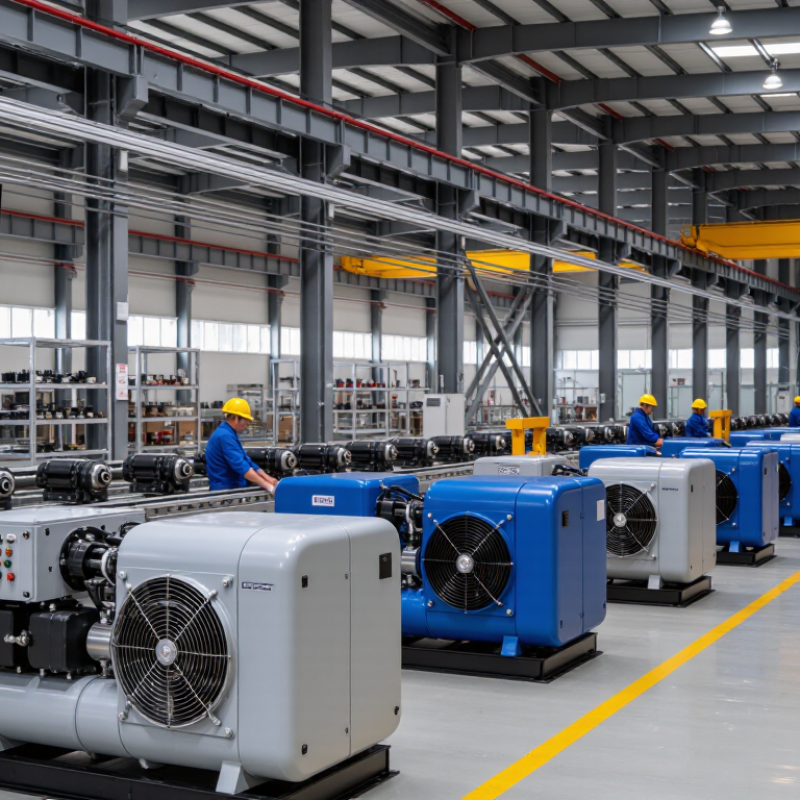
A leading industrial air compressor manufacturer in China is defined by more than production volume. Real experience appears in practical details: stable pressure during long shifts, clean air at the outlet, and easy access to filters and valves. Engineers should match compressor capacity with actual demand, not simply recommend the largest model. A 7.5 kW unit may suit a small workshop, while a heavy production line may require a carefully planned multi-unit system. Energy testing, noise checks, vibration control, and transparent performance data show professional discipline.
Reliability also depends on the factory behind the machine. Strong manufacturers use documented quality procedures, traceable components, pressure testing, and verified safety certifications. They provide clear manuals, maintenance schedules, spare-parts support, and trained service teams. Ask for measured data at rated pressure, not attractive figures from ideal conditions. I have seen purchasing decisions fail because buyers ignored humidity, temperature, and unstable electrical supply. That mistake is common. A dependable supplier will discuss those risks openly, even when the answer reduces the order size.
Tips: Check oil carryover, air delivery, warranty terms, response time, and service coverage. Request a factory inspection or live test when possible. Compare lifecycle cost, not only the purchase price. Keep the questions specific. A short maintenance record can reveal more than polished advertising. No supplier is perfect. The best ones admit limitations and improve their designs through field feedback.

China’s Top 10 Industrial Air Compressor Manufacturers are usually judged by engineering depth, production control, and long-term service. A serious supplier should provide rotary screw, oil-free, centrifugal, or reciprocating systems for different industrial loads. Buyers should examine airflow at working pressure, not only motor horsepower. A 110 kW unit may perform differently across factories.
Practical evaluations often begin with the air network. Inspectors check noise, vibration, heat discharge, drain design, and control-panel clarity. They also review test records based on ISO 1217 and air-quality requirements such as ISO 8573-1. Energy data matters greatly. A compressor running 6,000 hours yearly can make a small efficiency gap expensive. Ask for measured specific power, service intervals, spare-parts availability, and response times.
A ranking is never perfect. Some manufacturers have strong equipment but limited overseas support. Others offer reliable service yet lack advanced oil-free technology. Factory audits should include assembly areas, machining accuracy, pressure testing, and final performance reports. Watch for vague claims. They often hide weak data. A realistic comparison also considers installation space, ambient temperature, voltage stability, and seasonal maintenance. The best choice is not always the largest producer; it is the manufacturer that can document performance and support the compressor after commissioning.
| Ranking | Manufacturer Profile | Primary Product Focus | Typical Technology | Typical Power Range | Typical Pressure Range | Common Compliance References | Common Industrial Applications |
|---|---|---|---|---|---|---|---|
| 01 | Large-scale industrial compressor supplier | Oil-injected screw compressors | Fixed-speed and variable-speed drive systems | 22–315 kW | 7–13 bar(g) | ISO 1217; GB/T 3853; ISO 9001 | General manufacturing, automotive, metal processing |
| 02 | Energy-efficiency-focused compressor supplier | Variable-speed screw compressors | Permanent-magnet motor and inverter control | 7.5–250 kW | 7–13 bar(g) | ISO 50001; ISO 1217; CE requirements | Factories with fluctuating compressed-air demand |
| 03 | Heavy-duty compressor equipment supplier | High-capacity screw and centrifugal systems | Multi-stage compression and centralized control | 90–1,000+ kW | 7–40 bar(g) | ISO 1217; ISO 8573-1; industrial safety codes | Steel, cement, mining, petrochemical production |
| 04 | Oil-free compressed-air specialist | Oil-free screw and scroll compressors | Oil-free compression chambers and integrated drying | 7.5–160 kW | 7–10 bar(g) | ISO 8573-1 Class 0; ISO 1217; CE requirements | Food and beverage, pharmaceuticals, electronics |
| 05 | Portable compressor equipment supplier | Diesel-driven portable compressors | Trailer-mounted rotary screw systems | 37–450 kW | 7–35 bar(g) | ISO 1217; road and emissions requirements | Construction, quarrying, drilling, field maintenance |
| 06 | Small and medium industrial compressor supplier | Belt-driven and direct-drive screw compressors | Compact modular packages | 7.5–75 kW | 7–12.5 bar(g) | ISO 1217; GB/T 3853; ISO 9001 | Workshops, packaging, textiles, general factories |
| 07 | High-pressure compressor specialist | Reciprocating and booster compressors | Multi-stage piston and booster technology | 15–250 kW | 20–350 bar(g) | ISO 1217; pressure-vessel and machinery safety codes | PET bottle blowing, gas filling, testing systems |
| 08 | Refrigeration and compressed-air system supplier | Compressors, dryers, filters and air receivers | Integrated air-treatment packages | 5.5–315 kW | 7–16 bar(g) | ISO 8573-1; ISO 7183; ISO 9001 | Assembly lines, precision manufacturing, process air |
| 09 | Customized air-system engineering supplier | Engineered compressor stations | PLC monitoring, heat recovery and remote diagnostics | 22–1,000+ kW | 7–40 bar(g) | ISO 1217; ISO 50001; IEC 60204-1 | Large factories, utility plants, process industries |
| 10 | Export-oriented compressor manufacturer | Screw, piston and portable compressor ranges | Standardized models with configurable options | 5.5–450 kW | 7–35 bar(g) | ISO 9001; ISO 1217; applicable CE requirements | Distributors, OEM projects, overseas industrial plants |
Note: The specifications shown are common industry ranges and compliance references for Chinese industrial air-compressor manufacturers. Actual performance, certification status, warranty terms and delivery capability should be verified directly with each supplier.
China’s top ten industrial air compressor manufacturers cover several product families.
One commonly offers oil-injected rotary screw compressors for factories, workshops, and continuous production lines. Another focuses on oil-free screw models for food, pharmaceutical, and electronics applications. Reciprocating compressors remain useful for smaller plants and intermittent demand. Centrifugal units serve large facilities requiring stable, high-volume airflow. Rotary vane and scroll designs support quieter, compact installations.
Technology choices vary across each manufacturer. Many provide variable-speed drives that reduce energy waste during changing workloads. Some add permanent-magnet motors, two-stage compression, or integrated heat recovery systems. Digital controllers can monitor pressure, temperature, vibration, and operating hours. Remote alerts are useful, but sensor accuracy still requires regular verification. A few suppliers combine compressors with refrigerated or desiccant dryers, filters, receivers, and air-management systems. Product claims should be checked against measured flow, pressure, noise, and power consumption.
Tips: Match the compressor type to actual duty cycles, not peak demand alone. Ask for certified performance data and service records. Inspect oil carryover limits for sensitive production. Leave room for drainage, ventilation, and filter replacement. I have seen oversized units run inefficiently for years. That mistake is easy to miss. Maintenance access matters as much as motor efficiency. Consider local technicians, spare-part availability, and warranty response before choosing equipment.
Choosing among China’s top industrial air compressor manufacturers requires more than comparing catalog prices. Start with verified operating data, not promises. Check airflow at the required pressure, motor efficiency, noise levels, and oil carryover. Ask for test reports based on recognized standards. A compressor delivering 10% less air than specified can disrupt an entire production line.
Application fit matters greatly. A food plant may need oil-free air and stainless-steel contact parts. A metal workshop may prioritize high pressure, cooling performance, and resistance to dust. For continuous factory operation, inspect the control system, air receiver compatibility, and heat recovery options. Request references from facilities with similar working hours and climate conditions. Factory visits help, but they cannot replace independent technical checks.
Service support often separates a reliable supplier from an expensive problem. Compare local spare-parts availability, technician response times, warranty terms, and remote monitoring capability. Ask who pays for travel and emergency labor. Some manufacturers provide impressive demonstrations, yet their maintenance network remains thin outside major cities. That weakness may not appear in a quotation. We also should admit that efficiency claims can change with installation quality, inlet temperature, and pressure settings. A careful buyer records baseline energy use after commissioning. Then, performance can be judged honestly over several months.
This manufacturer-neutral chart shows common industrial discharge-pressure ranges by compressor technology. Use it as a first screening tool when comparing quality, energy efficiency, application fit, lifecycle cost, and service support among leading suppliers.
Values are typical reference ranges in bar(g); actual limits depend on model design, airflow, cooling method, operating conditions, and ISO 1217 test data. A fair supplier comparison should also review specific power, air-quality class, warranty coverage, spare-parts availability, response time, and maintenance network.
Selecting a Chinese air compressor supplier requires more than comparing catalog prices. The U.S. Department of Energy reports that compressed air systems may waste 20–30% of output through leaks. Therefore, ask suppliers for measured flow, pressure stability, and leakage-test records. A factory visit should include machining, assembly, paint quality, and final testing. Look for documented procedures, not polished promises.
Technical fit matters. Compare FAD values, not only motor horsepower. Request test results based on ISO 1217, and confirm air purity against ISO 8573-1 when production needs clean air. The Carbon Trust notes that compressed air can consume around 10% of industrial electricity in some facilities. Variable-speed control, heat recovery, and correct receiver sizing can reduce operating costs. However, savings claims need site-specific measurements.
Service capability often separates a reliable supplier from a risky purchase. Check spare-parts availability, response times, technician training, warranty limits, and remote monitoring support. Ask for references from factories with similar duty cycles. A low quotation may hide expensive filters, oil, energy, or downtime. I would also recheck every performance figure under local voltage and temperature conditions. One weakness remains: supplier documents may look complete but still omit maintenance assumptions. Independent inspection before shipment is worth considering.
An exceptional record of quality and service for 35+ years.
© 2026 Excell Battery Co. All rights reserved.Privacy Statement