A 7.5KW Belt-Driven Screw Air Compressor can suit workshops that need steady compressed air through long production shifts. Its belt drive transfers power from the motor to the airend, while the rotary screw mechanism supplies a continuous flow. But the kilowatt rating alone does not tell the whole story. Check the stated airflow at your required pressure, not just the headline figures.
Compressed-air specialist Ron Marshall’s guidance can be paraphrased this way: “Choose a compressor by the air your process needs and the conditions it must handle, not by motor size alone.” This is a paraphrase, not a verbatim quotation. It points to practical checks: receiver capacity, duty cycle, cooling, filtration, and service access. A belt that is easy to inspect matters. So does enough room around the machine for maintenance.
This Top 10 guide compares 7.5KW belt-driven screw compressors by useful specifications and ownership considerations. Expect differences in control systems, sound levels, warranties, and quoted delivery volume. Some figures may use different test conditions, so compare like with like. The ideal model depends on the tools running at once, the length of air lines, and the pressure drop across filters. A small detail can change the choice. No single model fits every shop, and a published rating may not match real operating conditions. That deserves a second look.
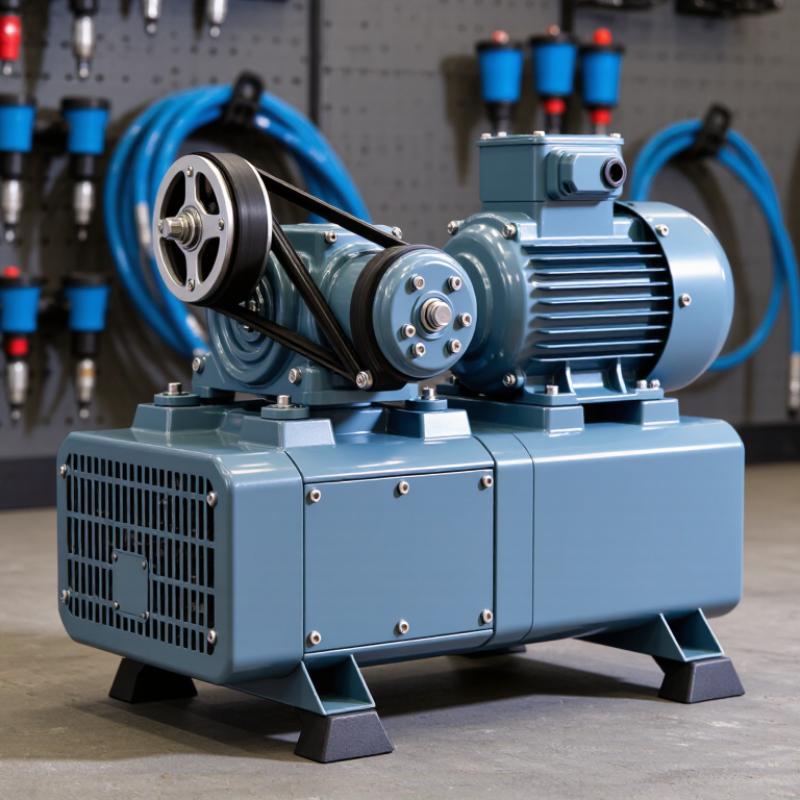
A 7.5 kW belt-driven screw air compressor uses a motor and belt to turn its screw element. The rotating screws compress air continuously, making this design suitable for workshops with steady demand. Compared with many piston units, it can deliver a smoother air supply and operate for longer periods. Specifications vary.
Actual airflow depends on operating pressure, compressor design, and ambient conditions, so check the performance data rather than relying on motor power alone. A receiver tank can help handle brief demand peaks, such as when several pneumatic tools start together. Leave clear space around the intake and cooler; warm, dusty air can reduce efficiency and increase service needs.
Belt drive allows technicians to inspect or replace the belt without dismantling the screw element. Keep an eye on belt tension, alignment, oil condition, and discharge temperature. Small details matter. A belt that is too loose may slip, while excessive tension can strain bearings. In daily use, pressure readings and unusual vibration provide useful clues, though neither replaces scheduled maintenance. There is no perfect setup: noise, available floor space, and changing air demand may complicate a seemingly straightforward installation.

A 7.5 kW belt-driven screw compressor turns motor power into a steady flow of compressed air. The motor spins a pulley, and a belt transfers that motion to the screw element. Different pulley sizes can set the element’s operating speed.
Air enters through an intake filter. Keep it clean; dust can reduce airflow and increase wear.
Inside the element, two meshing rotors trap pockets of air and carry them toward the outlet. As the space between the rotors shrinks, the air pressure rises.
In oil-injected designs, oil helps seal clearances, lubricate moving surfaces, and remove heat. The compressed air and oil then pass through a separator before the air continues toward the system.
Heat matters. A cooler and clear ventilation space help manage operating temperature.
Belt condition affects performance. Poor alignment or incorrect tension can cause slippage, extra noise, and premature wear.
A belt can look fine and still need attention, so follow the service instructions and check it at the stated intervals.
Not every 7.5 kW model delivers the same airflow; pressure, ambient temperature, and machine design all influence output.
For a 7.5 kW belt-driven screw air compressor, compare delivered airflow at the pressure your tools actually need. Free-air delivery is more useful than theoretical displacement. Check the stated pressure, too; a model rated for 8 bar may perform differently at 10 bar. Small differences matter.
Look for test conditions. Some specification sheets omit temperature or measurement standards, making figures harder to compare. That is a gap worth questioning. Also check whether the motor rating is continuous duty and whether the electrical supply matches your site. A belt drive can simplify maintenance, but belt access and tension adjustment vary between designs. Ask how often the belt and air filters need inspection.
Consider the whole installation, not just the compressor. Review receiver capacity, outlet size, cooling requirements, and noise levels where people work nearby. If the compressor will run long shifts, confirm its recommended duty cycle and operating temperature range. A lower price may reflect fewer accessories or a smaller receiver, rather than better efficiency. Specification tables rarely tell the whole story. Compare service clearances and consumable costs with the machine’s footprint. Even a promising datasheet can leave practical questions unanswered.
A 7.5 kW belt-driven screw air compressor suits workshops with steady air demand, but its rated power alone cannot confirm a good fit. Compare the supplier’s airflow figures at your required pressure, not just the motor size. The U.S. Department of Energy’s Improving Compressed Air System Performance sourcebook notes that compressed air can account for about 10% of manufacturing electricity use. That makes operating pressure, leaks, and control settings worth checking before purchase.
Belt drives allow pulley changes to adjust compressor speed, but the setup needs correct belt tension and periodic inspection. Too much tension can strain bearings; too little may cause slippage. Small details matter. The same DOE sourcebook estimates that leaks can waste 20% to 30% of compressor output in typical systems, though actual losses vary by site. Ask for performance data measured under ISO 1217 conditions, then compare the stated flow and power at matching pressure. Check the room’s ventilation, service access, and receiver capacity too. A tidy specification sheet can still leave out the daily realities: dusty filters, frequent starts, or a long pipe run. I would treat quoted efficiency as a starting point, not a promise.
Comparison of ten common 7.5 kW configuration profiles. Air-delivery figures are indicative typical ranges, not specifications for individual products; actual performance depends on compressor design, operating pressure, ambient conditions, and the test standard used.
| No. | Configuration profile | Rated motor power | Working pressure | Indicative free air delivery | Receiver option | Typical electrical supply | Cooling and drive | Common application |
|---|---|---|---|---|---|---|---|---|
| 1 | Standard workshop setup | 7.5 kW (10 hp) | 7 bar (approx. 102 psi) | Approx. 0.9–1.1 m³/min | 200–300 L, optional | Three-phase, typically 380–415 V, 50 Hz | Air-cooled, belt-driven | General pneumatic tools and workshop equipment |
| 2 | Higher-pressure workshop setup | 7.5 kW (10 hp) | 8 bar (approx. 116 psi) | Approx. 0.85–1.0 m³/min | 200–300 L, optional | Three-phase, typically 380–415 V, 50 Hz | Air-cooled, belt-driven | Workshops with moderate pressure requirements |
| 3 | 10 bar process-air setup | 7.5 kW (10 hp) | 10 bar (approx. 145 psi) | Approx. 0.72–0.88 m³/min | 200–500 L, optional | Three-phase, typically 380–415 V, 50 Hz | Air-cooled, belt-driven | Applications requiring higher line pressure |
| 4 | 13 bar high-pressure setup | 7.5 kW (10 hp) | 13 bar (approx. 189 psi) | Approx. 0.58–0.72 m³/min | 200–500 L, optional | Three-phase, typically 380–415 V, 50 Hz | Air-cooled, belt-driven | Specialty processes requiring elevated pressure |
| 5 | Compressor with receiver tank | 7.5 kW (10 hp) | 7–8 bar | Approx. 0.85–1.1 m³/min | 200–500 L integrated or paired receiver | Three-phase, typically 380–415 V, 50 Hz | Air-cooled, belt-driven | Intermittent demand and reduced short cycling |
| 6 | Base-mounted compressor package | 7.5 kW (10 hp) | 7–10 bar | Approx. 0.72–1.1 m³/min, pressure dependent | No receiver included; external tank optional | Three-phase, typically 380–415 V, 50 Hz | Air-cooled, belt-driven | Installations with a separate air receiver or central system |
| 7 | Integrated dryer package | 7.5 kW (10 hp) | 7–10 bar | Approx. 0.72–1.1 m³/min before system losses | Receiver optional, commonly 200–500 L | Three-phase, typically 380–415 V, 50 Hz | Air-cooled, belt-driven; refrigerated dryer included | General-purpose air systems needing drier compressed air |
| 8 | Compact enclosure package | 7.5 kW (10 hp) | 7–10 bar | Approx. 0.72–1.1 m³/min, pressure dependent | Typically no integrated receiver | Three-phase, typically 380–415 V, 50 Hz | Enclosed, air-cooled, belt-driven | Indoor installations where sound and access need consideration |
| 9 | 50 Hz industrial supply profile | 7.5 kW (10 hp) | 7–10 bar | Approx. 0.72–1.1 m³/min, pressure dependent | 200–500 L, optional | Three-phase, 380–415 V, 50 Hz typical | Air-cooled, belt-driven | Facilities operating on standard 50 Hz industrial power |
| 10 | 60 Hz industrial supply profile | 7.5 kW (10 hp) | 7–10 bar | Varies by motor speed and compressor design; check rated data | 200–500 L, optional | Three-phase, commonly 440–480 V, 60 Hz | Air-cooled, belt-driven | Facilities operating on standard 60 Hz industrial power |
Selection note: Confirm rated flow at the required pressure, voltage and frequency compatibility, receiver and dryer sizing, ventilation requirements, and applicable pressure-vessel regulations before purchase or installation.
A 7.5 kW belt-driven screw air compressor can serve small production cells, workshops, vehicle service bays, and packaging lines. Typical tasks include powering air tools, pneumatic clamps, and intermittent blow-off nozzles. It is a poor match if peak demand exceeds its delivered airflow. Not every shop runs steadily. That matters.
Start selection with measured demand, not motor power alone. Record pressure near the tools during a busy shift, then compare required flow with the compressor’s performance data. The U.S. Department of Energy’s Improving Compressed Air System Performance sourcebook reports that compressed air can account for about 10% of industrial electricity use; leaks may waste 20–30% of compressor output. These are system-level figures, not guaranteed savings for one machine. Check duty cycle, inlet temperature, receiver size, filtration, noise, and access for belt maintenance. A rough demand estimate is tempting, but often wrong.
Tips: Use a pressure gauge at the farthest point of use. Check for leaks and pressure drops before buying a larger unit. Confirm that the compressor can meet peak demand without running continuously. Ask for delivered-air figures at your target pressure, not just the motor rating.
Typical compressed-air operating pressure by application
Bars show the midpoint of each typical pressure range; hover over a bar to see its range. Actual requirements vary by equipment and installation. Select a compressor by checking required free-air delivery (FAD), pressure losses, duty cycle, air quality, and simultaneous demand—not pressure alone. High-flow uses such as sandblasting may exceed the capacity of a single 7.5 kW unit.
An exceptional record of quality and service for 35+ years.
© 2026 Excell Battery Co. All rights reserved.Privacy Statement