2026 Top Water Cooled Condenser Types and Buying Guide
Choosing the right Water Cooled Condenser affects cooling stability, energy use, maintenance, and equipment life. In 2026, buyers face several options, including shell-and-tube, brazed plate, flooded, and evaporative designs. Each type responds differently to water quality, refrigerant selection, load changes, and available installation space.
Real equipment experience shows that the cheapest condenser is rarely the lowest-cost choice. A unit with narrow water passages may perform well initially, then lose efficiency when scale builds inside the tubes. Small details matter. Tube material, connection size, cleaning access, pressure rating, and condenser water temperature can change the result.
This guide explains the main condenser types in clear technical terms. It also examines capacity, heat-transfer performance, fouling risk, corrosion resistance, sound levels, and lifecycle cost. Engineers should compare rated conditions with actual site conditions, rather than trusting catalog figures alone. A model rated at 30°C entering water may behave differently during a hotter summer or under a dirty cooling tower.
Fit is not universal. Real systems compromise. A compact plate condenser can save floor space, while a shell-and-tube model may offer easier mechanical cleaning. Selection also depends on pump energy, water treatment, service skills, and replacement-part availability. These points are sometimes overlooked.
No buying guide can remove every uncertainty. Manufacturer data may use different test conditions, and field performance can vary. That limitation deserves attention. Careful buyers should request certified performance data, installation requirements, warranty terms, and references from comparable applications. With that evidence, the Water Cooled Condenser becomes a measured engineering decision, not a guess based on price or appearance.
What Is a Water-Cooled Condenser and How Does It Work?
2026 Top Water Cooled Condenser Types and Buying Guide
What Is a Water-Cooled Condenser and How Does It Work?
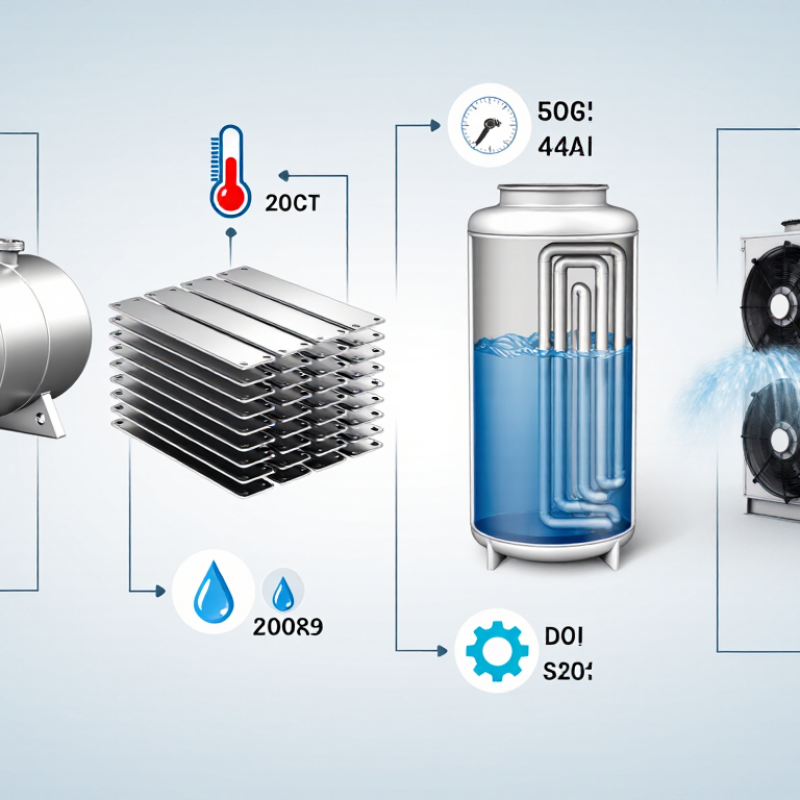
A water-cooled condenser removes heat from refrigerant vapor after compression. Cooling water flows through tubes or plates. The refrigerant surrounds these surfaces and changes into a high-pressure liquid. Heat then moves into the water circuit. This process supports stable cooling and can reduce outdoor equipment noise.
Common designs include shell-and-tube, brazed plate, and double-pipe condensers. Shell-and-tube models handle demanding commercial loads and allow practical service access. Brazed plate units are compact, but their narrow passages need clean water. Double-pipe designs suit smaller systems with simpler flow requirements. Select by capacity, refrigerant pressure, water temperature, flow rate, and pressure drop. Material choice matters too. Copper alloys, stainless steel, and protective treatments behave differently in hard water. A perfectly clean system is rarely realistic. Fouling can raise condensing pressure and energy use.
Tips: Check entering and leaving water temperatures during commissioning. Confirm actual flow with a calibrated instrument, not a pump label. Install strainers and plan descaling access. Review water treatment records regularly. If readings drift, investigate early. Small errors become expensive. Ask a qualified engineer to verify sizing, controls, and local code requirements before purchase.
Top Water-Cooled Condenser Types for Different Applications
Water-cooled condensers suit applications where stable heat rejection matters. Shell-and-tube condensers handle industrial refrigeration, chillers, and large process systems well. Their wide tubes tolerate moderate fouling and allow mechanical cleaning. They also need more installation space. Field experience shows that neglected water treatment quickly reduces heat-transfer performance.
Plate-and-frame condensers fit commercial HVAC and compact process equipment. Their narrow channels create efficient heat transfer with a small footprint. Gasketed plates can be opened and cleaned, which helps during seasonal servicing. However, poor filtration may block the channels. Brazed plate condensers are smaller and lighter. They work well in packaged cooling units, but internal cleaning is difficult.
Small systems may use double-pipe condensers. These are practical for laboratory equipment, heat pumps, and limited cooling loads. They are simple, but capacity remains restricted. For every type, match the condenser to water temperature, flow rate, refrigerant pressure, and allowable pressure drop. Check water hardness and chloride levels before selecting copper, stainless steel, or another material. A low entering-water temperature can improve condensing pressure, though excessive flow wastes pumping energy. No choice is perfect. I would also leave service clearance, because a technically efficient condenser becomes costly when technicians cannot reach the connections.
How to Compare Capacity, Efficiency, Materials, and Maintenance
2026 Top Water Cooled Condenser Types and Buying Guide
Selecting a water-cooled condenser in 2026 requires more than matching nominal tonnage. Shell-and-tube models suit stable, high-capacity systems and allow mechanical tube cleaning. Brazed plate units are compact and transfer heat efficiently, but their narrow passages can foul quickly. Gasketed plate designs offer easier inspection and expansion, although gasket replacement adds service work.
Compare capacity at your actual entering water temperature, refrigerant condition, flow rate, and design fouling factor. A catalog rating may look impressive. Site performance can differ. Check condensing temperature, pressure drop, and part-load efficiency instead of capacity alone. Lower water temperature usually improves efficiency, but it may increase cooling-tower energy use. Measure the whole system.
Materials must match water chemistry. Copper tubes can perform well in suitable water, while stainless steel offers stronger resistance in demanding conditions. Neither choice is universally superior. Ask for corrosion data, allowable velocity, and tube-wall details. Maintenance access matters just as much. Leave room for brush cleaning, isolate water circuits, and confirm replacement parts availability. Gasketed units need regular inspection. Shell-and-tube units may hide scale until efficiency falls noticeably. Keep records of approach temperature and pressure drop during commissioning. Small measurement errors can distort later decisions. A practical selection often balances service access, water quality, seasonal load, and technician skill—not just the lowest purchase price.
2026 Buying Guide: Selecting the Right Water-Cooled Condenser
Selecting the right water-cooled condenser begins with the operating profile, not the equipment catalog. Record cooling load, refrigerant type, entering water temperature, and expected water flow. A condenser sized only for peak capacity may waste energy during lighter operation. Undersizing creates high condensing pressure and unstable performance.
Shell-and-tube condensers suit many industrial systems because they tolerate steady, high-load operation. Plate condensers are compact and transfer heat efficiently, but their narrow passages need cleaner water. Double-pipe designs can work well for smaller systems with limited flow. Check the approach temperature, pressure drop, connection size, and allowable working pressure together. One number never tells the whole story.
Water quality deserves serious attention. Hardness, suspended solids, and chloride levels influence scaling and corrosion. Request material compatibility data before choosing copper alloys, stainless steel, or coated surfaces. Include isolation valves, strainers, flow measurement, and service access in the layout. A poorly placed strainer can turn routine maintenance into a shutdown. I still see projects that calculate heat transfer carefully but forget cleaning clearance. That mistake is expensive. Review seasonal water temperatures, too. A design that performs well in spring may struggle during a hot summer afternoon. Ask for tested performance data, inspection records, and clear warranty conditions. Vague specifications should slow the purchase.
2026 Buying Guide: Selecting the Right Water-Cooled Condenser
Typical condenser approach-temperature ranges under clean-water conditions and correct flow. A lower approach temperature generally indicates stronger heat-transfer performance, but water quality, fouling, refrigerant, pressure drop, and maintenance requirements must also be evaluated.
How to use this chart: Brazed-plate and plate-and-frame condensers commonly achieve tighter temperature approaches in compact systems. Shell-and-tube and coaxial designs are often selected when durability, serviceability, refrigerant compatibility, or variable operating conditions are more important. Actual performance depends on the equipment design and operating conditions.